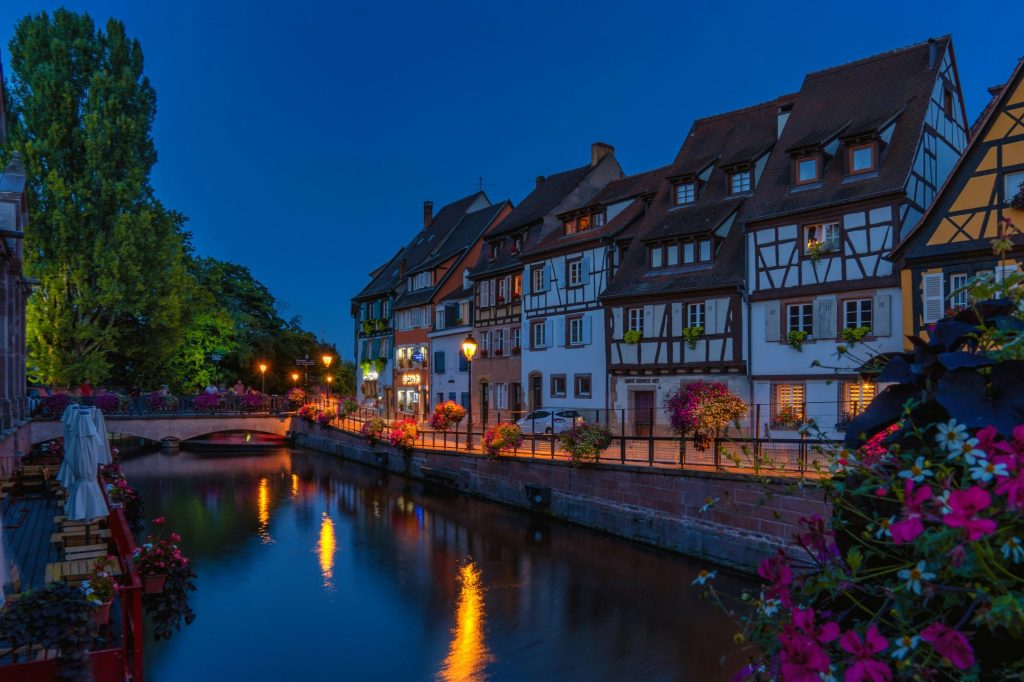
France is one of those countries where the weight of literary history feels … a little intimidating. Where do you even start? Who am I, to imagine I can recommend books from France?
Trying to sum up French literature in ten books is a bit like trying to bottle fine French wine in a soda can. France has centuries of novels, manifestos, and moody philosophical meanderings …
And I’ve picked… 10 books that happened to catch my eye.
Here are my suggestions for 10 books to read from France.
A list of books to read from France
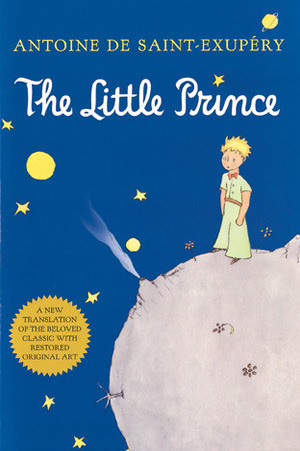
The Little Prince
Author: Antoine de Saint-Exupéry
First published: 1943
Original title: Le Petit Prince
Genre: Children’s / Philosophical
“It is only with the heart that one can see rightly; what is essential is invisible to the eye.”
We begin with a book that holds the universe. Yes, is is a children’s book and no, it is in fact not set in France. But it is as iconic as it gets, and my heart clearly sees that it must be included in this list. Told through the eyes of a childlike traveler from another planet, this beloved classic is part fairy tale, part existential meditation. It asks what really matters in life — and whether grown-ups have forgotten.
The Little Prince is one of my all time favourite books, and if you haven’t read it, you absolutely must!
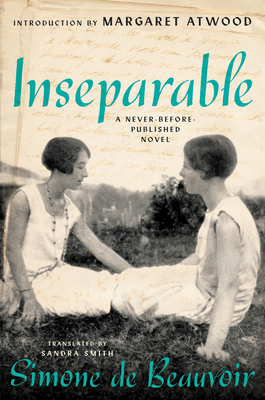
Inseparable
Author: Simone de Beavoir
First published: posthumously in 2021 (written in 1954)
Original title: Les inséparables
Genre: Autobiographical / Coming-of-age
From the moment Sylvie and Andrée meet in their Parisian day school, they see in each other an accomplice with whom to confront the mysteries of girlhood. For the next ten years, the two are the closest of friends and confidantes as they explore life in a post-World War One France, and as Andrée becomes increasingly reckless and rebellious, edging closer to peril.
Deemed too intimate to publish during Simone de Beauvoir’s life, Inseparable offers fresh insight into the groundbreaking feminist’s own coming-of-age; her transformative, tragic friendship with her childhood friend Zaza Lacoin; and how her youthful relationships shaped her philosophy.
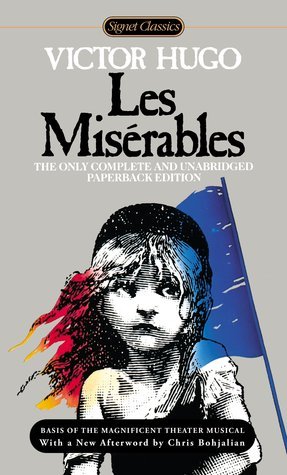
Les Misérables
Author: Victor Hugo
First published: 1862
Original Title: Les Misérables
Genre: Historical fiction
Would I personally choose to read a book of more than 1400 pages for a challenge of reading a book from every country? I mean, probably not. But this great mountain of literature must be included in any list of French literature.
Victor Hugo’s tale of injustice, heroism and love follows the fortunes of Jean Valjean, an escaped convict determined to put his criminal past behind him. But his attempts to become a respected member of the community are constantly put under threat: by his own conscience, when, owing to a case of mistaken identity, another man is arrested in his place; and by the relentless investigations of the dogged Inspector Javert. It is not simply for himself that Valjean must stay free, however, for he has sworn to protect the baby daughter of Fantine, driven to prostitution by poverty.
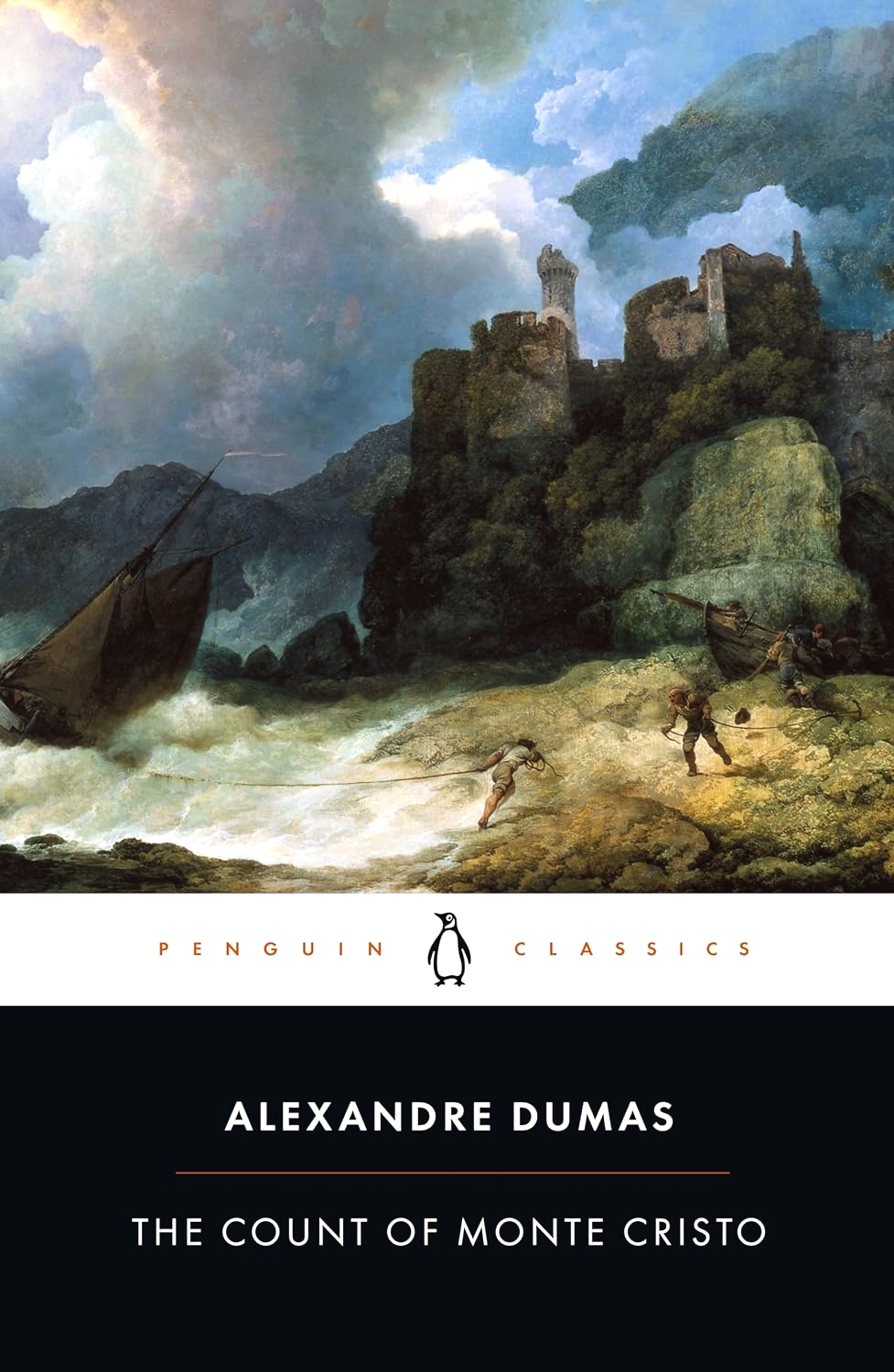
The Count of Monte Cristo
Author: Alexandre Dumas
First published: 1844-1846
Original Title: Le Comte de Monte-Cristo
Genre: Adventure
This is one of those classics that have been on my TBR for as long as I can remember. Maybe now is the time to finally pick it up?
Thrown in prison for a crime he has not committed, Edmond Dantès is confined to the grim fortress of If. There he learns of a great hoard of treasure hidden on the Isle of Monte Cristo and he becomes determined not only to escape, but also to use the treasure to plot the destruction of the three men responsible for his incarceration. Dumas’ epic tale of suffering and retribution, inspired by a real-life case of wrongful imprisonment, was a hugely popular success when it was first serialized in the 1840s.
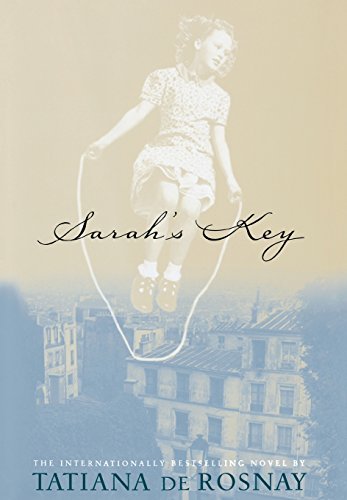
Sarah’s Key
Author: Tatiana de Rosnay
First published: 2006
Original title: Elle s’appelait Sarah
Genre: Historical Fiction
Paris, July 1942: Ten-year-old Sarah is brutally arrested with her family in the Vel’ d’Hiv’ roundup, the most notorious act of French collaboration with the Nazis. but before the police come to take them, Sarah locks her younger brother, Michel, in their favorite hiding place, a cupboard in the family’s apartment. She keeps the key, thinking that she will be back within a few hours.
Paris, May 2002: On Vel’ d’Hiv’s sixtieth anniversary, Julia Jarmond, an American journalist, is asked by her Paris-based American magazine to write an article about this black day in France’s past. Julia has lived in Paris for nearly twenty-five years, married a Frenchman, and she is shocked both by her ignorance about the event and the silence that still surrounds it. In the course of her investigation, she stumbles onto a trail of long-hidden family secrets that connects her to Sarah.
A brilliantly subtle, compelling portrait of France under occupation revealing the taboos and denial surrounding this painful episode in French history.
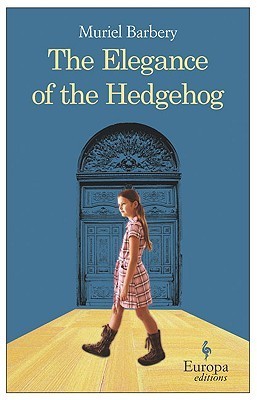
The Elegance of the Hedgehog
Author: Muriel Barbery
First published: 2006
Original title: L’Élégance du hérisson
Genre: Literary fiction / Contemporary
In a Parisian apartment building, a concierge hides her intellectual life from her snobbish tenants. Unbeknownst to her employers, Renée is a cultured autodidact who adores art, philosophy, music, and Japanese culture.
Upstairs a talented and startlingly lucid child has decided to end her life on her thirteenth birthday. Until then she will continue behaving as everyone expects her to behave: a mediocre pre-teen high on adolescent subculture, a good but not an outstanding student, an obedient if obstinate daughter.
The two discover their kindred souls when a wealthy Japanese man named Ozu arrives in the building. Only he is able to gain Paloma’s trust and to see through Renée’s timeworn disguise to the secret that haunts her.
The elegance of the Hedgehog is a moving, funny, triumphant novel that exalts the quiet victories of the inconspicuous among us.
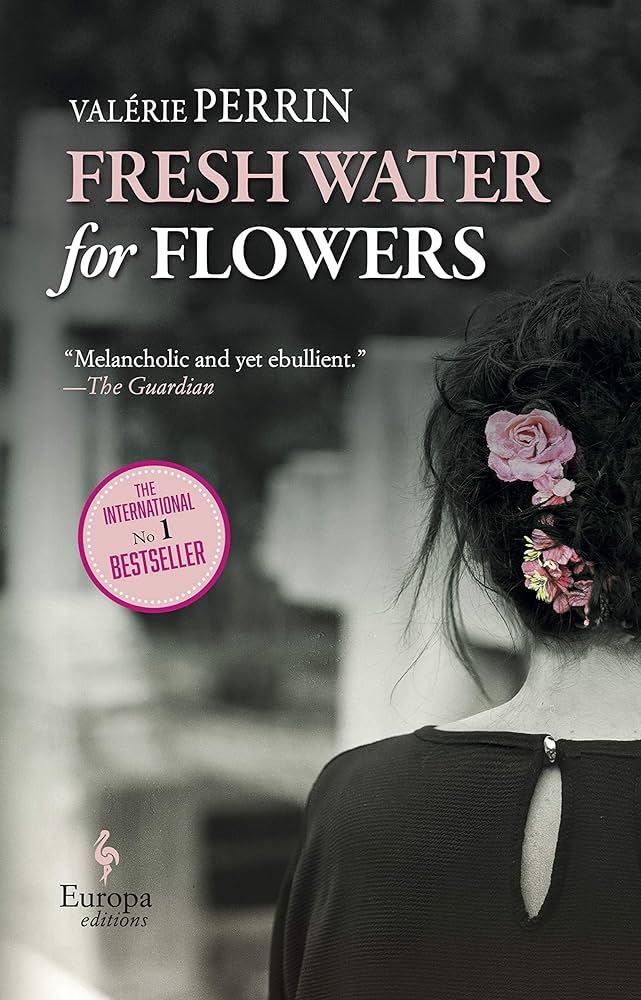
Fresh water for flowers
Author: Valérie Perrin
First published: 2018
Original title: Changer l’eau des fleurs
Genre: Contemporary / Drama
Violette is the caretaker at a cemetery in a small town in Bourgogne. Random visitors, regulars, and, most notably, her colleagues — three gravediggers, three groundskeepers, and a priest —visit her as often as possible to warm themselves in her lodge, where laughter, companionship, and occasional tears mix with the coffee that she offers them.
Violette’s routine is disrupted one day by the arrival of a man — Julien Sole, local police chief — who insists on depositing the ashes of his recently departed mother on the gravesite of a complete stranger. It soon becomes clear that the grave Julien is looking for belongs to his mother’s one-time lover, and that his mother’s story of clandestine love is intertwined with Violette’s own secret past.
A #1 best-seller in France, Fresh Water for Flowers is a delightful, atmospheric, absorbing fairy tale full of poetry, generosity, and warmth.
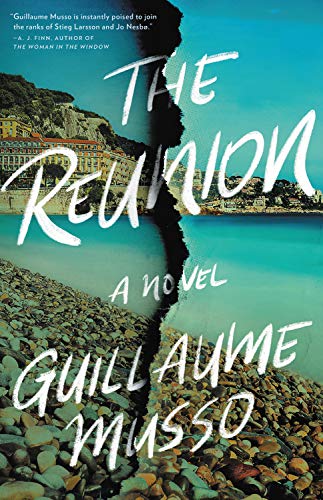
The Reunion
Author: Guillaume Musso
First published: 2018
Original Title: La Jeune Fille et la Nuit
Genre: Mystery / Thriller
If you’re not really into 19th century epics or quiet introspection, you could let things take a darker turn and go with this with this mystery thriller from France’s #1 bestselling author, Guillaume Musso.
A former student returns to his elite boarding school on the Côte d’Azur, where a girl went missing years before. Secrets unravel, and so does the past. What really happened that long-ago winter night? Now nothing stands in the way of the truth.
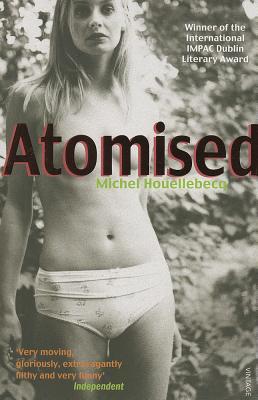
Atomised
Author: Michel Houellebecq
First published: 1998
Original title: Les particules élémentaires
Alternative title: The elementary particles
Genre: Social satire
Atomised is a provocative, wildly controversial, and biting critique of modern society. Two half-brothers struggle with isolation, sexuality, and meaning in a world fraying at the seams.
To admirers Houllebecq is a writer in the tradition of literary provocation that reaches back to the Marquis de Sade and Baudelaire; to detractors he is a peddler, who writes vulgar sleazy literature to shock. His works though, particularly Atomised, have received high praise from the French literary intelligentsia, with generally positive international critical response, and I’m personally intrigued.
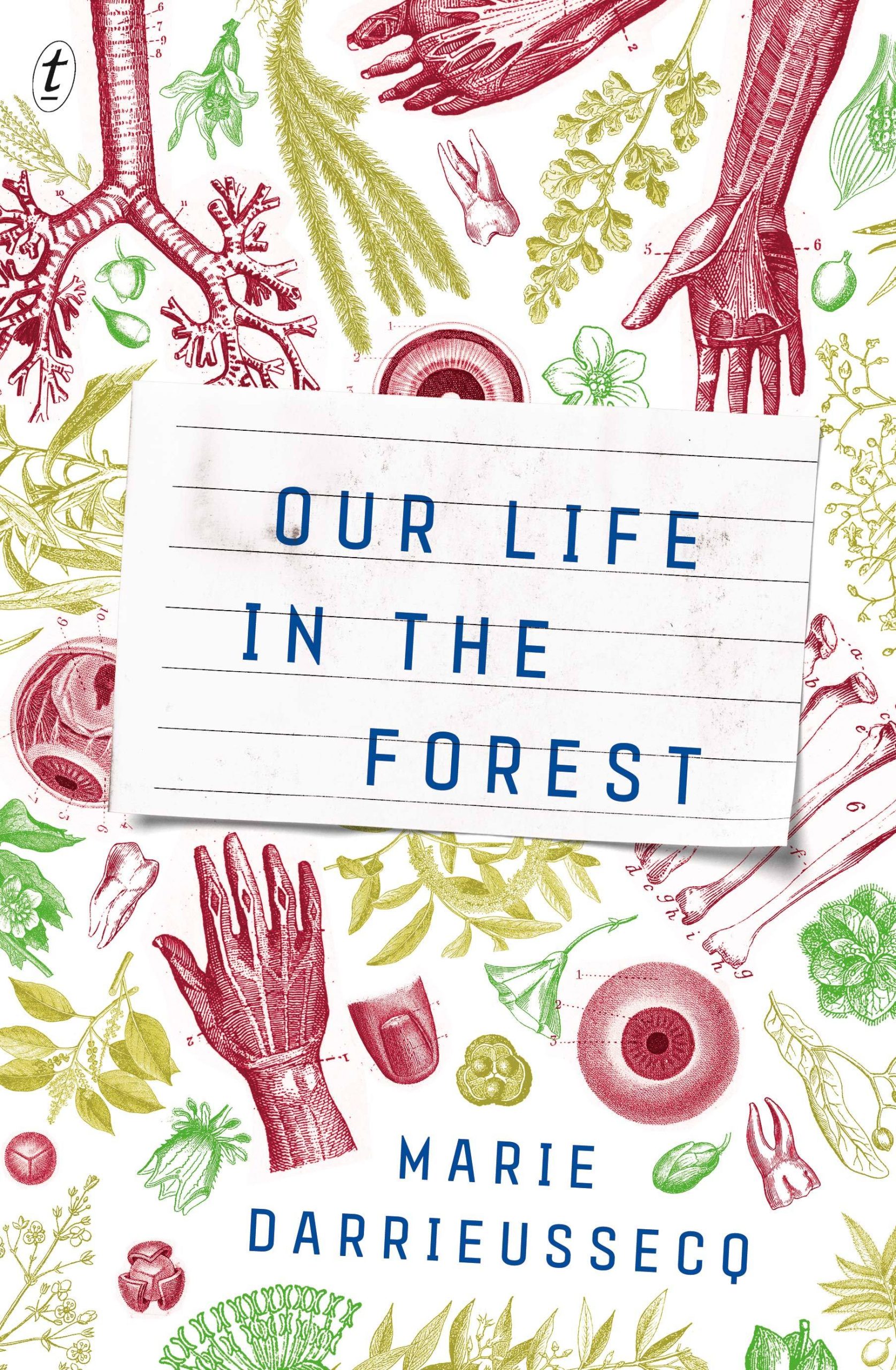
Our life in the forest
Author: Marie Darrieussecq
First published: 1953
Original Title: Kapellekensbaan
Genre: Dystopia
In the near future, a woman is writing in the depths of a forest. She’s cold. Her body is falling apart, as is the world around her. She’s lost the use of one eye; she’s down to one kidney, one lung. Before, in the city, she was a psychotherapist, treating patients who had suffered trauma. Every two weeks, she travelled out to the Rest Centre, to visit her “half”, Marie, her spitting image, who lay in an induced coma, her body parts available whenever the woman needed them. As a form of resistance against the terror in the city, the woman flees, along with other fugitives and their halves. But life in the forest is disturbing too.
A dystopian tale in the vein of Never Let Me Go, this is a clever novel of chilling suspense that challenges our ideas about the future, about organ-trafficking, about identity, clones, and the place of the individual in a surveillance state.
I’ll admit this is an outlier on a list of french literature, but as Ishiguro’s Never let me go is one of my favourites, I am definitely reading this at one point or other.
Join me, and read a book from France
I won’t pretend this is a balanced survey of French literature — it’s more of a stroll through a bookshop where I plucked whatever looked interesting down from the shelves. Some are classics I feel like I honestly should have read by now. Others are recent bestsellers that popped up on every recommended reading list. And a few were just too intriguing to put back on the shelf.
And if just one of these books make it onto your own to-read pile, I’ll consider that a success.
As for me? I’ll be over here, wondering how to pronounce “Houellebecq” correctly and trying to resist the urge to just reread The Little Prince for the seventeenth time and call it a day.
Seriously, go read The Little Prince. Learn to see with your heart and let a fox teach you how to make a friend.