
I visited Hong Kong in 1994 while it was still a British colony, and what I remember most are the glaring contrasts. Gleaming towers next to crumbling facades. Order and chaos. I also remember spending a full afternoon searching for the Kowloon walled city mentioned in my guide book, not realising that it has been completely demolished only a few months before. This was before the internet, folks …
Hong Kong has long been a meeting point. Of empire and resistance, capitalism and community, Cantonese and English, memory and reinvention. That also makes it wonderfully accessible in translation and in English.
These are the ten books that caught my eye this time. Here you will find books that circle the city from different angles: colonial glamour, vanishing neighbourhoods, digital paranoia, political unrest, and even dystopian body experiments.
Let’s begin in the past.
A list of books to read from Hongkong
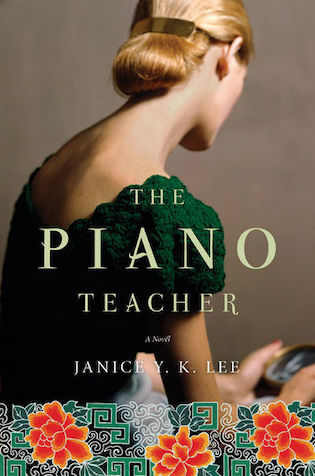
The piano teacher
Author: Janice Y. K. Lee
First published: 2009
Original title: The Piano teacher
Genre: Historical Fiction / Romance
“Exotic Hong Kong” takes centre stage here — but not in a shallow way. Set in the 1940s and 50s, this novel immerses us in a tight-knit social enclave of foreign nationals who enjoy the privileges of colonial life: elegant dinners, dazzling parties, careful distance from the culture surrounding them.
Then history intervenes. The Japanese occupation fractures those carefully managed lives. Years later, Claire Pendleton arrives from London and takes a position as a piano teacher to the daughter of a wealthy Chinese family. Through Claire’s growing fascination with the enigmatic Will Truesdale, the novel slowly reveals buried secrets and moral compromises from the wartime years.
Read this if you want to understand colonial Hong Kong from the inside: Glamour, denial, and the emotional cost of survival.
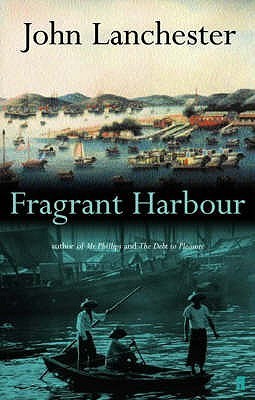
Fragrant Harbour
Author: John Lanchester
First published: 2002
Original title: Fragant Harbour
Genre: Historical Fiction
Or we could go with a wider lens on colonial Hong Kong.
Fragrant Harbour follows four intertwined lives across seventy years of Hong Kong’s transformation. Tom Stewart arrives from England seeking fortune and builds one of the city’s finest hotels. Sister Maria, a principled Chinese nun, crosses his path. Dawn Stone becomes the public face of corporate power. Matthew Ho grows up shaped by decisions made long before he was born.
This is Hong Kong as opportunity, ambition, and reinvention. The city changes; fortunes rise and fall; identities shift. If you want a panoramic novel that tracks Hong Kong’s evolution from postwar recovery to modern global hub, this is the sweeping version.
Diamond Hill
Author: Kit Fan
First published: 2021
Original title: Diamond Hill
Genre: Historical Fiction
It is 1987. The Joint Declaration has been signed. The handover of Hong Kong to China looms in the distance: officially ten years away, but unofficially already reshaping the city.
Diamond Hill, once the “Hollywood of the Orient,” is now a shanty town slated for demolition. Buddha, a recovering heroin addict, returns home to find bulldozers circling his neighbourhood. Nuns, gang members, property developers, and foreign interests all want a piece of what remains.
This novel reads like a requiem for a disappearing Hong Kong. If you’re drawn to stories about redevelopment, displacement, and the quiet erasure of communities that don’t fit the glossy skyline, this could be the one for you.
Farewell to my Concubine
Author: Lillian Lee
First published: 1985
Original title: 霸王別姬
Genre: Historical Fiction / Romance / LGBTQ
Beginning in 1930s China and stretching into 1980s Hong Kong, this passionate story follows two opera students bound together by art and complicated love, and the woman who disrupts their fragile equilibrium.
Though much of the novel unfolds outside Hong Kong, Lilian Lee is one of the territory’s most significant cultural voices. The book, which was adapted into an internationally acclaimed film, captures how political upheaval shapes identity, loyalty, and desire.
Read this for its emotional sweep and for its important place in Hong Kong’s literary and cinematic heritage.
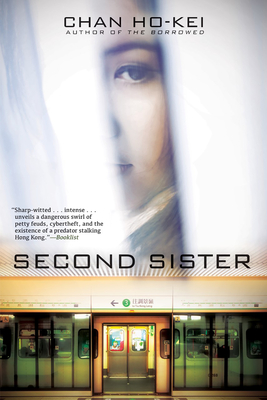
Second Sister
Author: Chan Ho-Kei
First published: 2017
Original title: 網內人
Genre: Contemporary / Mystery Thriller
Or we could go contemporary, and pick up one of the many mystery thrillers from modern Hong Kong.
In Second Sister a teenage girl falls from her twenty-second-floor window. The verdict is suicide. Her older sister, who has been raising her, refuses to accept it. She hires a mysterious hacker known only as N., and together they descend into Hong Kong’s digital underground: online gossip platforms, mass-transit harassment, high school rivalries, venture capital ambitions, Triads, market women, noodle shops in Sai Wan.
This is a cat-and-mouse thriller, but also a portrait of a “Darwinian digital city” where reputations are destroyed online and real people are forgotten behind screens. Read it for pace and for its unsettling look at online cruelty in a hyper-connected society.
(The Borrowed by the same author is another interesting option …)
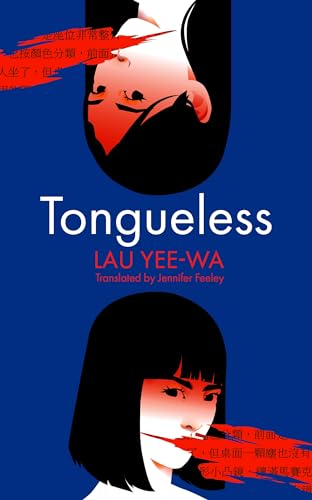
Tongueless
Author: Lau Yee-Wa
First published: 2019
Original title: Tongueless
Genre: Contemporary / Psychological Thriller
Two teachers at a Hong Kong secondary school are told they must switch from Cantonese to Mandarin – or lose their jobs.
Wai throws herself obsessively into mastering Mandarin. Ling believes she can outmanoeuvre the situation through charm and strategy. Professional rivalry turns existential as language becomes political terrain.
Darkly humorous and sharply observed, Tongueless explores what happens when the language that defines you is placed at risk. Read it if you’re interested in how policy filters down into staffrooms and personal ambition, and how survival can quietly reshape identity.
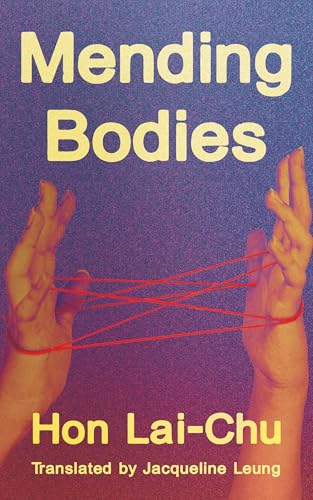
Mending bodies
Author: Hon Lai-Chu
First published: 2010
Original title: 縫身
Genre: Science fiction / Dystopia
In this unsettling dystopia, the government promotes physical conjoinment surgery — encouraging citizens to join their bodies together to reduce living costs and increase social harmony.
The unnamed narrator, broke and writing a dissertation on the subject, is critical yet increasingly tempted. Isn’t it better to sacrifice autonomy if it benefits society?
Set in a recognisably Hong Kong-like environment of cramped space and bureaucratic logic, the novel becomes a macabre allegory of conformity and control. Read it if you’re drawn to speculative fiction that pushes political ideas into the grotesque.
I’m personally always drawn to dystopian fiction, so this one caught my eye immediately.
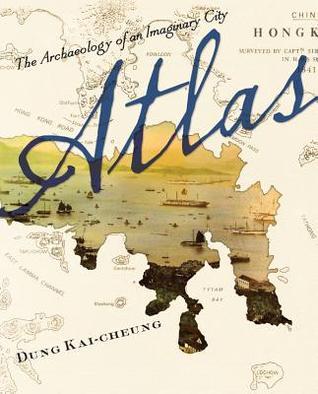
Atlas: The Archaeology of an Imaginary City
Author: Deng Kai-Cheung
First published: 1997
Original title: Atlas
Genre: Fantasy / Experimental
For an even more speculative take, we could go for a Hong Kong imagined by future archeaologists.
Set in the long-lost City of Victoria (a fictional world similar to Hong Kong) this formally inventive novel is divided into “Theory,” “The City,” “Streets,” and “Signs.” Through maps, documents, and reconstructed artefacts, it blends real history with invention.
Atlas questions how cities are remembered, and who gets to do the remembering. Read it if you enjoy literary experimentation and if you’re curious about Hong Kong’s anxieties around memory, preservation, and post-handover uncertainty.
I think I would love this.
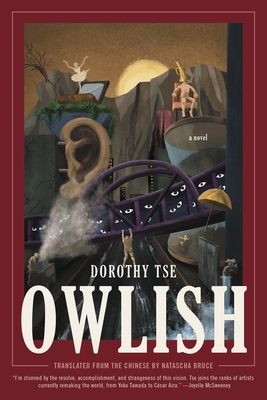
Owlish
Author: Dorothy Tse
First published: 2020
Original title: Owlish
Genre: Magical Realism / Fantasy
And we stay in the speculative realm …
In a city called Nevers, there lives a professor of literature called Q. He has a dull marriage and a lackluster career, but also a scrumptious collection of antique dolls locked away in his cupboard. And soon Q lands his crowning acquisition: a music box ballerina named Aliss who has tantalizingly sprung to life. Guided by his mysterious friend Owlish and inspired by an inexplicably familiar painting, Q embarks on an all-consuming love affair with Aliss, oblivious to the protests spreading across the university that have left his classrooms all but empty.
The mountainous city of Nevers is itself a mercurial character with concrete flesh, glimmering new construction, and “colonial flair.” Having fled there as a child refugee, Q thought he knew the faces of the city and its people, but Nevers is alive with secrets and shape-shifting geographies.Owlish is a fantastically eerie debut novel that is also a bold exploration of life under oppressive regimes.
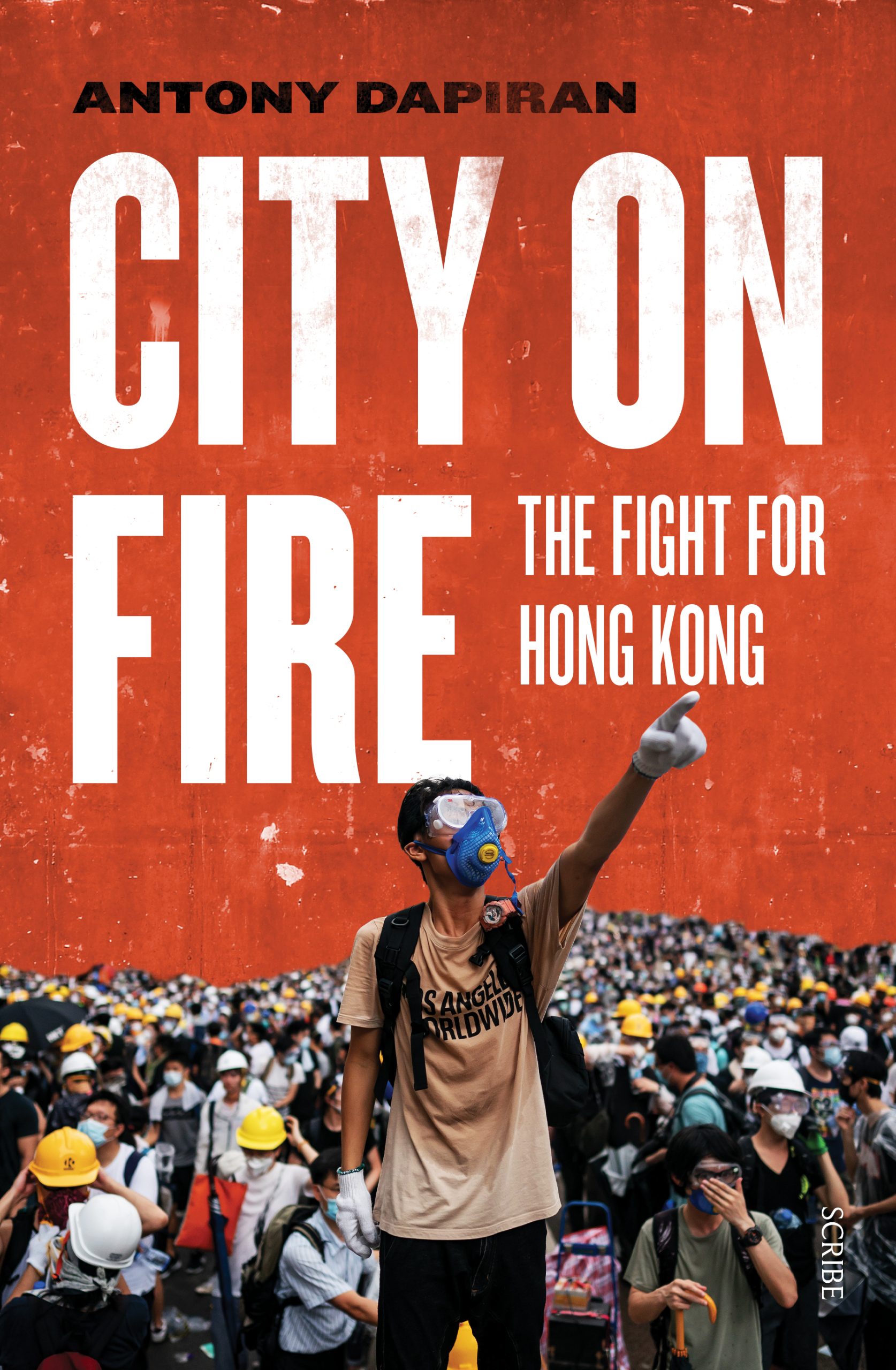
City on fire: The fight for Hong Kong
Author: Anthony Dapiran
First published: 2020
Original title: City on fire
Genre: Nonfiction / Journalism
And finally, from the speculative takes on Hong Kong we turn to a chillingly real nonfiction option:
Through the long, hot summer of 2019, Hong Kong burned. Sparked by a proposed extradition law, protests grew into a leaderless, technology-driven pro-democracy movement. Students and young activists adopted a “Be Water” philosophy, fought street battles with police, and drew global attention.
Anthony Dapiran, a long-term resident, provides a detailed account of the movement’s tactics, history, and implications — placing the unrest within Hong Kong’s longer tradition of dissent.
Join me, and read a book from Hong Kong
Colonial harbour. Vanishing neighbourhoods. Digital shadows. Allegory. Protest.
The variety from Hong Kong surprised me.
I’ve actually never read a book from Hong Kong before, but that is about to change. If you had to start somewhere, would you begin with elegance and secrets, or with barricades and encrypted messages? Tell me what you would read from Hong Kong?