We were the kids of the poor, and the poor had no say
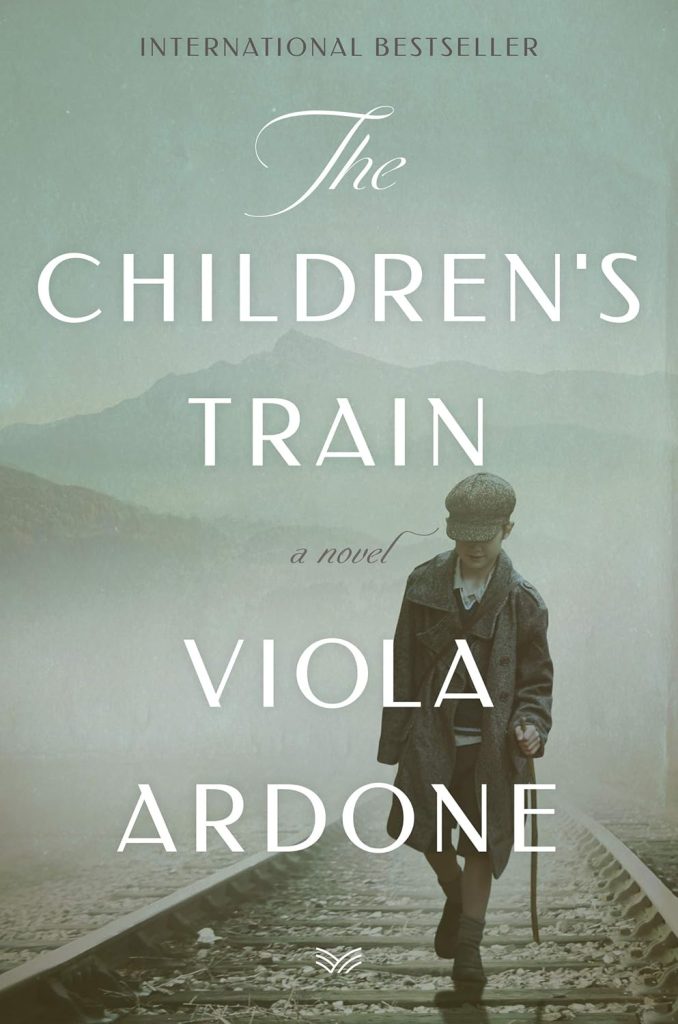
I’ve read some books from Italy before, so when it came time to pick one for the Borderless Bookshelf, I wanted something that would show me a piece of Italian history I didn’t already know. The Children’s Train by Viola Ardone offered just that: a glimpse into a post-war initiative I’d never heard of:
Between 1946 and 1952, in the years following World War II, thousands of children from southern Italy were sent by train to live temporarily with families in the north. The initiative was organized by the Italian Communist Party and humanitarian groups to help children from the poorest regions escape hunger, illness, and the devastation left by the war.
The families who took them in were often better off and living in cities that had recovered more quickly. For many of these children, it was their first time seeing running water, heating, or enough food — and for some, it became impossible to return to the life they’d left behind.
Not your thing? Try another book from Italy!
Viola Ardone’s novel fictionalizes one of these journeys, giving a voice to the children caught between two very different Italys — and between two versions of home.
“I’ve never had a pair of shoes of my own; I wear other people’s shoes and they always hurt. Mamma says I don’t walk straight but it’s not my fault; it’s other people’s shoes that are the problem. They are the shape of the other feet that wore them before me. They’ve taken on their habits, walked other streets, played other games. By the time they get to me, what do they know about the way I walk, or where I want to go?”
The book begins in Naples in 1946, where seven year old Amerigo Speranza lives with his mother in serious poverty. Amerigo is fascinated by shoes, but he has none. Food is scarce. So when his mother gets the opportunity to send him north for a better life, despite the elderly woman Pachiochia trying to scare the parents, claiming that the children will be deported to Siberia or eaten by cannibals, out of desperation she agrees.
The stay in the north starts a little rough and with some misunderstandings, but eventually there is food and a loving adopted family who treats Amerigo well. After the initial bullying, he makes friends. He goes to school and learns to play the violin.
But when he returns home the next year, is where the story finds its real emotional weight. The main conflict arises from the way Amerigo’s worldview has changed while his mother’s has stayed the same. I really don’t want to spoil too much here, but let’s just say it’s not a feel-good reunion. The children’s train captures the long shadow of that journey north. It deals with identity, family, memory, and the complicated effects of war and big politics on real people — through the eyes of a child who never asked to be uprooted in the first place.
The child sees things that the adults do not see. He lives in his own world, and often does not really understand what’s going on around him.
Amerigo’s childish voice is very endearing and often funny. Like when in a bid to earn some money, he and his friend Tommasino catch rats in the sewers, paint them brown and white, remove their tails, and sell them as “hamsters” in the local market.
Home isn’t just a place; it’s where you feel safe, where you’re loved. Sometimes, that place isn’t where you were born.
The relationship between Amerigo and his mother is complicated, and she is truly one of the saddest characters I have encountered. It’s a heartbreaking story, but still I feel like this book should have moved me much more than it actually did. Maybe the writing is just not that great, or maybe something is lost in translation, I don’t know. But I did find myself wondering whether it would ever fully pull me in, and actually seriously considered putting it aside for something else.
But at about 75% the story does a time jump to around 50 years later, with an adult Amerigo, now a famous violinist, looking back and reflecting on his childhood and his (lack of) relationship with his mother. And life throws him an opportunity to make different choices. I see a lot of reviewers hating on this change of perspective, but for me personally it was what somewhat saved this story, and made me glad I stuck with it.
But, as Italian novels go I still like Ferrante much better. I was expecting this to move me in the same way, and it just didn’t.
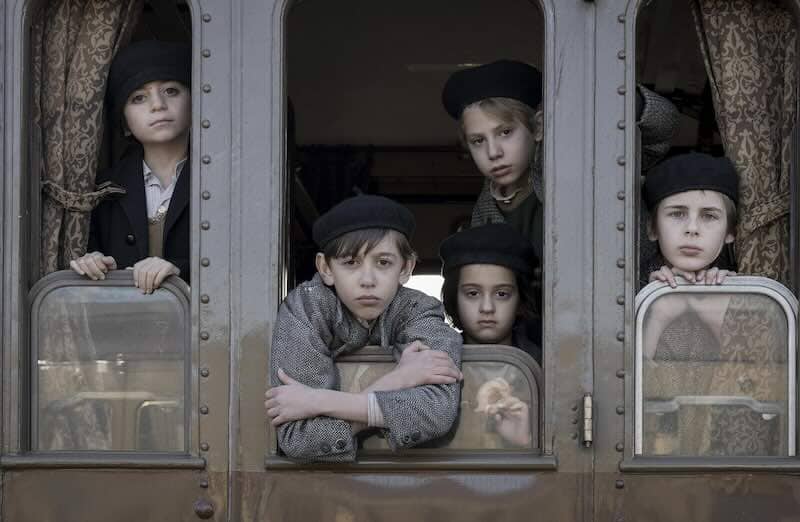
(A film adaptation of The Children’s Train was released on Netflix in 2024, the cover photo of this post is a screenshot from that film.)