There are so many things in this world that we aren’t supposed to know
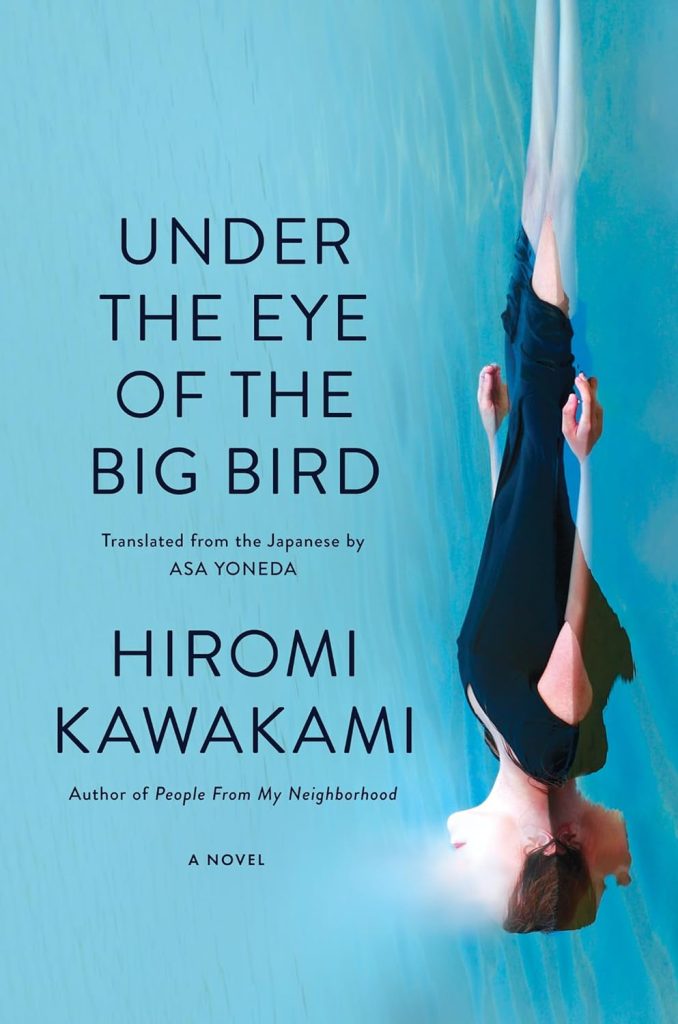
I picked up this one because it was shortlisted for the international Booker Prize, and because dystopia is basically my comfort zone at this point. If there’s a strange future and something slightly off about humanity, I’m already halfway sold.
So this sounded like it would be right up my alley.
If it’s not up yours, here are some other options for Japan!
Despite the claim to be “A Novel”, this story is told as a series of interconnected short stories, all set in a distant future where humans can’t reproduce naturally anymore. Instead, everything is sort of … managed. Watched over. Guided by mysterious “mothers” and their watchers, who keep an eye on small, isolated and very different communities.
There are recurring characters, some overlaps, some hints that everything is connected. The book seem to stretch across a huge span of time, but still tries to hold itself together as one bigger story.
And I do give Kawakami top points for creativity and variety of themes. We’re talking cloning, artificial reproduction, weird shifts in identity, blurred gender roles … It throws so many ideas at you. Sometimes several in the same chapter. Here are people who can photosynthesise. Here’s someone’s mind inhabiting a bird. Here’s a society where people are numbers instead of names. Here’s a completely different way of forming relationships. Some moments are genuinely eerie, others surprisingly soft and human, even in this very un-human world. And I was genuinely fascinated by most of these ideas.
But before you’ve really had time to sit with any of it, the story has already moved somewhere else.
I started to feel a bit untethered. Like I was being shown lots of interesting pieces, but never quite enough to make them click together.
Oh, and they like to eat me, too. Say I taste good.
Yeah, they’re always looking forward to eating, like some folk do.
Eh? Is it normal to let someone eat you?
You’re really concerned about what’s normal, aren’t you?
By the time I was well into the second half, I found myself waiting for things to come together. And some threads do become clearer over time, especially the isolation of the communities and the role of the watchers, but overall, I was still left feeling like I was circling something rather than arriving anywhere.
And then came the ending.
Without spoiling anything, the final part of the book shifts into something that feels much more direct and explanatory. Instead of continuing the quiet, fragmented storytelling, this feels like the author very explicitly sitting you down and explaining what’s been going on all along.
I felt a bit like being handed the answers after being left in the dark for too long. And not in a satisfying “aha” way, but in a slightly annoying and over-explained way. And maybe a little too easy? More “show, don’t tell” would have gone a long way.
Mothers are only mothers after all.
There is no need to speak of them as if they were people.
So for me, this just didn’t quite land.
Which is a shame, because there is so much to like. The atmosphere, the concepts, the sheer ambition and creativity of it all. It’s all there. I still found it interesting. I’m very glad I read it. But I sadly came away feeling slightly disappointed, like I’d been offered something really thought-provoking that never fully formed into something satisfying. But maybe the death of humanity as a whole is meant to feel exactly this way,
If you enjoy dystopian fiction that leans heavily into the abstract and philosophical, this might still work for you. There are plenty of juicy ideas to chew on.