We open the Baltic region with Estonia. Yet another country I know next to nothing about, except a vague idea of forests and the story of how the Danish flag dropped from the sky there in June of 1219 …
But what I found here was a regular treasure trove of stories to pick from. From medieval mysteries and mythic forests to Soviet shadows and quiet modern introspection, Estonian literature carries the weight of history with a distinctly playful imagination. These ten books trace the country’s journey through centuries of occupation and independence, but with an eye for the uncanny and the fantastical.
The imaginative nature of some of these books reminded me of my research for Finland, which is in fact not surprising, since the countries are close neighbours, with many cultural ties and similarities.
These are ten of the books that caught my eye for Estonia:
A list of books to read from Estonia
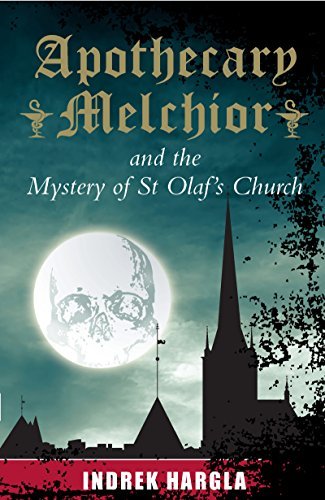
Apothecary Melchior and the mystery of St. Olaf’s Church
Author: Indrek Hargla
First published: 2010
Original title: Apteeker Melchior ja Oleviste mõistatus
Genre: Historical fiction / Mystery
The Apothecary Melchior series plunges the reader into 15th-century Tallinn when Estonia is at the edge of Christian lands and the last foothold before the East: a town of foreign merchants and engineers, dominated by the mighty castle of Toompea and the construction of St Olaf’s Church, soon to become the tallest building in the world. Apothecary Melchior is a divisive figure in the town: respected for his arcane knowledge and scientific curiosity but also slightly feared for his mystical witch-doctor aura. When a mysterious murder occurs in the castle, Melchior is called in to help find the killer and reveals a talent for detection. But Tallinn has a serial killer in its midst, and Melchior is tested to the limit in a plot with as many twists and turns as the turreted castle itself. Melchior uncovers a mystery surrounding St Olaf’s and a secret society that has been controlling the town for years, uncovering truths about the town that may spell danger.
The first in a series of books that have taken Europe by storm and are soon to be filmed, featuring a chemist-turned-sleuth who battles ignorance and superstition as well as killers in a beautiful setting and in a gripping and mysterious era of history
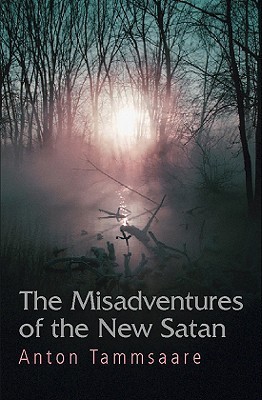
The misadventures of the new Satan
Author: Anton Tammsaare
First published: 1939
Original title: Põrgupõhja uus vanapagan
Genre: Fantasy
Satan has a problem: God has come to the conclusion that it is unfair to send souls to hell if they are fundamentally incapable of living a decent life on earth. If this is the case, then hell will be shut down, and the human race written off as an unfortunate mistake. Satan is given the chance to prove that human beings are capable of salvation – thus ensuring the survival of hell – if he agrees to live as a human being and demonstrate that it is possible to live a righteous life. St Peter suggests that life as a farmer might offer Satan the best chance of success, because of the catalogue of privations he will be forced to endure. And so Satan ends up back on earth, living as Jürka, a great bear of a man, the put-upon tenant of a run-down Estonian farm. His patience and good nature are sorely tested by the machinations of his scheming, unscrupulous landlord and the social and religious hypocrisy he encounters.
The Misadventures of the New Satan is the last novel by Estonia’s greatest twentieth-century writer, Anton Tammsaare (1878-1940). Tammsaare combines a satire on the inequalities of rural life and absurdly rigid social attitudes with biblical themes, mythology, and bawdy folklore. The novel has proved to be an enduring classic of European literature.
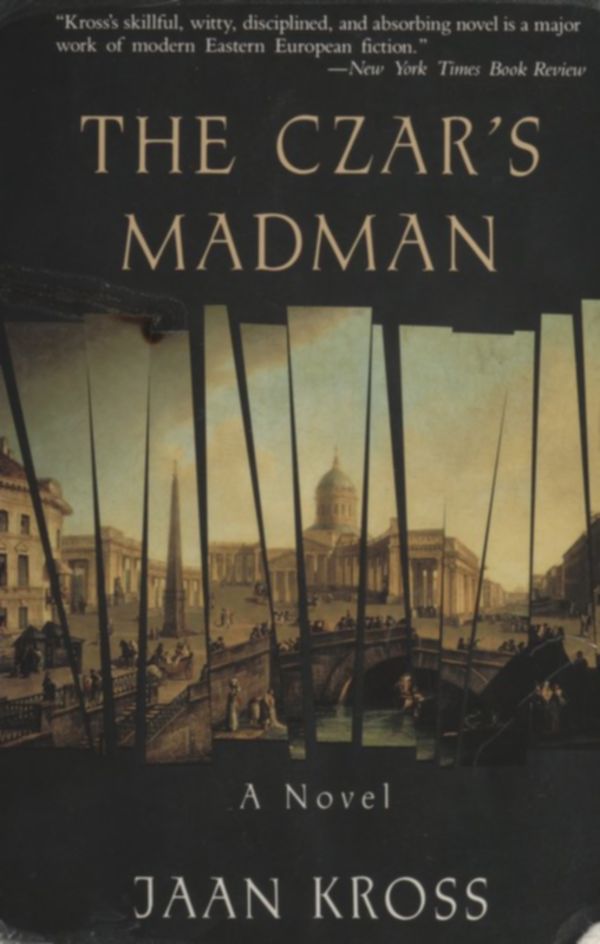
The Czars Madman
Author: Jaan Kross
First published: 1978
Original title: Keisri hull
Genre: Historical fiction / Classics
Timo von Bock’s release by the Czar from nine years’ incarceration does not spell the end of the Baron’s troubles: he is confined to his Livonian estate to live under the constant eye of police informers planted among his own household, and is subjected to endless humiliations. It is claimed that he is a madman and in need of ‘protection’: a man would need to be insane, after all, to have taken a Czar at his word when asked for a candid appraisal of the state’s infirmities.
From the year of his release from prison and return to his wife Eeva, a woman of peasant stock to whom, with her brother Jakob, he has given a solid education, the Baron’s life is recorded in a secret journal by this same Jakob, a shrewd and observant house-guest. Reconstructing the events leading up to the Baron’s incarceration in 1818 and subsequent to his release in 1827, Jakob little by little brings to light mysteries surrounding the ‘Czar’s madman’. Was his madness genuine? What was the secret understanding between him and his boon companion Czar Alexander I, who committed him to prison?
In The Czar’s Madman Jaan Kross weaves together the elements of intrigue surrounding those historical characters who survived in post-Napoleonic Russia, and by a skillful shifting of chronology and viewpoints, creates a superbly rich and moving narrative.
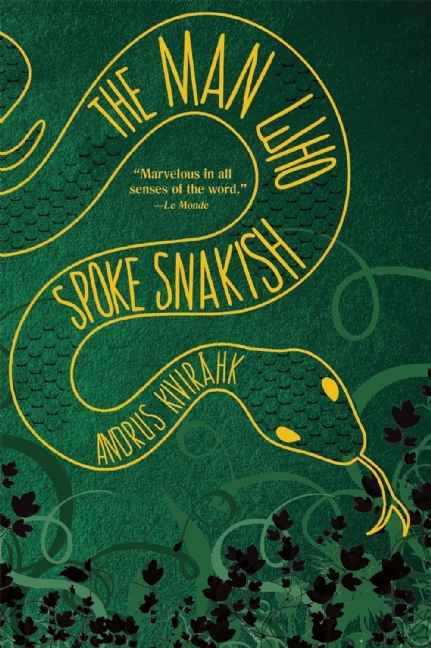
The man who spoke snakish
Author: Andrus Kivirähk
First published: 2007
Original title: Mees, kes teadis ussisõnu
Genre: Magical realism / Historical fiction / Fantasy
A bestseller in the author’s native country of Estonia, where the book is so well known that a popular board game has been created based on it, The Man Who Spoke Snakish is the imaginative and moving story of a boy who is tasked with preserving ancient traditions in the face of modernity.
Set in a fantastical version of medieval Estonia, The Man Who Spoke Snakish follows a young boy, Leemet, who lives with his hunter-gatherer family in the forest and is the last speaker of the ancient tongue of snakish, a language that allows its speakers to command all animals. But the forest is gradually emptying as more and more people leave to settle in villages, where they break their backs tilling the land to grow wheat for their “bread” (which Leemet has been told tastes horrible) and where they pray to a god very different from the spirits worshipped in the forest’s sacred grove. With lothario bears who wordlessly seduce women, a giant louse with a penchant for swimming, a legendary flying frog, and a young charismatic viper named Ints, The Man Who Spoke Snakish is a totally inventive novel for readers of David Mitchell, Sjón, and Terry Pratchett.
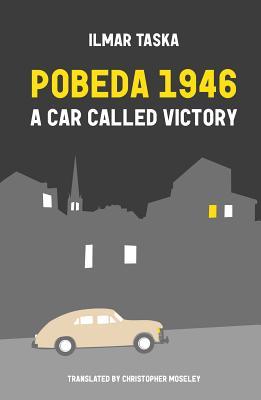
Pobeda 1946: A car called Victory
Author: Ilmar Taska
First published: 2016
Original title: Pobeda 1946
Genre: Historical fiction
In Tallinn in 1946 a young boy is transfixed by the beauty of a luxurious cream-coloured car gliding down the street. It is a Russian Pobeda, a car called Victory. The sympathetic driver invites the boy for a ride and enquires about his family. Soon the boy’s father disappears.
Ilmar Taska’s debut novel captures the distrust and fear among Estonians living under Soviet occupation after World War II. The reader is transported to a world seen through the eyes of a young boy, where it is difficult to know who is right and who is wrong, be they occupiers or occupied. Resistance fighters, exiles, informants and torturers all find themselves living in Stalin’s long shadow.
Ilmar Taska is best known in his native Estonia as a film director and producer. Pobeda 1946: A Car Called Victory is his first full novel, and is based on a prize-winning short story from 2014.
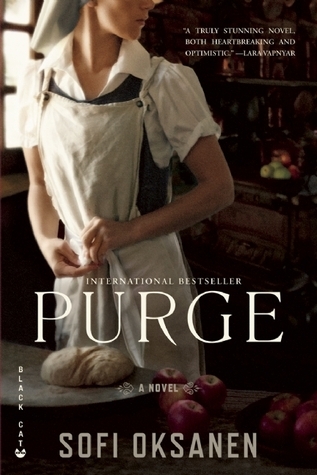
Purge
Author: Sofi Oksanen
First published: 2008
Original title: Puhdistus
Genre: Historical fiction
An international sensation, Sofi Oksanen’s award-winning novel Purge is a breathtakingly suspenseful tale of two women dogged by their own shameful pasts and the dark, unspoken history that binds them. Sofi Oksanen was born in Finland to a Finnish father and an Estonian mother, so this one breaks the rules somewhat. However it is too well known and too important to leave out!
When Aliide Truu, an older woman living alone in the Estonian countryside, finds a disheveled girl huddled in her front yard, she suppresses her misgivings and offers her shelter. Zara is a young sex-trafficking victim on the run from her captors, but a photo she carries with her soon makes it clear that her arrival at Aliide’s home is no coincidence. Survivors both, Aliide and Zara engage in a complex arithmetic of suspicion and revelation to distill each other’s motives; gradually, their stories emerge, the culmination of a tragic family drama of rivalry, lust, and loss that played out during the worst years of Estonia’s Soviet occupation.
Sofi Oksanen establishes herself as one the most important voices of her generation with this intricately woven tale, whose stakes are almost unbearably high from the first page to the last. Purge is a fiercely compelling and damning novel about the corrosive effects of shame, and of life in a time and place where to survive is to be implicated.
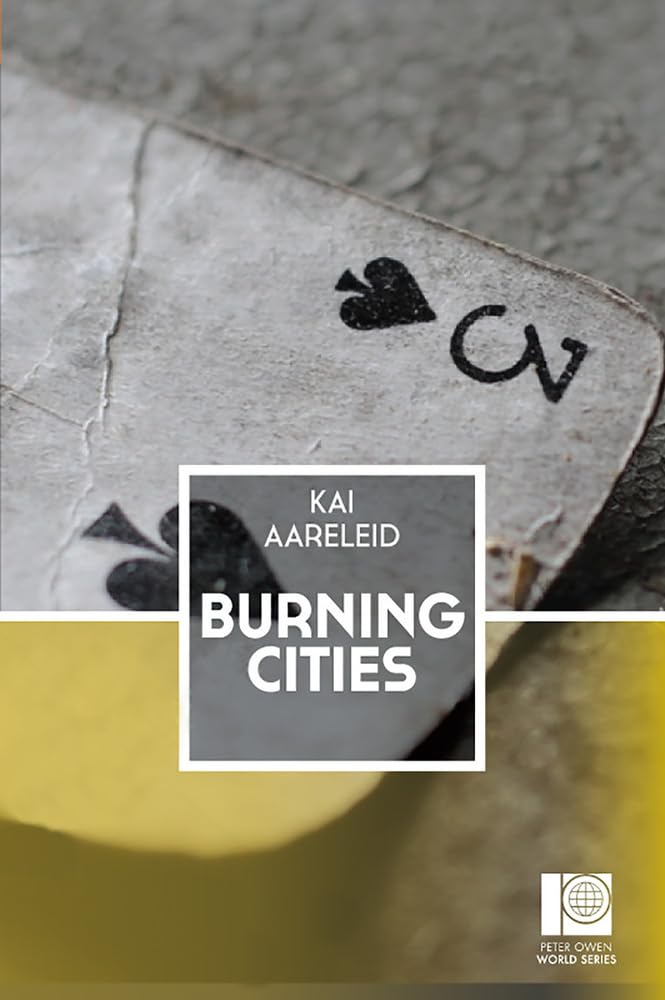
Burning Cities
Author: Kai Aareleid
First published: 2016
Original title: Linnade Poletamine
Genre: Historical fiction
Set in post-war Tartu, this understated novel captures how ordinary lives continue amid political ruins. Aareleid’s gentle storytelling glows with compassion and nostalgia, and is perfect for readers who like small moments to carry big meaning.
The city, destroyed by Nazi invasion then rebuilt and re-mapped by the Soviets, is home to many secrets, and little Tiina knows them all, even if she does not know their import. The adult world that makes up Communist society, is one of cryptic conversations, undiagnosed dread and heavy drinking. From the death of Stalin to the gradual separation of her parents, Tiina, as a young girl, experiences both domestic and great events from the periphery, and is, therefore, powerless to prevent the defining tragedy in her life – a suicide in the family.
Burning Cities’ is an intimate portrayal of life under Soviet Communism and an absorbing family drama told with poetic precision.
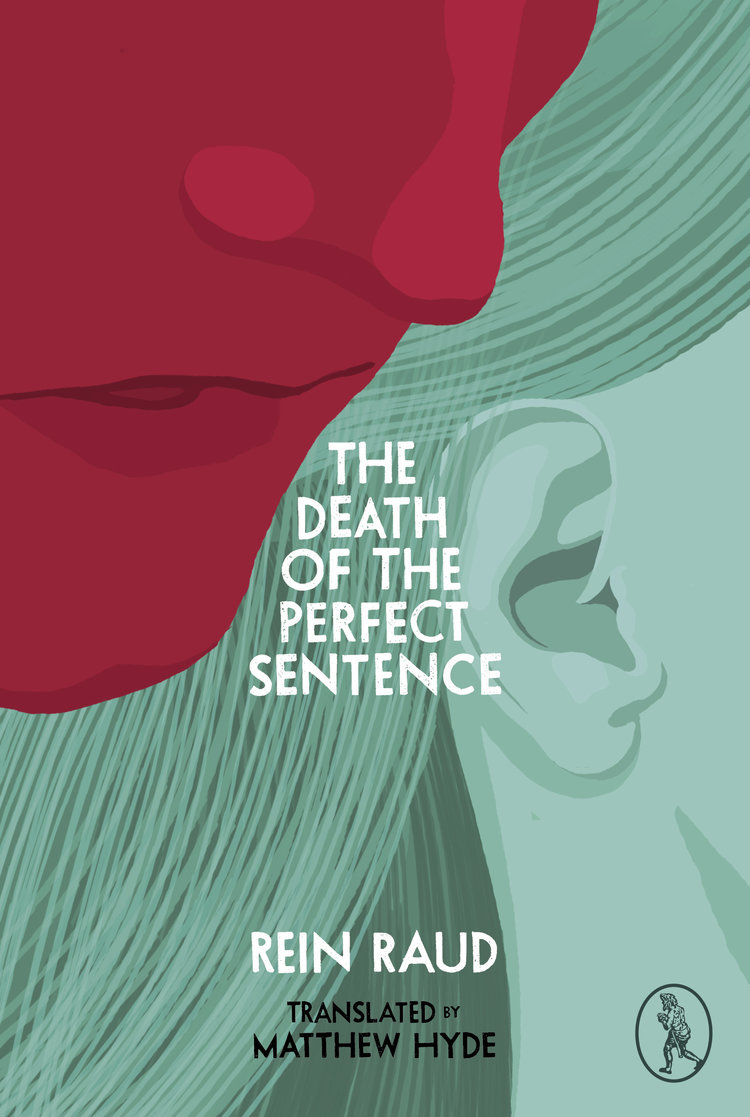
The death of the perfect sentence
Author: Rein Raud
First published: 2015
Original title: Täiusliku lause surm
Genre: Historical fiction / Spy novel
This thoughtful spy novel cum love story is set mainly in Estonia during the dying days of the Soviet Union, but also in Russia, Finland and Sweden. A group of young pro-independence dissidents devise an elaborate scheme for smuggling copies of KGB files out of the country, and their fates become entangled, through family and romantic ties, with the security services never far behind them.
Through multiple viewpoints the author evokes the curious minutiae of everyday life, offers wry observations on the period through personal experience, and asks universal questions about how interpersonal relationships are affected when caught up in momentous historical changes.
This sometimes wistful examination of how the Estonian Republic was reborn after a long and stultifying hiatus speaks also of the courage and complex chemistry of those who pushed against a regime whose then weakness could not have been known to them.
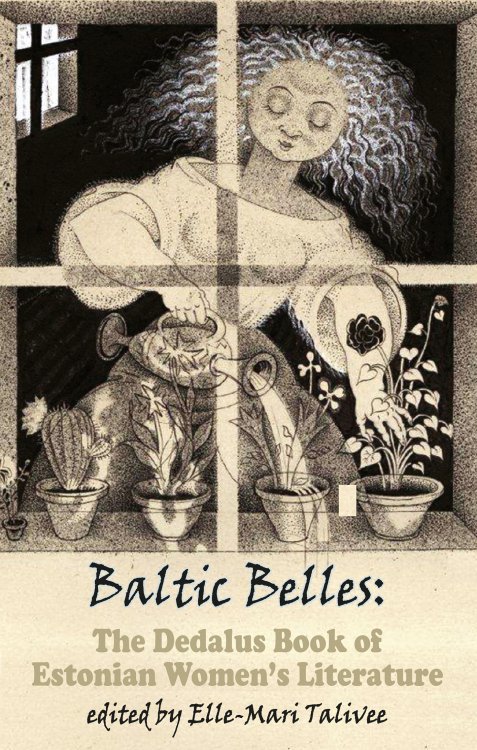
Baltic Belles: The Dedalus book of Estonian women’s literature
Author: Various authors, edited by Elle-Mari Talivee
First published: 2018
Original title: Baltic Belles
Genre: Anthology / Short stories
This rare English-language collection brings together Estonian women’s voices spanning different eras. Their stories of freedom, love, and endurance create a chorus of perspectives that balance the country’s largely male literary canon with grace and strength.
The collection opens with the early realist Elisabeth Aspe, who described both village life and urban fear during the final decades of the 19th century. Early 20th-century works by female writers often discussed the young creative individual’s encounters in the transformed urbanised world, some of the most outstanding examples of which are by the great Betti Alver. After World War II, Estonian writing bore the unmistakable signs of Soviet censorship. Nevertheless, Viivi Luik’s momentous novel The Seventh Spring of Peace managed to avoid suppression, and the wonderfully unique Asta Põldmäe seized her opportunity to write. Very strong authors such as Eeva Park, Maarja Kangro and Maimu Berg flourished with the return of freedom of expression in the late 20th century, and continue to do so today. They represent the best of Estonian short-story writing, handling social topics very sharply and suggestively, and scrutinising the country’s soul in a highly personal manner.
The Cavemen Chronicle
Author: Mihkel Mutt
First published: 2012
Original title: Kooparahvas läheb ajalukku.
Genre: Historical fiction
This novel paints a fascinating portrait of bohemian culture in Estonia in the last quarter of the twentieth century.
The “cavemen” in question are the regulars at the underground (both literally and figuratively) bar called “The Cave,” including artists, musicians, writers, and philosophers, who escape the dreary Soviet reality “above” with vodka and high-minded discussion in their secret hideaway.
The arrival of national independence upsets the balance of these dissidents’ lifestyle, and the narrator recounts how each individual adapts to their newfound freedom. “The Cavemen Chronicle” presents an illuminating and thrilling look into life on the fringes of Soviet culture, both pre- and post perestroika, and is also a meditation on what it means to be an Estonian.
Join me, and read a book from Estonia
Medieval murders, talking snakes or post-Soviet philosophers?
I began this list knowing almost nothing about Estonia, and that might actually be the best way to approach it. With curiosity and no expectations. Because the stories I found here look both stranger, sadder, and funnier than I imagined.
Somewhere between all of these, a sense of Estonia begins to take shape for me.
Did you read any of these? Stay tuned, and I’ll tell you which one I chose!