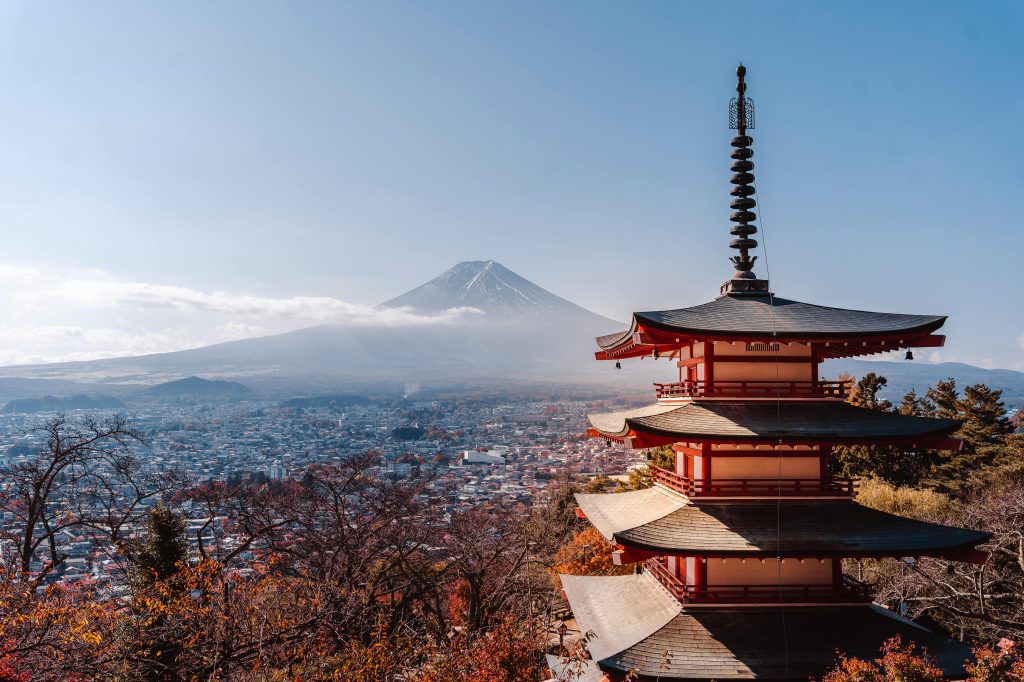
When I began researching Taiwan, I assumed I might struggle to find books in translation. Instead, I had quite the opposite problem! The longlist just kept growing. Colonial identity novels. Rural realism. Political memoirs. Feminist classics. Diaspora sagas. Environmental meditations. And a surprising wealth of queer literature.
Why is queer representation so strong in Taiwanese literature compared to many other places in the region? The answer, it turns out, may lie in Taiwan’s particular history. Fifty years of Japanese colonial rule. Then decades of martial law under the Kuomintang. And then rapid democratization in the late 1980s. As political space opened, so did literary space. Universities flourished intellectually. Independent publishing expanded. Identity: national, linguistic and sexual, became something writers could explore openly.
Taiwan’s literature is shaped by that intensity.
These ten books move through colonial fracture, rural change, authoritarian repression, feminist reckoning, queer awakening, ecological memory, and political transformation.
A list of books to read from Taiwan
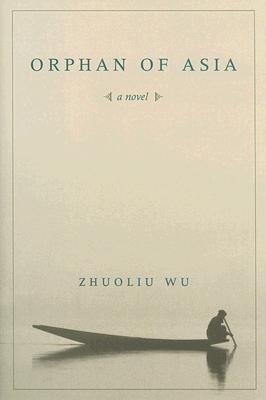
Orphan of Asia
Author: Zhuoliu Wu
First published: 1945
Original title: 亞細亞的孤兒
Genre: Historical Fiction / Autobigraphical
Set during Japanese colonial rule, this foundational novel follows a Taiwanese intellectual educated in Japanese yet alienated from both colonizer and homeland.
Orphan of Asia begins during Taiming’s childhood in Taiwan, which has been annexed to Japan only recently. Taiming eventually makes his mark in the colonial Japanese educational system and graduates from a prestigious college. However, he finds that his Japanese education and his adoption of modern ways have alienated him from his family and native village. He becomes a teacher in the Japanese colonial system but soon realizes that there is something seriously wrong with the status quo. He quits his post but finds that, having repudiated his roots, he doesn’t seem to belong anywhere.
It’s not a loud novel. It’s interior, conflicted, quietly tragic. And it captures something essential: the psychological fracture colonialism leaves behind. If you want to understand modern Taiwanese identity at its root, this could be the place to begin.
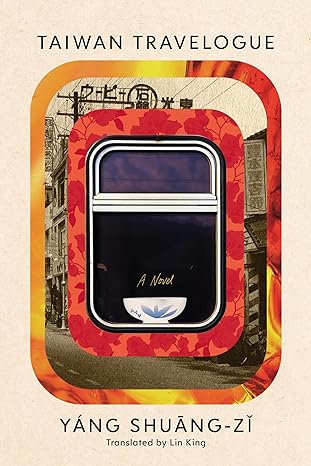
Taiwan Travelogue
Author: Yang Shuang-zi
First published: 2020
Original title: 臺灣漫遊錄
Genre: Historical Fiction
Still in the Japanese colonial period, but this time through a very different lens. A bittersweet story of love between two women, nested in an artful exploration of language, history, and power.
May 1938. The young novelist Aoyama Chizuko has sailed from her home in Nagasaki, Japan, and arrived in Taiwan. She’s been invited there by the Japanese government. A Taiwanese woman is hired as her interpreter and makes her dreams come true. The charming, erudite, meticulous Chizuru arranges Chizuko’s travels all over the Land of the South and also proves to be an exceptional cook. Over scenic train rides and braised pork rice, lively banter and winter melon tea, Chizuko grows infatuated with her companion and intent on drawing her closer. But something causes Chizuru to keep her distance. It’s only after a heartbreaking separation that Chizuko begins to grasp what the “something” is.
Disguised as a translation of a rediscovered text by a Japanese writer, this novel was a sensation on its first publication in Mandarin Chinese in 2020 and won Taiwan’s highest literary honor, the Golden Tripod Award. Also longlisted for the International Booker Prize 2026,
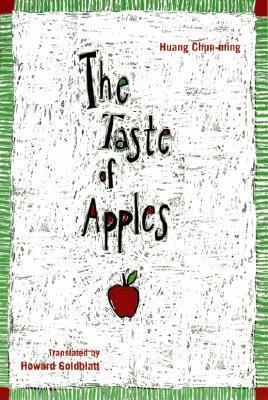
The Taste of Apples
Author: Huang Chun-Ming
First published: 2001
Original title: 苹果的滋味
Genre: Short stories
Postwar rural Taiwan. American military presence. Modernization creeping into small towns.
These short stories from the preeminent writer of Taiwanese nativist fiction focus on ordinary people navigating economic change and foreign influence. They are tender, ironic, sometimes quietly heartbreaking. Children misunderstand the adults around them. Families adjust to new hierarchies.
If we’re looking for the texture of everyday life under global pressure, this could be the one to choose.
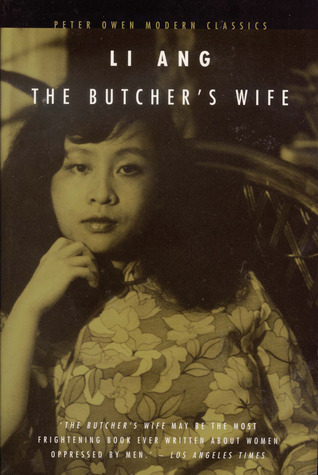
The Butcher’s Wife
Author: Li Ang
First published: 1983
Original title: 殺夫:鹿城故事
Genre: Historical Fiction / Literary Fiction / Feminism
Chen Jiangshui is a pig-butcher in a small coastal Taiwanese town. Stocky, with a paunch and deep-set beady eyes, he resembles a pig himself. His brutality towards his new young wife, Lin Shi, knows no bounds. The more she screams, the more he likes it.
She is further isolated by the vicious gossip of her neighbors who condemn her for screaming aloud. As they see it, women are supposed to be tolerant and put their husbands above everything else.
A literary sensation in the Chinese language world with its suggestion that ritual and tradition are the functions of oppression, this novel also caused widespread outrage with its unsparing portrayal of sexual violence and emotional cruelty. This tale has made a profound impact on contemporary Chinese literature and today ranks as a landmark text in both women’s studies and world literature.
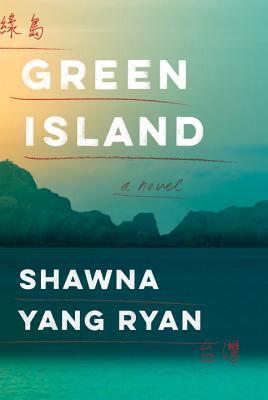
The Green Island
Author: Shawna Yang Ryan
First published: 2016
Original title: Green Island
Genre: Historical Fiction / Family Saga
Another option would be a sweeping family saga across six decades and two continents.
February 28, 1947: Trapped inside the family home amid an uprising that has rocked Taipei, Dr. Tsai delivers his youngest daughter, the unnamed narrator of Green Island, just after midnight as the city is plunged into martial law. In the following weeks, as the Chinese Nationalists act to crush the opposition, Dr. Tsai becomes one of the many thousands of people dragged away from their families and thrown into prison. His return, after more than a decade, is marked by alienation from his loved ones and paranoia among his community.
Years later, this troubled past follows his daughter to the United States, where, as a mother and a wife, she too is forced to decide between what is right and what might save her family — the same choice she witnessed her father make many years before.
The author is born in the US, to a Taiwanese mother and American father who met in Taiwan during the Vietnam War.
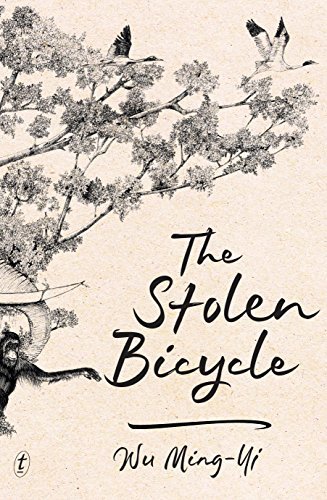
The Stolen Bicycle
Author: Wu Ming-Yi
First published: 2015
Original title: 單車失竊記
Genre: Literary Fiction / Historical Fiction
A writer embarks on an epic quest in search of his missing father’s stolen bicycle and soon finds himself caught up in the strangely intertwined stories of Lin Wang, the oldest elephant who ever lived, the soldiers who fought in the jungles of South-East Asia during the Second World War and the secret worlds of the butterfly handicraft makers and antique bicycle fanatics of Taiwan.
Sounds delightful, does it not?
Award-winning novelist Wu Ming-Yi is also an artist, designer, photographer, literary professor, butterfly scholar, environmental activist, traveller and blogger, and is widely considered the leading writer of his generation in his native Taiwan.
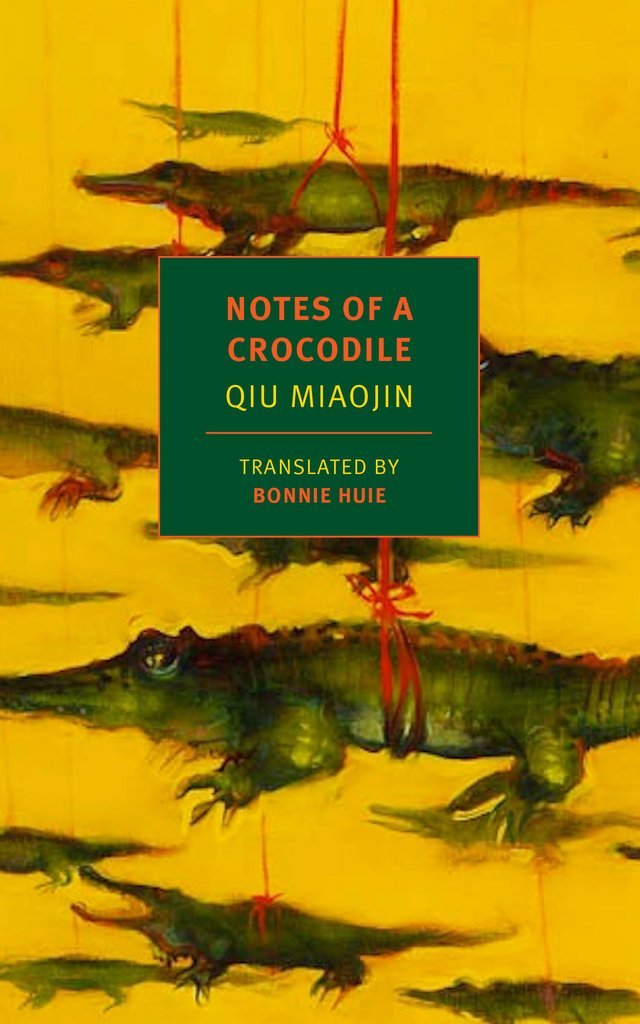
Notes of a crocodile
Author: Qiu Miaojin
First published: 1994
Original title: 鱷魚手記
Genre: Literary Fiction / LGBTQ
Set in the post-martial-law era of late 1980s Taipei, Notes of a Crocodile depicts the coming-of-age of a group of queer misfits discovering love, friendship, and artistic affinity while hardly studying at Taiwan’s most prestigious university.
Told through the eyes of an anonymous lesbian narrator nicknamed Lazi, Qiu Miaojin’s cult classic novel is a postmodern pastiche of diaries, vignettes, mash notes, aphorisms, exegesis, and satire.
Fragmented, self-aware, melancholy and sharp, it gave queer experience literary seriousness at a moment when Taiwan itself was redefining freedom. It feels inseparable from the island’s democratization.
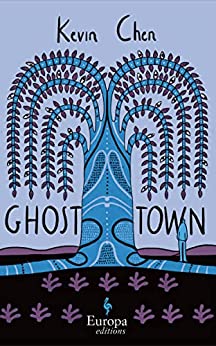
Ghost Town
Author: Kevin Chen
First published: 2019
Original title: 鬼地方
Genre: Literary fiction / Historical Fiction / LGBTQ
Chen has just been released from a Berlin prison for killing his boyfriend. He is about to return to his family’s village in Taiwan, a poor and desolate place. With his parents gone, his sisters married, mad, or dead, there is nothing left for him there. As the story unfurls, we learn what tore this family apart and, more importantly, the truth behind the murder of Chen’s boyfriend.
Told in a myriad of voices, both living and dead, and moving through time with deceptive ease, Ghost Town weaves a mesmerizing web of family secrets and countryside superstitions, the search for identity and clash of cultures.
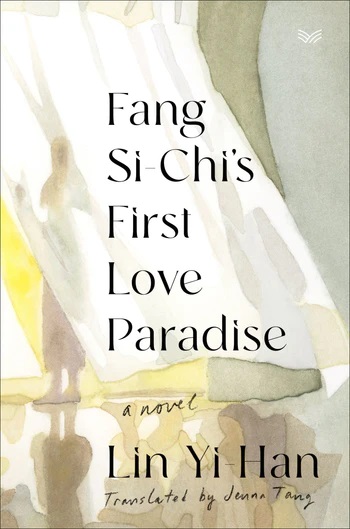
Fang Si-Chi’s First Love Paradise
Author: Lin Yi Han
First published: 2017
Original title: 房思琪的初戀樂園
Genre: Contemporary / Feminism
The most influential book of Taiwan’s #MeToo movement. A heartbreaking account of sexual violence and a remarkable reinvention of the trauma plot, turning the traditional Lolita narrative upside down as it explores women’s vulnerability, victimization, and the lengths they will go to survive.
Thirteen-year-old Fang Si-Chi lives with her family in an upscale apartment complex in Taiwan, a tightknit community of strict yet doting parents and privileged children raised to be ambitious, dutiful, and virtuous. Si-Chi’s innocence is irresistible to Lee Guo-hua, a revered cram literature teacher and serial predator who lives in her building. From him Si-Chi learns about things no one teaches them in school. Lessons about sex and love that will change the course of her life. Confused and uncertain, Si-Chi turns to her beloved books for guidance. But literature tells her nothing honest about rape or how to cope with the trauma of abuse.
A chilling tale of grooming and its lingering trauma, and the power structures that allow it to flourish.
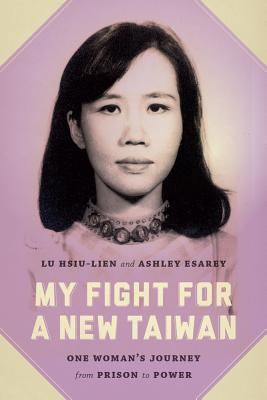
My Fight for a New Taiwan: One Woman’s Journey from Prison to Power
Author: Lu Hsiu-Lien
First published: 2014
Original title: My Fight for a New Taiwan
Genre: Nonfiction / Memoir
Lu Hsiu-lien’s journey is the story of Taiwan. Through her successive drives for gender equality, human rights, political reform, Taiwan independence, and, currently, environmental protection, Lu has played a key role in Taiwan’s evolution from dictatorship to democracy. The election in 2000 of Democratic Progressive Party leader Chen Shui-bian to the presidency, with Lu as his vice president, ended more than fifty years of rule by the Kuomintang (Nationalist Party).
Taiwan’s painful struggle for democratization is dramatized here in the life of Lu, a feminist leader and pro-democracy advocate who was imprisoned for more than five years in the 1980s. Unlike such famous Asian women politicians as Burma’s Aung San Suu Kyi, India’s Indira Gandhi, and Pakistan’s Benazir Bhutto, Lu Hsiu-lien grew up in a family without political connections. Her impoverished parents twice attempted to give her away for adoption, and as an adult she survived cancer and imprisonment, later achieving success as an elected politician―the first self-made woman to serve with such prominence in Asia.
My Fight for a New Taiwan’s rich narrative gives readers an insider’s perspective on Taiwan’s unique blend of Chinese and indigenous culture and recent social transformation.
Join me, and read a book from Taiwan
Wow. Narrowing this list down to ten was so unexpectedly difficult!
Books like Daughters of Shandong, My Enemy’s Cherry Tree, Membranes, Taiwan in 100 Books and Bamboo shoots after the rain are still sitting on my longlist, looking at me reproachfully for not including them.
This doesn’t feel like a finished exploration. It feels like the beginning of a side quest.
If you were choosing your first book from Taiwan, where would you start?