Life is like that; all things come to an end
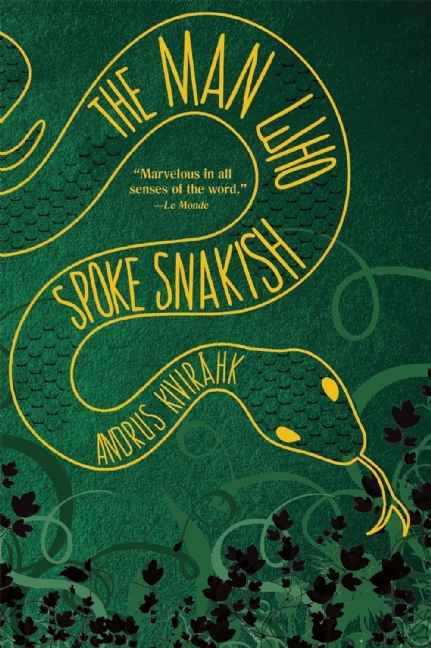
I’ll start this one with a warning. If you’re put off by graphic violence, extremely provocative thoughts on religion, or women who marry actual bears, this book probably isn’t for you. And if you have a fear of snakes, put the book down and back away slowly!
But if you’re adventurous enough and willing to wander into the wildest, weirdest corners of Estonian imagination, The Man Who Spoke Snakish is quite the experience.
Adders never interfered in other beings’ affairs, as long as it didn’t affect them directly. In their view, everyone has the right to live their lives just as foolishly as they like.
The story is set in a mythic, half-remembered Estonia where forest-dwelling pagans live side by side with the newly Christianised villagers. Leemet, the narrator, is a young boy belonging to the old world, He is the last of his kind to speak Snakish, the language taught by snakes that lets humans command animals, milk wolves, and move through the forest unseen.
But times are changing, and Leemet watches as his people slowly give up their ancient ways, abandon the forest and move to the village for bread, ploughed fields and singing monks.
The result is a tale that is a mix of delightfully fantastical and deeply, deeply, sad. There are moments of pure wonder, giant lice you can ride, talking snakes with a dry sense of humour … and other moments that genuinely disturbed me, and made me wince in disgust and horror, and put the book down to breathe.
Sounds like too much? Maybe try another book from Estonia.
And beneath all the absurdity runs a devastatingly dark current of loss and grief: the disappearance of language, tradition, and a way of life that once gave meaning to the world. Kivirähk uses his dark, absurd humor to explore something painfully real: what happens when a culture loses its connection to its roots.
It is magical and fantastical, but very much not a gentle fairy tale. It’s an extremely violent book! Blood is spilled, bodies are mangled, and there’s a shocking amount of death, especially in the last part of the book. It was honestly teetering right on the edge of what I could personally stomach. But undoubtably this brutality fits the story Kivirähk wants to tell. He pinpoints the ugliness of human nature, whether in the forest or in the village, and his satire cuts sharply through both.
One person believes in sprites and visits the sacred grove, and another believes in Jesus and goes to the church. It’s just a matter of fashion. There’s no use in getting involved with just one god; they’re more like brooches or pearls, just for decoration. For hanging around your neck, or for playing with.
Religion, in particular, takes quite a beating. His portrayal of the Christian missionaries and the fanatical converts is sharply ironic, but so is his portrayal of the religion that worships the forest sprites, suggesting that blind faith, old or new, can be equally destructive. It’s irreverent, and would most definitely be deemed offensive by some, but I found it interesting and thought-provoking.
It’s not always clear where the story is heading, but I didn’t mind. The wandering rhythm felt right for a tale that’s half myth, half elegy. It’s the kind of book that sinks its teeth into you. Grotesque, funny, sad, and strangely beautiful in its own unique way. A book that invites you to laugh, recoil, and reflect.
If you like your stories weird, wild, and disturbing, step into the Estonian forest. You won’t come out unchanged.
But do watch out for the run-away wolves!