I can’t say that Belarus is a place I know much about, but I could in fact have named one author before I started this list: Svetlana Alexievich, who was awarded the Nobel prize for literature in 2015. I’ve had her on my TBR for a long time, so of course she is on top of this list, and I could have gone with any one of her books.
But as I started looking for possibilities, though, Belarus opened up in the most unexpected ways.
The list ended up containing gothic mysteries wrapped in marshland fog, modern dystopia, political texts banned at home or smuggled out of prison, and even 19th-century fantastical tales that promise just the right amount of strangeness. The range is surprisingly wide for a country that rarely appears in bookshop windows. I never imagined that I’d be spoilt for choice in Belarussian literature, but I’m honestly delighted by how much there is to explore here, and it will be harder to choose than I imagined.
A list of books to read from Belarus
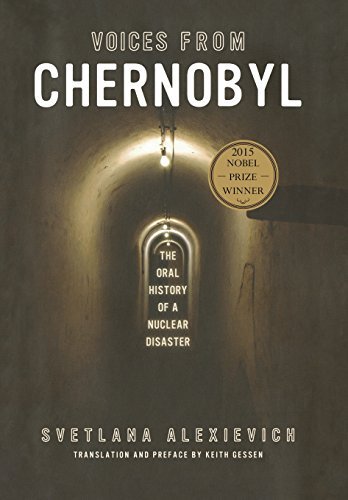
Voices from Chernobyl
Author: Svetlana Alexievich
First published: 1997
Original title: Чернобыльская молитва
Genre: Nonfiction
Chernobyl, the acclaimed HBO miniseries (winner of ten Emmy Awards and two Golden Globe Awards), is based in large part on the personal recollections from this book, containing personal accounts of what happened to the people of Belarus after the nuclear reactor accident in 1986, and the fear, anger, and uncertainty that they still live with.
Voices from Chernobyl is the first book to present personal accounts of the tragedy. Journalist Svetlana Alexievich interviewed hundreds of people affected by the meltdown – from innocent citizens to firefighters to those called in to clean up the disaster – and their stories reveal the fear, anger, and uncertainty with which they still live. Comprised of interviews in monologue form, Voices from Chernobyl is a crucially important work, unforgettable in its emotional power and honesty.
Svetlana Alexievitch was awarded the Nobel Prize in Literature in 2015, for “her polyphonic writings, a monument to suffering and courage in our time.”
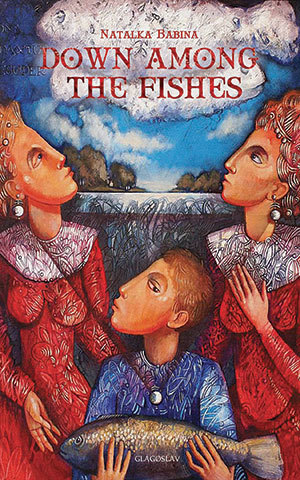
Down among the fishes
Author: Natalka Babina
First published: 2007
Original title: Рыбін горад
Genre: Mystery / Magical realism
Two twin sisters, natives of Dobratyche, a small Belarusian village on the Buh river close to the border with Poland, set out to examine the events that led to granny Makrynya’s unexpected death. Their trek quickly turns into a murder investigation. As the twins uncover new facts of the crime, more questions need to be answered. But will they? A rural intrigue continues to hold the villagers firm in its grasp until the very resolution.
Babina’s surprisingly fresh portrait of today’s Belarus celebrates the country’s diverse demographics be it business, education, culture or just the way people go about their daily errands. Quiet and shy, Belarus turns out to be the land of grandeur, vastness of spirit and passionate hearts and minds.
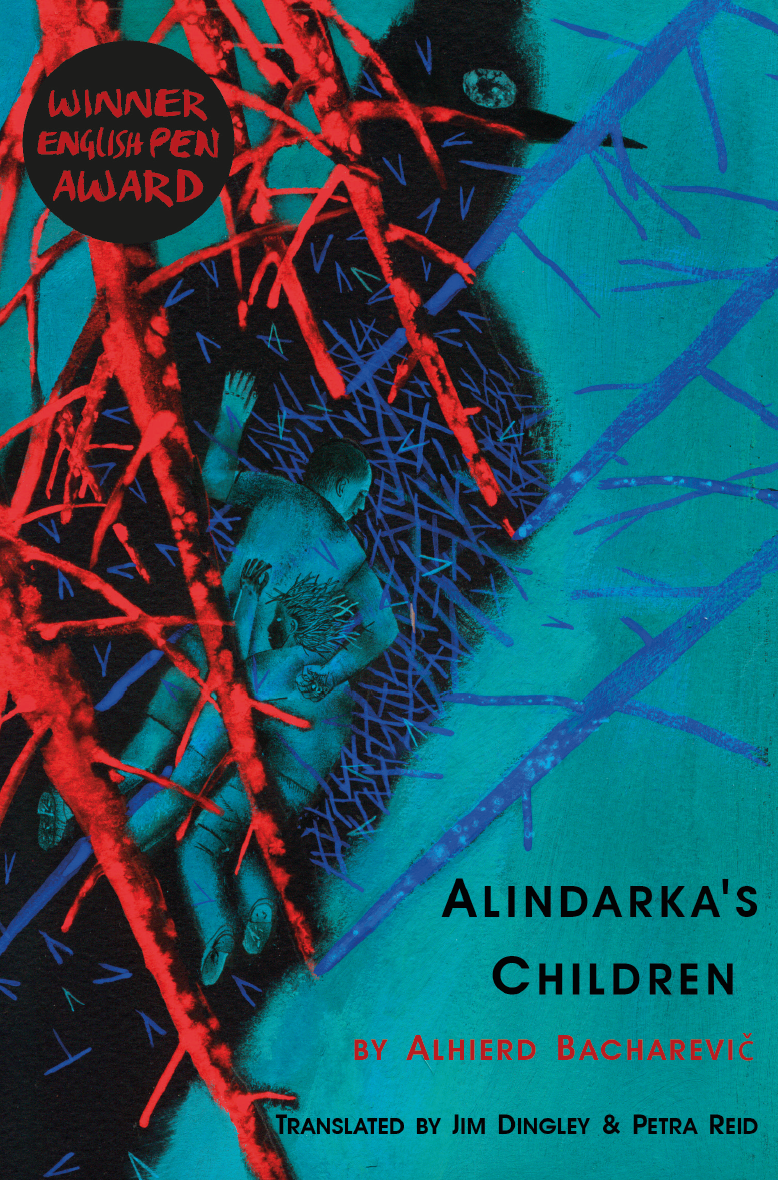
Alindarka’s children
Author: Alhierd Bacharevič
First published: 2014
Original title: Dzieci Alindarkiis
Genre: Dystopia
Alindarka’s Children is a contemporary dystopian novel about a brother and a sister interned in a camp. Here children are taught to forget their own language and speak the language of the colonizer, aided by the use of drugs as well as surgery on the larynx to cure the ‘illness’ of using the Belarusian language.
The children escape but are pursued by the camp leaders and left to thrive for themselves in this adventure, which bears a likeness to an adult, literary ‘Hansel and Gretel’.
In the English translation, the Russian is translated as standard Bristish and Belarussian as Scots.
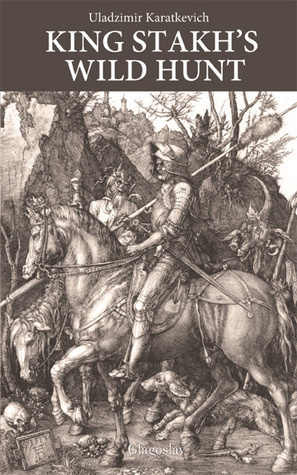
King Stakh’s wild hunt
Author: Uladzimir Karatkievič
First published: 1964
Original title: Дзікае паляванне караля Стаха
Genre: Classics / Historical Fiction / Gothic
King Stakh’s Wild Hunt tells the tale of Andrey Belaretsky, a young folklorist who finds himself stranded by a storm in the castle of Marsh Firs, the seat of the fading aristocratic Yanovsky family. Offered refuge by Nadzeya, the last in the Yanovskys’ line, he learns of the family curse and terrible apparitions that portend her early death and trap her in permanent, maddening fear.
As Belaretsky begins to unravel the secrets of the Yanovskys, he himself becomes quarry of the Wild Hunt, silent phantoms who stalk the marshes on horseback and deliver death to all who cross their path. He must uncover the truth behind the ghostly hunt to release Nadzeya from her fate and undo the curse that hangs over the marshes.
A jewel of Belarusian classic literature, King Stakh’s Wild Hunt is one of Karatkevich’s most critically acclaimed works that also inspired a 1979 film adaptation. Based on an ancient European legend, this suspense masterpiece taps into the imagery of the country’s rich cultural heritage to offer both a haunting piece of gothic intrigue as well as a profound meditation on the destiny of the Belarusian people.
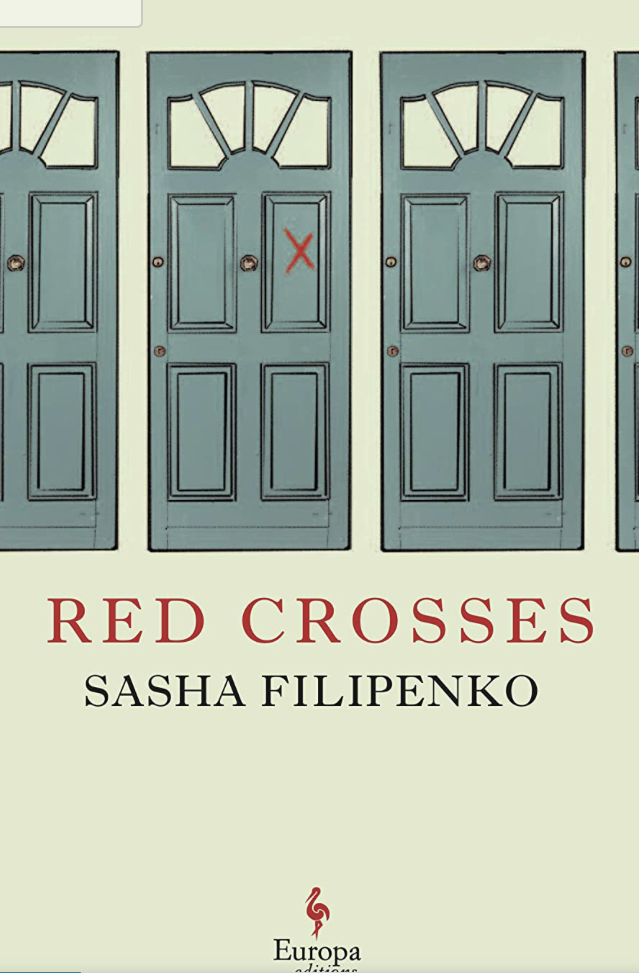
Red Crosses
Author: Sasha Filipenko
First published: 2017
Original title: Красный крест
Genre: Historical Fiction / Contemporary
One struggles not to forget, while the other would like nothing better. Tatiana Alexeyevna is an old woman, over ninety, rich in lived experience, and suffering from Alzheimer’s. Every day, she loses a few more of her irreplaceable memories. Alexander is a young man whose life has been brutally torn in two. Tatiana tells her young neighbor her life story, a story that encompasses the entire Russian 20th century with all its horrors and hard-won humanity. Little by little, the old woman and the young man forge an unlikely friendship and make a pact against forgetting.
Sasha Filipenko traces the arc of Russian history from Stalin’s terror to the present day, in a novel full of heart and humanity.
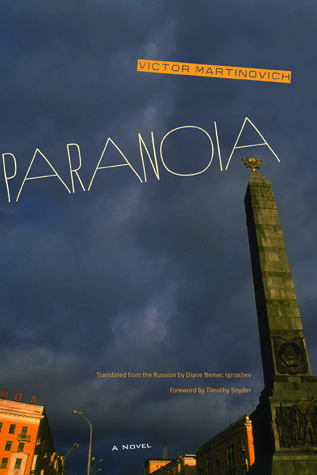
Paranoia
Author: Victor Martinovich
First published: 2009
Original title: Paranoia
Genre: Literary Fiction
Immediately banned after it was published, Paranoia is a novel about how dictatorships survive by burrowing into the minds of those they rule, sowing distrust and blurring the boundaries between the state’s and the individual’s autonomy. Although Minsk and Belarus are never mentioned, they are clearly the author’s inspiration for the novel’s setting. The plot focuses on a doomed romance between a young man whose former lover has disappeared and a young woman whose other lover is the minister of state security.
Paranoia evokes classic dissident literature while artfully depicting the post-Soviet, globalized world.
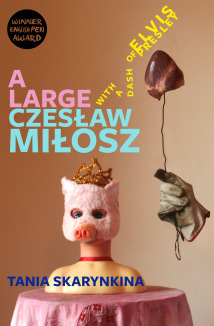
A Large Czesław Miłosz with a dash of Elvis Presley
Author: Tania Skarynkina
First published: 2015
Original title: Шмат Чэслава Мілаша, крыху Элвіса Прэслі
Genre: Contemporary / Literary essays
Tania Skarynkina’s stories mix life in a small Belarusian town with thoughts on world literature. Sitting by her window with a glass of cranberries in sugar syrup bought from a woman in the market who assured her they came from Karelia, she muses “Perhaps they have some kind of effect when you eat them. Spiritual maybe? So I eat and wait for the cranberries to work their magic on me.” Skarynkina is impelled to spend the last of her money on a trip to Krakow to meet Czesław Miłosz but never finds his address, so he remains to her an idol like Elvis Presley dressed in gold lame. Each story has a charm and imaginative flight of its own.
Tania Skarynkina, poet and essayist, was born in 1969 in Smarhon, Belarus. This book includes recollections of her childhood in Smarhon interwoven with thoughts on poets, philosophers and world literature as a whole.
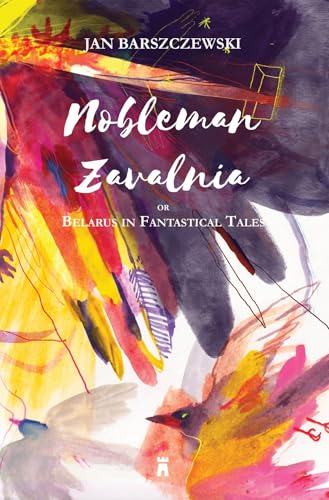
Nobleman Zavalnia or Belarus in Fantastical Tales
Author: Jan Barszczewski
First published: 1846
Original title:
Genre: Folklore / Folk horror / Political Allegory
First published in 1846, Nobleman Zavalnia or Belarus in Fantastical Tales is one of the earliest works of Belarusian literature. At Zavalnia’s hearth, peasants, nobles, and wanderers spin stories of witches, restless souls, enchanted forests, and haunted battlefields. Their tales reflect a society still bound by serfdom, set against the strange year of 1817, known as the “year without a summer.”
Written four decades after the Russian Empire’s annexation of much of the Grand Duchy of Lithuania, where Belarusian lands lay, Barszczewski’s collection blends folklore, folk horror, and political allegory. Behind its supernatural figures and uncanny landscapes lie the encrypted memories of a people struggling to preserve their identity. With its mix of oral tradition, Gothic imagination, and historical witness, the book has been called “European voodoo”.
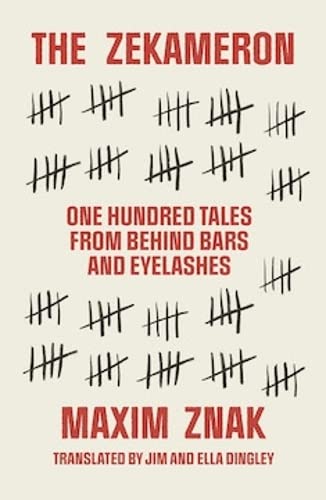
The Zekameron: One hundred tales from between bars and eyelashes
Author: Maxim Znak
First published: 2022
Original title: The zekameron
Genre: Nonfiction / Short Stories
100 stories written from prison in Belarus with ‘echoes of early Chekhov, Zoshchenko and Samuel Beckett’. Despite its bleak context, this is a fundamentally optimistic book, engaging comically, yet honestly, with what it means to be human.
International lawyer Maxim Znak was arrested in autumn 2020 and sentenced to ten years in prison in 2021. He is in prison in Belarus and is recognised by Amnesty as a prisoner of conscience. Znak wrote these stories from within prison, and they later found their way outside the prison walls. The publisher – Edinburgh’s Scotland Street Press – were at first reluctant to publish the collection in case it made Znak’s situation worse. But Znak’s wife and sister urged them to publish.
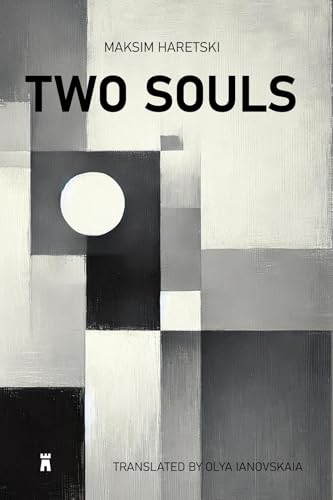
Two souls
Author: Maksim Haretski
First published: 1919
Original title: Дзве душы
Genre: Existensialism
As Belarus grapples with the aftershocks of the Socialist Revolution, Ignat Abdziralovich, an officer, finds himself at the heart of personal and societal turmoil. While Ignat searches for love, he uncovers an unexpected family secret that pushes him to rethink who he is, confront the stark realities of class antagonism and pick a side.
Two Souls delves into Ignat’s philosophical introspections, offering a profound commentary on the human search for identity amid the conflict between personal ambitions and collective duties. Through Ignat’s eyes, readers experience the complexities and contradictions of a society on the brink of significant change.
Two Souls is a work of deep exploration created by Belarus’ first existentialist writer. Maksim Haretski’s masterful storytelling weaves a tale rich in historical and philosophical depth, vividly capturing the atmosphere of the early twentieth century and communicating the tension and uncertainty that pervaded Belarus during this transformative era.
Join me, and read a book from Belarus
This list only scratches the surface, but I hope it gives you a sense of the many different doors Belarusian literature can open, from ghostly legends to political realities and everything in between. If you’ve come across any other Belarusian titles in translation, I’d love to hear about them!
Which one would you pick? Let me know!