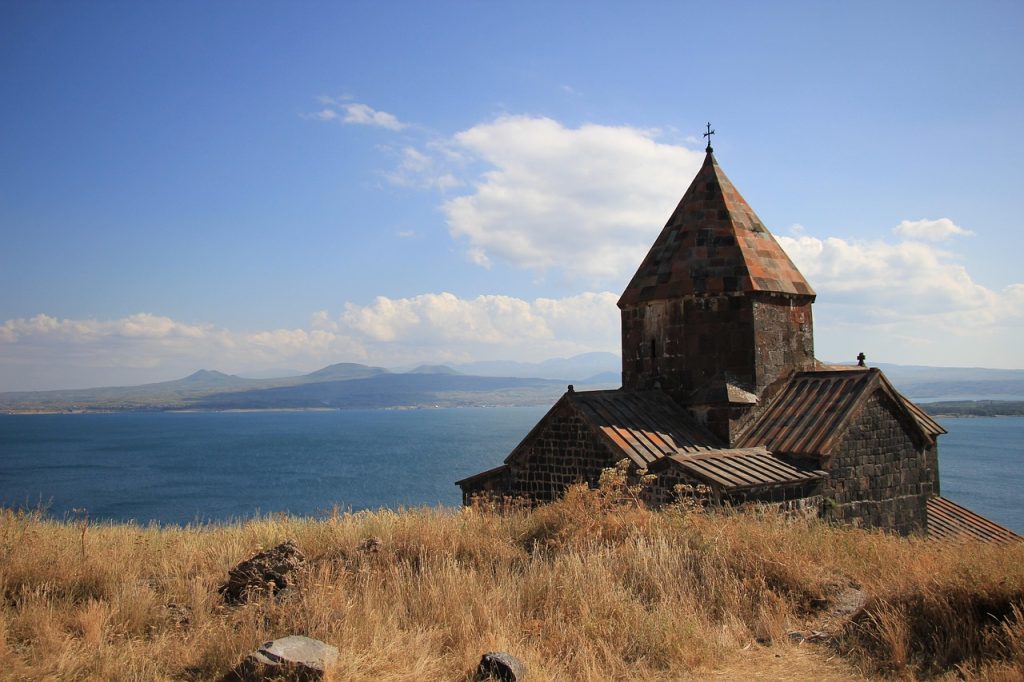
Before starting this project, Armenia was mostly an abstract place to me. A vague idea of mountains and conflict was all the name invoked in me, and just like Georgia, I could not confidently have placed it on the map.
Looking for books from Armenia quickly leads you into difficult territory. The genocide of 1915 understandably casts a long shadow. It would be impossible, and wrong, to ignore it! But at the same time, that focus has shaped what tends to be translated. And very much of what is marketed as Armenian literature stems from the diaspora, written by descendants of Armenian refugees coming to terms with their history. These books are often set in Turkey or Syria, rather than in Armenia itself. This is my attempt to make a list of 10 interesting Armenian books within that reality.
My list begins with context and orientation, moves through history and its aftershocks, and ends with contemporary voices that complicate and expand the picture. It is by no means the complete picture, but it is a place to begin.
A list of books to read from Armenia
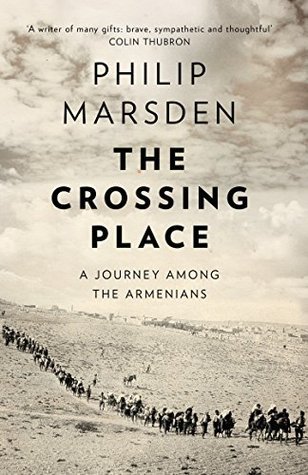
The crossing place. A Journey among the Armenians
Author: Philip Marsden
First published: 1993
Original title: The crossing place
Genre: Nonfiction / Travelogue / History
I think this is the first time I start one of my booklists with nonfiction written by an outsider. But for context and orientation, I feel this could be the one to read.
After centuries of prominence as a world power, Armenia has withstood every attempt during the 20th century to destroy it. The Armenians founded a civilization and underwent a diaspora that brought many of the great ideas of the East to Western Europe. Today, shrunk to a tenth of its former size and wracked by war with Azerbaijan and by earthquakes, its people still retain one of the world’s most fascinating and misunderstood cultures. This book is a passionate and dramatic portrait of this country – the people and their massive exodus.
Travelling from Venice to Istanbul, passing through Eastern Europe, Beirut and Syria, and crossing the Black Sea to the Caucasus and into Armenia, the author takes us on a journey through time and history as we come to know this closed society.
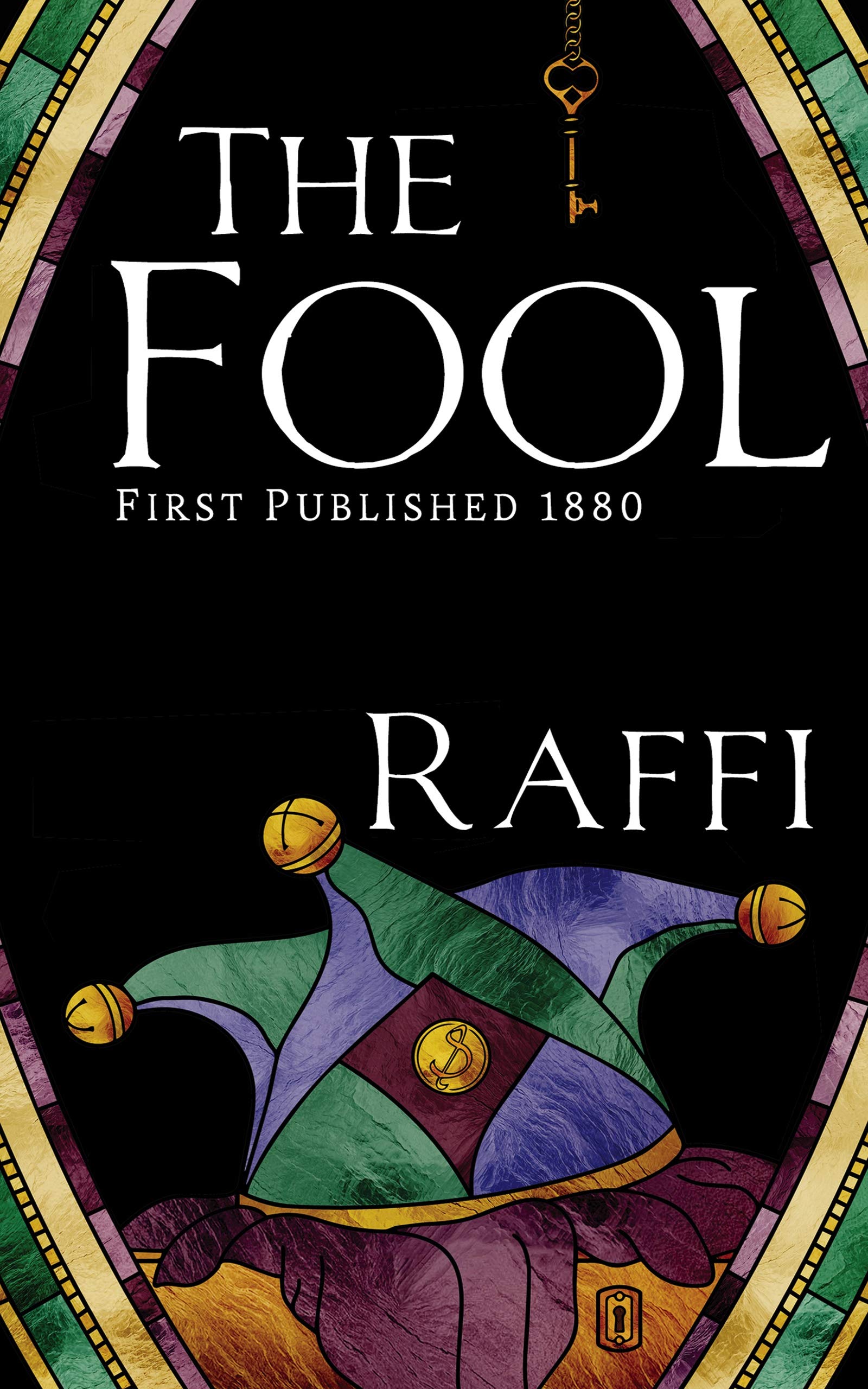
The fool
Author: Raffi
First published: 1880
Original title: Խենթը (Jalaleddin)
Genre: Classics
The year is 1877 and the Ottoman Empire is embroiled in war. A young man escapes a crumbling fortress during a military siege. Disguising himself as a jester, he entertains the enemy camp before disappearing into the night. He sets out on a passionate and daring mission that involves a wealthy family, secret contrabandists, corrupt government officials, self-absorbed clerics, and a young propagandist from Constantinople. All are in pursuit of their own secret motives, while their nation lies on the brink of doom …
Written decades before the genocide, this classic novel is often considered a cornerstone of Armenian literature. It serves as a reminder that Armenian literary traditions did not begin with catastrophe, even if that is where many readers first encounter them.
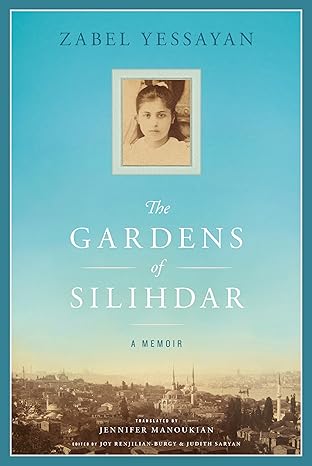
The Gardens of Silihdar
Author: Zabel Yessayan
First published: 1935
Original title: Սիլիհտարի պարտեզները
Genre: Memoir
Zabel Yesayan was one of the greatest Armenian feminist writers of the late 19th century Ottoman era. Her works reached out to large masses of readers, appealing to both Western and Eastern Armenian societies. She championed social justice and women’s rights. Even as a young woman, she fought against the injustices she saw at school, refused to accept the restrictions placed on girls in her community, and demonstrated a fierce determination to succeed in the literary world at a time when few women were allowed entry.
Her 1935 memoir, “The Gardens of Silihdar” is a moving narrative of her childhood and a vivid account of Armenian community life in Constantinople (Istanbul) at the end of the nineteenth century.
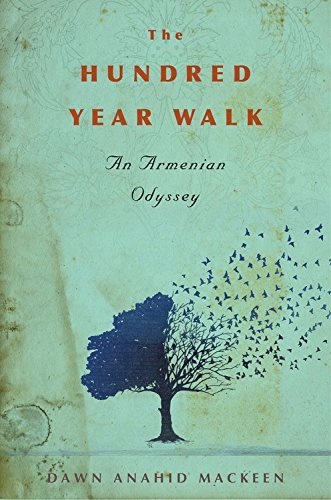
The Hundred Year Walk: An Armenian Odyssey
Author: Dawn Anahid MacKeen
First published: 2016
Original title: The Hundred-Year Walk
Genre: Nonfiction / Biography / Memoir
A tale of one man’s courage in the face of genocide and his granddaughter’s quest to tell his story
In the heart of the Ottoman Empire as World War I rages, Stepan Miskjian’s is separated from his family as they are swept up in the government’s mass deportation of Armenians. Just before killing squads slaughter his caravan during a forced desert march, Stepan manages to escape, in a desperate bid for survival, Stepan dons disguises, outmaneuvers gendarmes, and, when he least expects it, encounters the miraculous kindness of strangers.
A century later, his family discovers his long-lost journals, and his granddaughter Dawn MacKeen finds herself first drawn into the colorful bazaars before the war and then into the horrors Stepan later endured. Inspired to retrace his steps, she sets out alone to Turkey and Syria, shadowing her resourceful, resilient grandfather across a landscape still rife with tension. With his journals guiding her, she grows ever closer to the man she barely knew as a child.
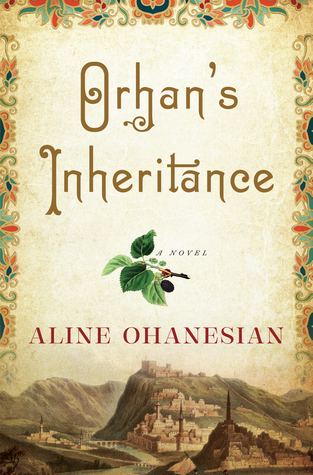
Orhan’s Inheritance
Author: Aline Ohanesian
First published: 2015
Original title: Orhan’s Inheritance
Genre: Historical fiction / Mystery
When Orhan’s brilliant and eccentric grandfather Kemal, a man who built a dynasty out of making kilim rugs, is found dead, submerged in a vat of dye, Orhan inherits the decades-old business. But Kemal’s will raises more questions than it answers. He has left the family estate to a stranger thousands of miles away, an aging woman in an Armenian retirement home in Los Angeles. Her existence and secrecy about her past only deepen the mystery of why Orhan’s grandfather willed his home in Turkey to an unknown woman rather than to his own son or grandson.
Left with only Kemal’s ancient sketchbook and intent on righting this injustice, Orhan boards a plane to Los Angeles. There he will not only unearth the story that eighty-seven-year-old Seda so closely guards but discover that Seda’s past now threatens to unravel his future. Her story, if told, has the power to undo the legacy upon which his family has been built.
Moving back and forth in time, between the last years of the Ottoman Empire and the 1990s, Orhan’s Inheritance is a story of passionate love, unspeakable horrors, incredible resilience, and the hidden stories that can haunt a family for generations. Aline Ohanesian draws from her family’s own dark history to create a tender, powerful story of love and reclamation
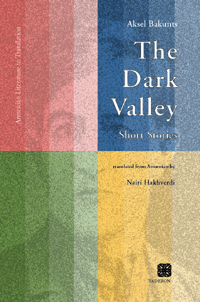
The dark valley
Author: Axel Bakunts
First published: 1927
Original title: Մթնաձոր
Genre: Short story collection
This book is made up of 18 short stories depicting provincial life in the early years of Soviet Armenia
Aksel Bakunts was one of the rising stars of Soviet Armenian literature. He fell victim to the Stalinist terror and was accused of various crimes including alienation from socialist society. He was arrested in 1936 and is believed to have been shot after a twenty-five minute trial in 1937.
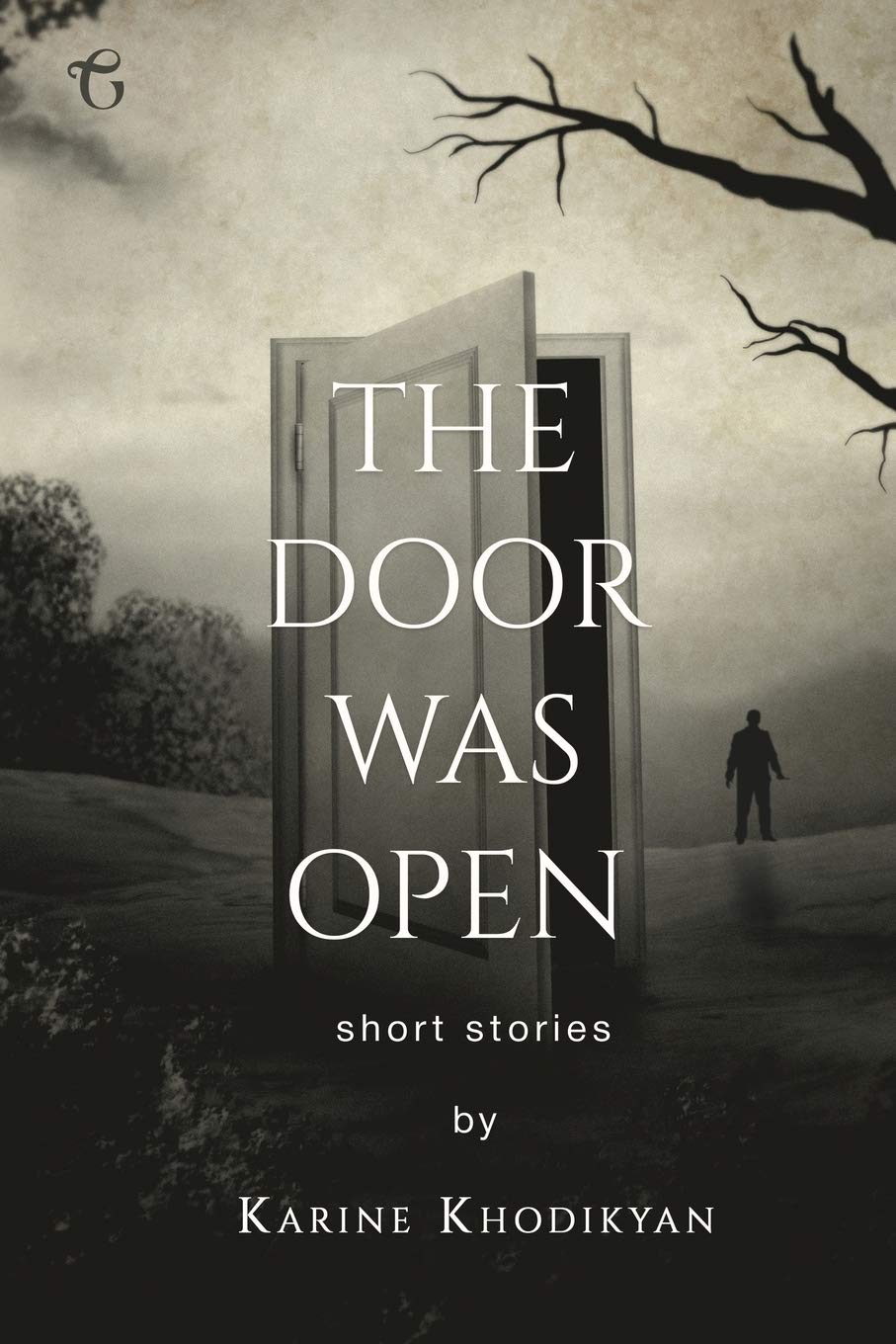
The door was open
Author: Karine Khodikyan
First published: 2019
Original title: The door was open
Genre: Short story collection
The short fiction of Karine Khodikyan can be described as intellectual fiction for women. These short stories with a “mystical touch” tell stories about women – young and old, happy and sad; even when the protagonist is not a woman, the story will immerse you into the life of a woman, revealing her role in anything and everything.
This book was published with the support of the Ministry of Culture of the Republic of Armenia under the “Armenian Literature in Translation” Program.

Goodbye, bird
Author: Aram Pachyan
First published: 2012
Original title: Ցտեսություն, Ծիտ
Genre: Contemporary
For a twenty-eight-year-old young man who returned from the army several years ago but has yet to reacclimatize to ordinary life, every step, gesture, word, and vision is a revelation, which takes him back to the beginning, to a time when reality had lost its shape, and turned into a new and imperceptible world. In his imagination, he embodies a number of different characters, he feels the presence of his girlfriend again, and remembers friends from his childhood and from the army, who are now gone.
This is a book of questions, and the answers to these questions are to be found by the reader. The novel is like a puzzle which needs to be pieced together, and the picture is not complete until the last piece is in place, until the last word of the book has been read.
Aram Pachyan is an acclaimed writer from the new generation, who writes fiction and non-fiction, and has won several awards and prizes, including the honorable Presidential Prize for Literature in Armenia. His first novel, Goodbye, Bird became a national bestseller in 2012 and is still at the top of the charts for bestselling literature.
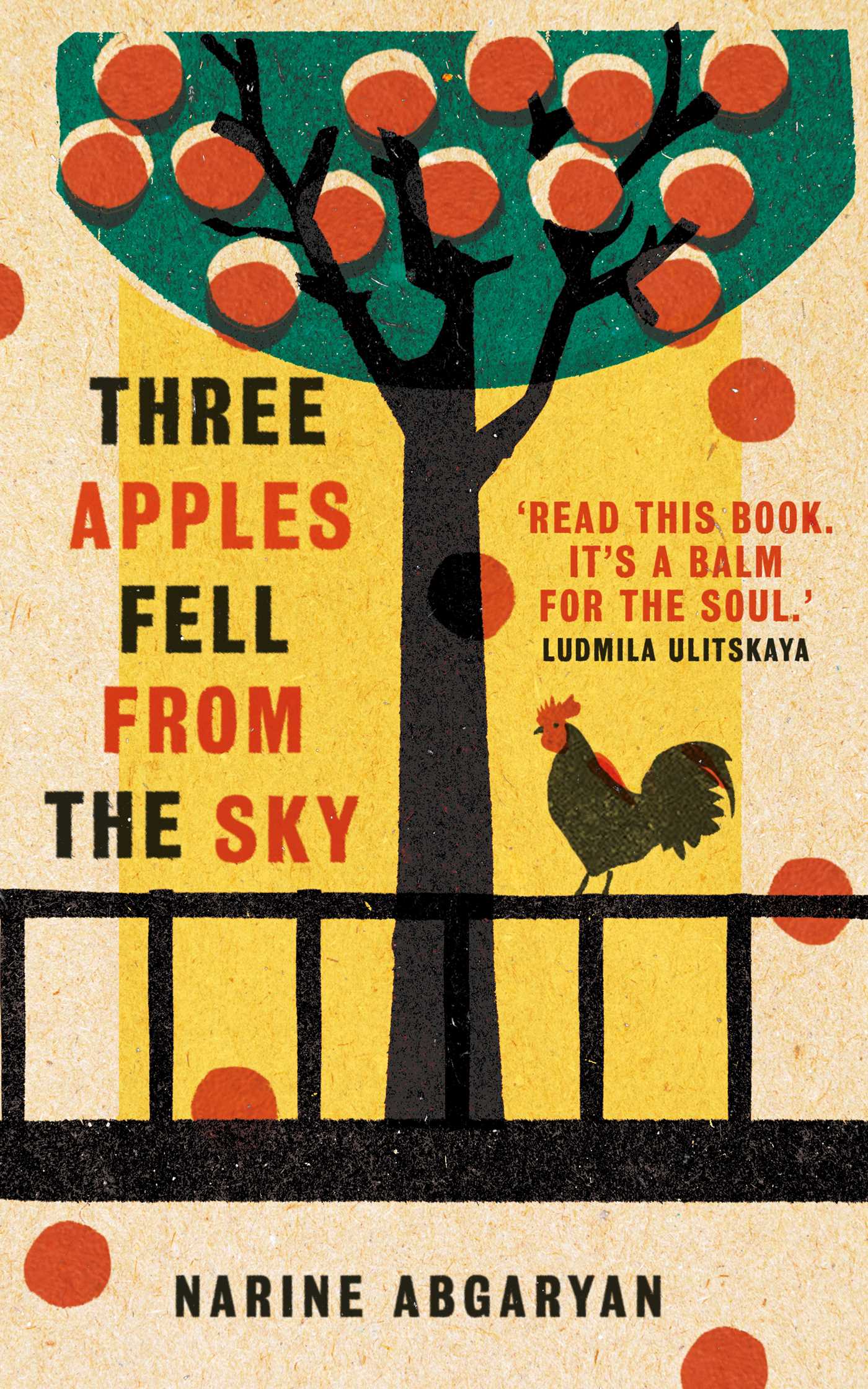
Three Apples Fell From The Sky
Author: Narine Abgaryan
First published: 2015
Original title: С неба упали три яблока
Genre: Literary fiction / Magical realism
In an isolated village high in the Armenian mountains, a close-knit community bickers, gossips and laughs. Their only connection to the outside world is an ancient telegraph wire and a perilous mountain road that even goats struggle to navigate.
As they go about their daily lives – harvesting crops, making baklava, tidying houses – the villagers sustain one another through good times and bad. But sometimes all it takes is a spark of romance to turn life on its head, and a plot to bring two of Maran’s most stubbornly single residents together soon gives the village something new to gossip about …
Three Apples Fell from the Sky is an enchanting fable that brilliantly captures the idiosyncrasy of a small community. Sparkling with sumptuous imagery and warm humour, this is a vibrant tale of resilience, bravery and the miracle of everyday friendship.
Narine Abgaryan is a Russian writer of Armenian origin.
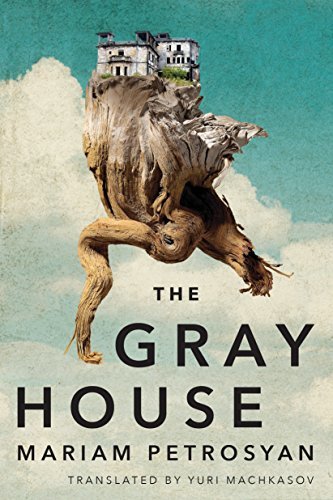
The Gray House
Author: Mariam Petrosyan
First published: 2009
Original title: Дом, в котором
Genre: Fantasy / YA
And to end this list on a completely different note, how about a YA fantasy outside time and place?
Bound to wheelchairs and dependent on prosthetic limbs, the physically disabled students living in the House are overlooked by the Outsides. Not that it matters to anyone living in the House, a hulking old structure that its residents know is alive. From the corridors and crawl spaces to the classrooms and dorms, the House is full of tribes, tinctures, scared teachers, and laws — all seen and understood through a prismatic array of teenagers’ eyes.
But student deaths and mounting pressure from the Outsides put the time-defying order of the House in danger. As the tribe leaders struggle to maintain power, they defer to the awesome power of the House, attempting to make it through days and nights that pass in ways that clocks and watches cannot record.
The Gray House is an astounding tale of how what others understand as liabilities can be leveraged into strengths.
Join me, and read a book from Armenia
While Armenian literature in translation is still limited, I think these ten books trace intersecting paths through history, memory, and everyday persistence.
As always, if you’ve read any of these books, I’d love to hear where they took you. And if you know of some I have missed, please let me know!