But you know how it is, Saya. Good luck never stays with you.
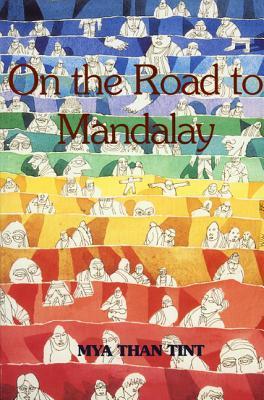
On the road to Mandalay promised a collection of thirty-four literary portraits of ordinary Burmese people. Which was what attracted me to it. And I certainly got my money’s worth.
During his travels around Myanmar, Mya Than Tint met people from all walks of life. Monks, labourers, artists, sailors, mechanics, fortune tellers, waitresses, and many others. And he recorded their stories with warmth, curiosity and quiet compassion. The result sits somewhere between journalism, biography and literary nonfiction.
Who says a rubber-tapper can’t become a school-teacher one day? Who says one can’t become a doctor? Or a lawyer? All you need is the strength to overcome the obstacles.
It seems like very authentic glimpses of everyday life in Myanmar in the eighties and nineties. These are not stories told by an outsider looking in, but by one of Myanmar’s most respected writers, someone deeply interested in the lives of people who rarely become the subject of books.
I liked it, but it took me a surprisingly long time to finish. The book is only 250 pages but in very small and tight print. Honestly it read like a 500 page book.
And each chapter introduces an entirely new person, meaning there is no overarching plot to pull you onwards. Some portraits fascinated me, while others left less of an impression. It became a book I read slowly, one life at a time, rather than one I hurried through.
And what remains with me most strongly is not any single individual, but the overall picture they create together.
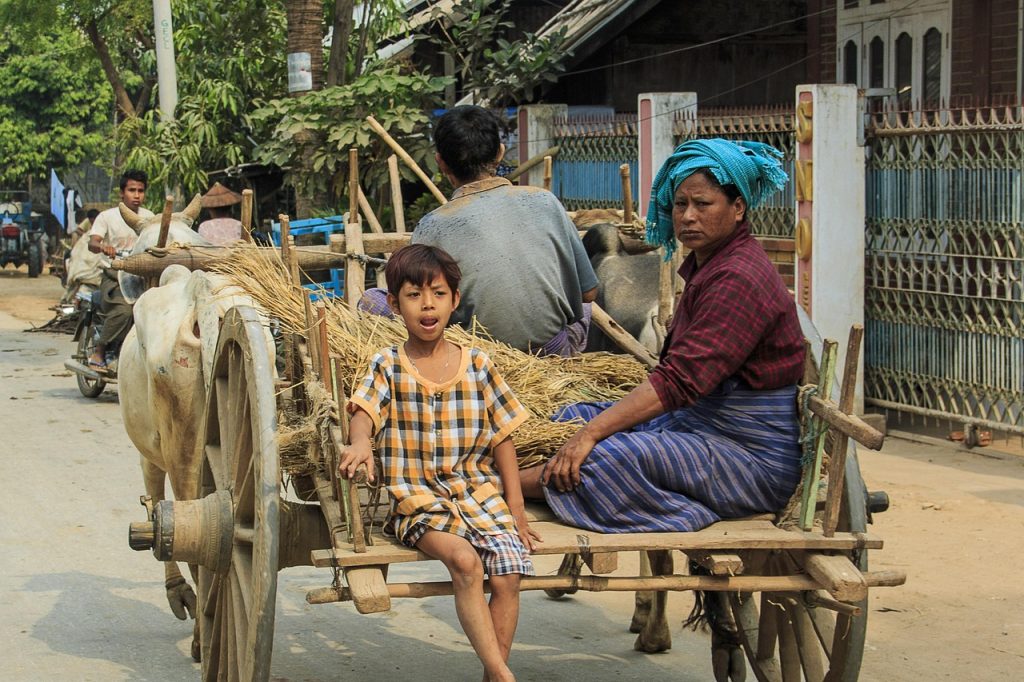
Again and again I encountered hardship, poverty, disappointment and loss. Most of the portrayed people struggle simply to get by. Alcohol is everywhere. So are drugs, violence and broken families.
Yet despite all of this, the overwhelming impression is not one of hopelessness. It is resilience. People keep going. They work, care for their families, laugh when they can, and find ways to carry on despite lives that often seem unimaginably difficult.
One day I was selling jasmine strings with another girl, and she was up by the side of one car selling them, when a big lorry pulled up right next door and she was crushed under it an died on the spot. I was selling on the other side of the road. It was so upsetting. Her jasmine strings were scattered in a pool of her blood.
This is not an easy or uplifting read in the conventional sense. There are very few happy stories here. But there is dignity, humanity and an enormous amount of cultural insight.
If you are looking for a sweeping Burmese novel with memorable fictional characters and a compelling plot, this is probably not the place to start.
Maybe choose another book from Myanmar.
But if you want to spend time with ordinary people whose voices are rarely heard outside Myanmar, On the Road to Mandalay offers something both valuable and surprisingly intimate.
By the final page, I felt that I hadn’t travelled along a road to Mandalay so much as been invited into dozens of homes, workshops, tea shops and lives. It is a quiet book, sometimes a difficult one, but definitely one that left me with a deeper understanding of Myanmar than I had before I opened it.