The universe doesn’t care what you do with your meat suit
Imagine this. You wake up dead with no recollection of how you got there.
This is what happens to Maali Almeida. He wakes up in some sort of bureaucratic afterlife, surrounded by ghosts, confused officials and people who may or may not be able to help him work out what happened. He doesn’t remember how he died. He isn’t entirely sure what the rules of being dead are.
Neither was I.
If you already know this will be too weird for you, here are some other options for Sri Lanka!
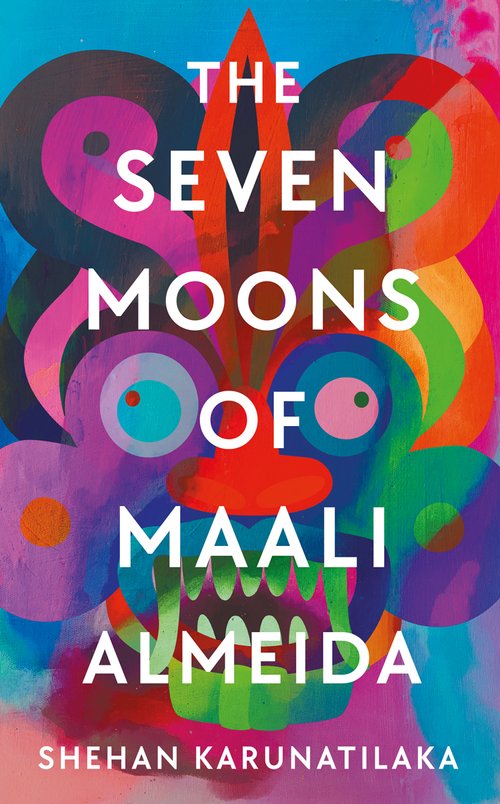
There were moments during the first few chapters of The Seven Moons of Maali Almeida when I seriously considered giving it up for something else.
The entire novel is written in the second person. You wake up dead. You try to figure out who killed you. I don’t think I have ever read an entire novel written like this before, and it took some getting used to. Combined with everything else going on, it added another layer to my initial feeling of: What on earth am I reading?
“If suicide bombers knew they end up in the same waiting room with all their victims,’” says the ghoul in her slithery voice, “‘they may think twice.”
The names were originally hard to keep track of. So were the Sri Lankan politics, acronyms, factions, ghosts, demons, memories, jokes and sudden changes of direction …
But I’m very glad I kept going.
Because somewhere along the way, the chaos stopped being something I was fighting and became one of the things I loved most about the book.
Maali is a photographer, gambler, atheist and closeted gay man who has spent years photographing the Sri Lankan civil war and the violence surrounding it. Now he has seven moons (meaning seven days) to find out who killed him. And to make sure that a collection of photographs reaches the right people.
Photographs that some very powerful people would prefer to remain hidden.
A vengeful (and possibly suspicious) ghost promises to teach Maali how to whisper to the living, while so-called garbage men are throwing dismembered bodies into Beira Lake, and there is a demon sitting on the president’s shoulder.
It is completely bonkers.
Once I accepted that, I had a wonderful time.
Underneath all the supernatural madness is the very real violence of Sri Lanka in 1989. Government forces, Tamil Tigers, Marxist insurgents, paramilitaries and foreign interests all appear. Every single faction has blood on their hands and it all is very confusing for an outsider.
Eventually, though, the pieces began to fall into place.
Characters I had struggled to tell apart became people I cared about. Details returned and suddenly mattered. Maali’s relationships with the handsome DD and the clever Jaki became increasingly moving, and the mystery of his death became something I genuinely wanted to solve.
I also grew enormously fond of Maali himself. He is selfish, reckless, funny, infuriating and frequently dishonest. Death certainly hasn’t turned him into a saint.
But he is excellent company.
It is not monsters or yakas or demons we should fear. Organised collectives of evil doers who think they are performing the work of the righteous. That is what should make us shudder.
The novel is part murder mystery, part political satire, part ghost story, part journey through a very very strange afterlife, and finally has some very deep musings on philosophy and religion and the very meaning of life itself.
Perhaps the biggest surprise was just how funny it is. It is filled with murder, torture, disappearances, war and political corruption, yet it is also absurdly funny. The afterlife has queues and administrators. The ghosts are every bit as petty and argumentative as the living. Maali has something dead pan cynical to say about almost everything.
And the bureaucratic journey through the afterlife starts on the 42. floor, which can only be a nod to one of my favorite books of all time.
I think part of the trick to loving this book is simply surrendering to it. I stopped trying to keep track of every name, understand every reference or work out exactly how this strange universe operated. I just went with the flow. It reminded me a little of reading Neil Gaiman or Douglas Adams. The books are not particularly alike, but I have had the same experience with those stories: there comes a point where I have to stop demanding that everything make perfect sense and simply accept the chaos.
And once I do that, I love it.