But listen: whoever grows up fast, fades fast
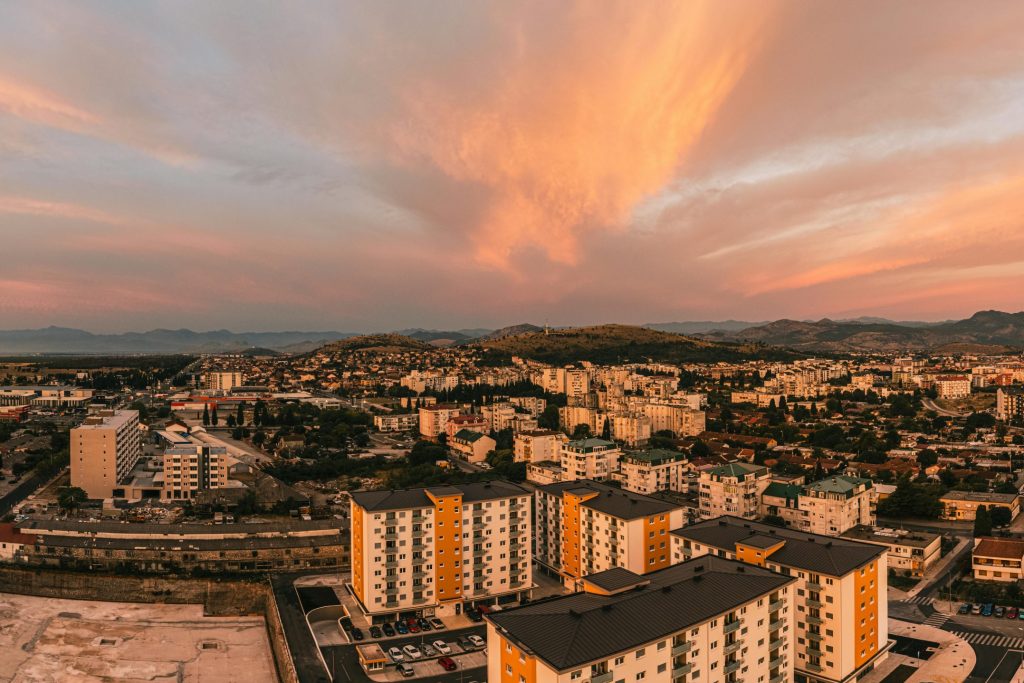
This novel follows Katarina, nicknamed Catherine, from her teenage years in 1970s Titograd (today’s Podgorica, capital of Montenegro) through a turbulent young adulthood and into the uneasy compromises of her later life.
After her mother dies from cancer very early on, she’s raised by her grandmother Katica, while her best friend Milica and first great love Siniša shape her youth. Catherine’s story takes her from Montenegro to Belgrade, where she nannies for a very colourful woman named Alma, while keeping an eye on Milica. Eventually she marries Vuksan, moves to London and has three children. There are moments of joy, but also plenty of losses: Milica’s addiction and depression, the dramatic fall-out with Siniša, the horrible marriage, and the lingering pull of her homeland. And the ending is, shall we say ambiguous.
The book has a very important place in contemporary Montenegrin literature: it won the 2019 V.B.Z. Award for Best Unpublished Novel of the Year and brought a female voice into a literary landscape largely dominated by men. Many readers have praised its candour, wit, and its attempt to capture the female migrant experience.
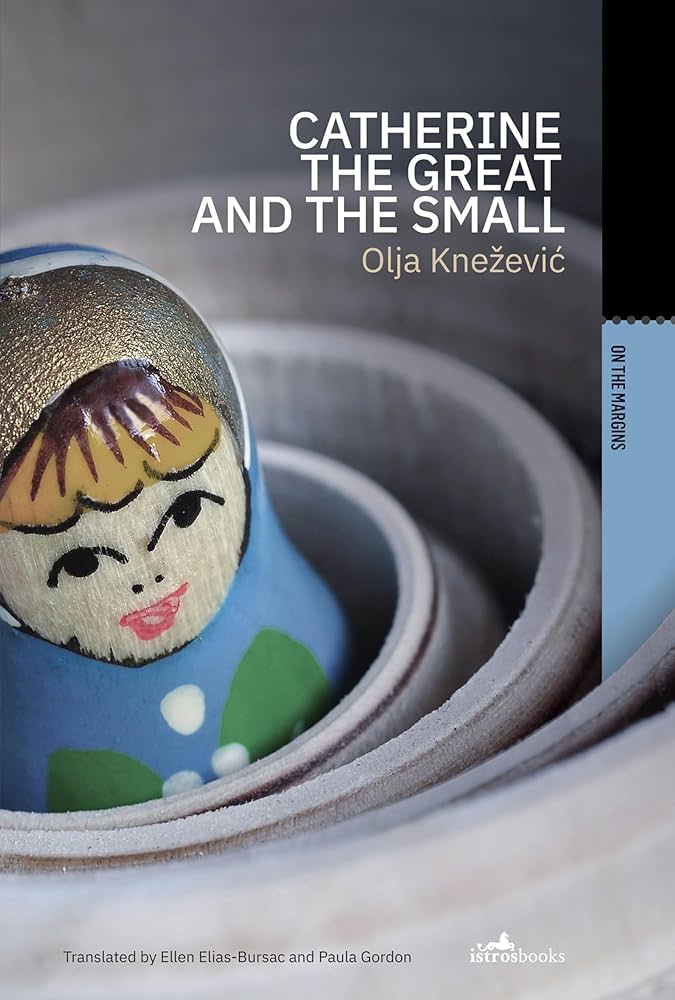
For me though, I’m sad to say, it simply did not click. I started the book several times, put it down, and very nearly abandoned it entirely. The undeniable acclaim kept me picking it back up, hoping I would grow into it and understand what all the fuss was about. And it is not a bad book by any means, but while there were a few chapters that drew me in, and some twists in the last half of the book I had not seen coming, I just never managed to connect with Catherine or anyone around her.
I think my struggle was with the characters themselves. To me they felt flat, as if I were being asked to like them without ever finding them believable. The dialogue had a staged quality, never quite convincing me these were real people, but I wonder if the translation could be to blame for this. It sometimes felt a little clunky to me.
The sadness remained curled up inside me, it trembled, like a bird in a nest, despite the nest being warm, the mother granny bird had built it well. A sturdy nest. And why should I let someone else define the terms of my “either-or”. I was the mistress of my own fate.
While the story moves Catherine from Montenegro to London and back, this whole migration theme is curiously brushed over, lacking any depth of alienation or the cultural dissonance I had expected. Both Catch the rabbit, Bolla and No-Signal Area had much more moving and believable depictions of this theme. I had also hoped for a stronger intertwining of personal and Balkan history, but the sense of place to me felt underdeveloped, almost hurried past.
The novel does contain a handful of thoughtful insights, and the appendix with notes on Montenegrin/Yugoslav history and pronunciation was genuinely useful. But as a whole, the book to me felt long, slow, and – dramatic occurrences aside – strangely empty.
I see what Olja Knežević set out to do, and I can appreciate the significance of the book in its Montenegrin context. But reading is always a personal journey, and this one just wasn’t for me. Sometimes even an acclaimed novel just doesn’t find its home in a particular reader, and this time, I was that reader.
Cancer don’t attack women who live on their own terms, my aunt said. Women like that dictate everything themselves, they even tweak their hearts to work just as long as they want them to. Granny dies of boredom, was my aunt’s assessment.
And so Catherine concludes my journey through the former Yugoslav countries! I wish, I could say the last book from this region had been the best, but oh well … Montenegro will join Greenland and Monaco on my list of countries who might deserve another shot at a spot on the Borderless Bookshelf. Maybe one of these.
There has been some real surprises for me in this region of the world, but now I’m excited to move on! Next week I will start the next region completing the area of the Balkans and South Eastern Europe. Stay tuned!