Moldova is the very last country on the Borderless Bookshelf in 2025, and it soon proved rather difficult to find books in translation. Many Moldovan-born writers live abroad and publish their works in English, German, Russian, Italian … So for this list, I’ve kept my definition of “from Moldova” a little broader than usual. At any rate that seems fitting for a country where over 25% of the population works abroad.
Some of these books reference Bessarabia — the historical region between the Prut and Dniester rivers that now overlaps with modern Moldova and parts of Ukraine. Yes, I had to look that up, I had never heard the term before.
Ánd what they all share is the feeling of living at a crossroads: between East and West, past and present, hope and hardship.
A list of books to read from Moldova
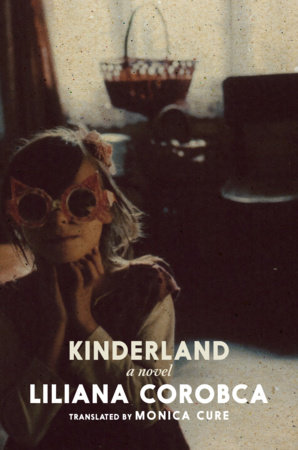
Kinderland
Author: Liliana Corobca
First published: 2013
Original title: Kinderland
Genre: Contemporary / Coming of age
With her parents gone in search of work, twelve-year-old Cristina must act as a mother to her two younger brothers. Through her eyes, we roam the streets of a contemporary Moldovan village. Just as many of the adults left their countryside and homes with the desire to earn a better income, their parents also went to the world for money, the mother to Italy, the father to Siberia, and the children were left to fend for themselves. Here the youth must learn to survive on their own; they grow up fast, imitating the gestures of the absent adults, and chasing their fading memories of normal family life.
A beautiful and heartrending novel that unfolds through the perspective of a young girl, who relays lively tales of cruel pranks and jovial reconciliations, pain and tenderness, despair and hope of real-life young children who grow up alone.
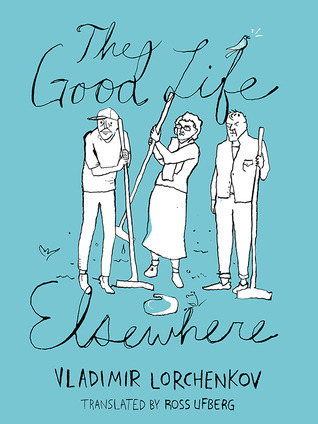
The good life elsewhere
Author: Vladimir Lorchenkov
First published: 2008
Original title: Все там будем
Genre: Satire / Dark Comedy
Vladimir Lorchenkov’s dark comedy follows a group of Moldovan villagers determined to reach Italy, no matter how impossible, absurd, or ill-advised their schemes may be. From a priest abandoned by his wife for an atheist art dealer to a mechanic who modifies his tractor for air and sea travel, this is a world where ingenuity meets desperation with spectacularly chaotic results.
Beneath the slapstick lies a sharp portrait of a country caught between Soviet legacies and European aspirations. Lorchenkov threads personal misadventures together with political manoeuvring and collective dreams, revealing both the humour and sorrow of people chasing “a better life” somewhere else.
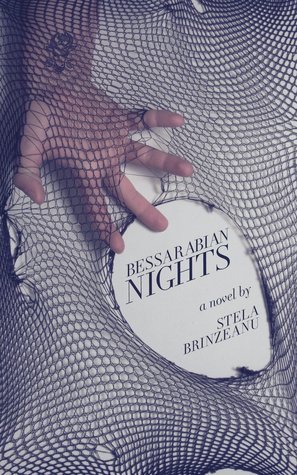
Bessarabian Nights
Author: Stela Brinzeanu
First published: 2014
Original title: Bessarabian nights
Genre: Contemporary
Following three young women whose childhood friendship is tested in adulthood, this novel explores the pressures shaping contemporary Moldova. When one of them disappears, the story opens into darker territory: economic migration, the East–West cultural divide, and the sexual exploitation of vulnerable women from Eastern Europe.
Religion, community expectations, and the promise of a better life abroad all play crucial roles in the characters’ decisions — and their consequences. Brinzeanu’s portrayal of modern Moldova is both intimate and unsettling, offering insight into the lives most affected by the country’s ongoing social and economic challenges.
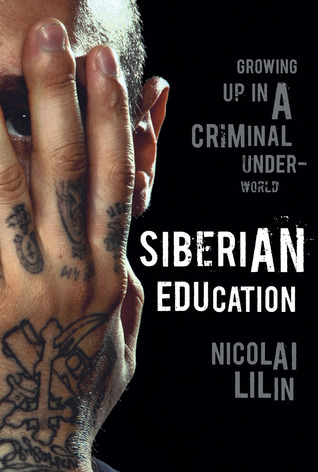
Siberian education
Author: Nicolai Lilin
First published: 2009
Original title: Educazione siberiana
Genre: Nonfiction / True Crime / Memoir
Set in Transnistria — the disputed region between Moldova and Ukraine — this memoir describes a community of “honest criminals” exiled there during Stalin’s rule. Nicolai Lilin recounts a childhood governed by strict moral codes, elaborate tattoo symbolism, and an unyielding distrust of authority. Here, weapons are categorised as “honest” or “sinful,” respect is enforced with precision, and loyalty is non-negotiable.
Whether one reads it as memoir or as a stylised reconstruction of a disappearing subculture, Lilin’s narrative is gripping. His account of the Siberian Urkas offers a raw, unsettling perspective on life beyond the reach of formal society.
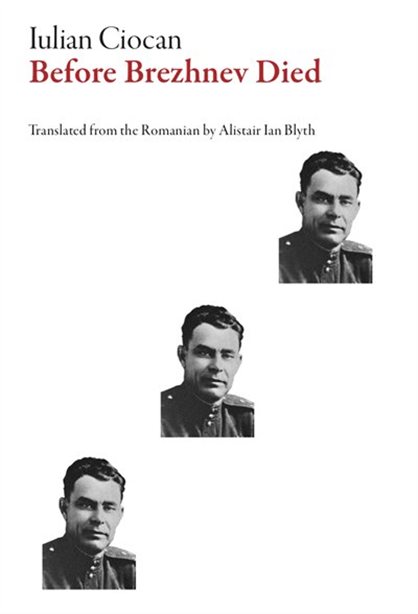
Before Brezhnev Died
Author: Iulian Ciocan
First published: 2007
Original title: 2007
Genre: Historical fiction
Set during the last, weary years of the Brezhnev era, this novel takes place in the Moldavian SSR — “the Latin edge of the Soviet empire.” When a pensioner tries to seek justice after his wife is killed by a falling crane, he encounters the indifference and cynicism of a system that values ideology over human life.
Ciocan’s sharply observed, often darkly humorous portraits of Soviet citizens reveal the psychological cost of living inside a crumbling utopia. War veterans, collective-farm workers, ambitious Party functionaries, and idealistic children all begin to realise that the promises of socialism were never meant to be kept — including the illusion of Brezhnev’s immortality.
Living tissue. 10 X 10
Author: Emilian Galaicu-Păun
First published: 2011
Original title: Țesut viu. 10×10
Genre: Literary fiction / Postmodern
Structured around the Ten Commandments, this exuberant and intricate novel covers four decades of Moldovan history, from the death of Yuri Gagarin in 1968 to the “Twitter Revolution” of 2009. Galaicu-Păun blends tragedy, comedy, fantasy, and political commentary in a whirlwind of styles — a kind of Moldovan Decameron filtered through postmodern playfulness.
The narrative jumps between Moldova and far-flung places like Paris, Moscow, and Tibet, collapsing boundaries between myth, memory, and lived reality. With its linguistic acrobatics and shifting techniques, Living Tissue is ambitious, demanding, and completely unlike anything else on this list.
Moldovian autumn
Author: Ion Druță (alt. spellings: Drutse, Druta, Drutce)
First published: 2001
Original title: Moldovian autumn
Genre: Short stories
Ion Druță is one of Moldova’s most celebrated writers, known for his warm, humorous, yet quietly melancholic portrayals of rural life. Born into a peasant family, he worked as a journalist before studying literature in Moscow, and was later awarded the State Prize for Literature of the Moldavian SSR.
This collection gathers some of his best short fiction — stories rooted in everyday concerns, simple joys, and the complicated emotional landscapes of village life. The tone may be cheerful, but there is always an undercurrent of sadness: a recognition that happiness and hardship walk side by side. (I have yet to actually find a copy of this English edition, but perhaps you will have better luck …)
Bessarabian stamps: Stories
Author: Oleg Woolf
First published: 2015
Original title: Bessarabian stamps
Genre: Short stories
Oleg Woolf’s cycle of sixteen interconnected stories takes place mostly in Sănduleni, a village perched between languages, histories, and cultural identities. Surreal, lyrical, and occasionally dreamlike, these stories capture what it means to live in a borderland shaped by shifting empires and overlapping traditions.
Woolf’s tone carries a soft, wry irony, affectionate, observant, and tinged with nostalgia. The result is a vivid portrait of Bessarabia as a liminal space where people, memories, and even landscapes seem to blur at the edges.
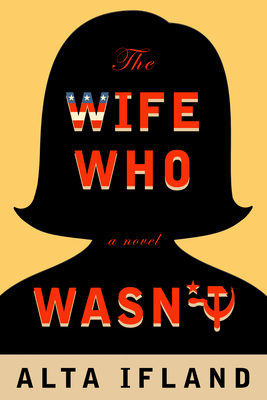
The Wife Who Wasn’t
Author: Alta Ifland
First published: 2021
Original title: The Wife Who Wasn’t
Genre: Comedy
This cross-cultural comedy brings together an eccentric Californian community and a family of Russians from Chișinău. Beginning in the late 1990s, shortly after the fall of communism, the novel centres on a mail-order marriage between an American man and a Moldovan-Russian woman — a connection that launches a parade of misunderstandings and culture clashes.
Told through short chapters and shifting perspectives, the book satirises everything from suburban American habits to post-Soviet anxieties. It is playful, lively, and sharply observant — a reminder that diaspora stories are as much a part of Moldova’s literary fabric as the tales set at home.
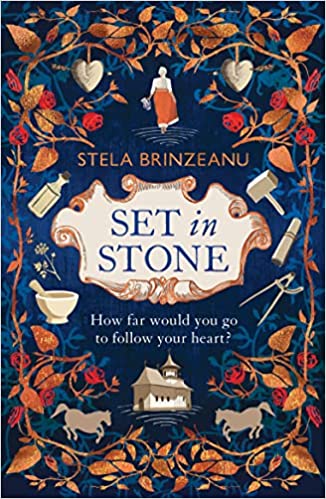
Set in stone
Author: Stela Brinzeanu
First published: 2022
Original title: Set in stone
Genre: Historical fiction / LGBTQ
Set in medieval Moldova, this novel follows two young women from vastly different backgrounds who fall in love in a world that leaves little room for female agency. To create a life together, they must challenge their families, the Church, and the patriarchal laws that govern every aspect of their existence.
As Mira risks her safety by defying tradition, Elina attempts to change her legal status to “son” in order to inherit her father’s land and secure their future. Through its historical setting, the novel raises timeless questions about autonomy, identity, and the cost of choosing your own truth.
I don’t usually include more than one book by each author on these lists, but decided to make an exception for this one.
Join me, and read a book from Moldova
Finding Moldovan literature in English felt like a minor archaeological dig, and several of these books required me to stretch my definition of what “counts.” But in a country shaped by shifting borders, multiple languages, and a long history of people leaving and returning, perhaps that flexibility is fitting.
Whether you’re drawn to Soviet-era satire, rural childhoods, LGBTQ medieval romance, experimental fiction, or diaspora comedy, each of these books offers a glimpse into a place that’s often overlooked.
If you’ve read any Moldovan writers (or managed to track down Moldovian Autumn in the wild), I’d love to hear about it!