A tractor flew over my head
I closed this book and stared at a wall not entirely sure how I felt about it, but absolutely certain I’d been entertained.
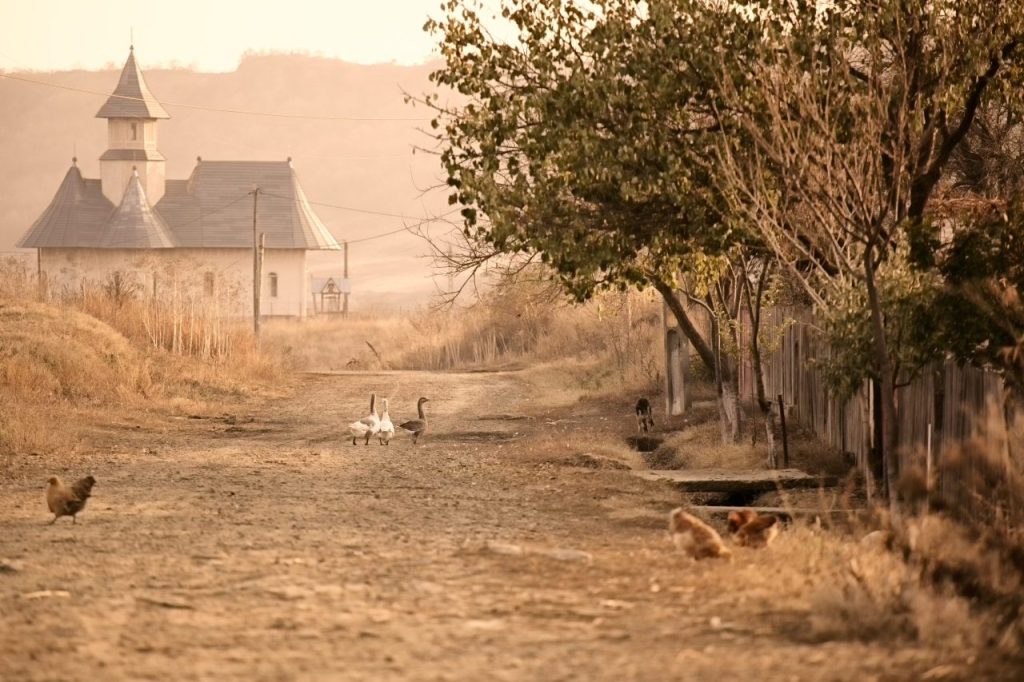
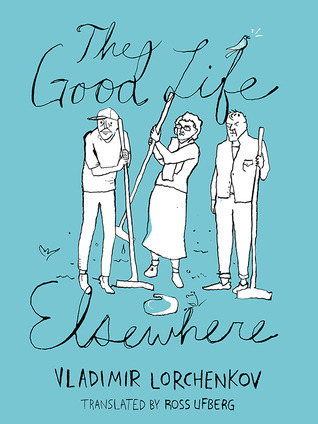
Lorchenkov’s little novel is an absurdist, satirical, surreal, and, underneath all of that, deeply tragic story. It follows the people of a fictional Moldovan village named Larga, where absolutely everyone dreams of reaching Italy, a place imagined as a kind of earthly paradise where all problems dissolve. Moldova, which is the poorest nation in Europe and one of the unhappiest countries in the world, becomes the backdrop for a story that veers between slapstick and despair.
“True, the curlers from Larga were supposed to be playing with a forty-five pound stone. The stone they had weighed an unofficial three hundred pounds, give or take; the Largans decided to train in the most difficult conditions in order to achieve maximal effectiveness.”
The people of Larga are not portrayed gently. They drink, lie, steal, fight, kill, and fall for every scam imaginable. At times it feels like the author is mocking his own countrymen so mercilessly that I almost recoiled. Yet some of the characters do have a strange kind of charm in all their ingenuity, and large parts of the novel is genuinely funny in a completely demented, chaotic sort of way.
The lengths the people of Moldova will go to in order to get to Italy get increasingly bizarre as the story moves on. It starts with a somewhat realistic plan: paying smugglers €4,000 to take them across the Italian border, only to learn they’ve been driven in circles and never left Moldova at all.
The husband of one of these desillusioned people, Vasily, who himself insisted on staying in the village, gives his returning wife the cold shoulder and encourages her to go out into the garden and hang herself from the walnut tree. Which she does. And Vasily sinks into alcoholism, even though he tries to demonstrate his indifference by leaving her hanging for several weeks and using the body to dry garlic, because the air there is better …
And from there, things escalate into full-blown madness: the village starts a curling team in anticipation of tournaments in Italy, someone builds an airplane out of a tractor, then a submarine, and eventually the village priest launches a crusade of hundreds of thousands of people determined to walk to Italy “by any means possible.” Corrupt officials, scheming politicians, and even the president himself are desperate to get to Italy. It’s ridiculous. It’s dark. It makes you chuckle and raise your eyebrows in awe of this author’s sheer imagination.
One of my favorite touches is the scattering of “news articles” throughout, breathlessly reporting the emmigration attempts while getting almost everything wrong. These little interludes really highlight the farce of the whole situation.
And beneath the absurdity of course, lies something much heavier. Moldova in the early 2000s, where the book is set, was caught between its Soviet past and an uncertain future, with constant talk of joining the EU and what that might mean for ordinary people. Lorchenkov uses this surreal humor to explore the desperation behind migration: the bribes paid to police just to keep moving, the arbitrary detentions, the fear Western countries have of newcomers, and the unwavering belief that life elsewhere must be better. Italy becomes a promised land these villagers have never seen, but are willing to die trying to reach. Quite literally, as the book contains an astonishing amount of death for something so comedic on the surface!
“Do whatever you want, as long as you say you want to be a part of Europe. And then you’ll get away with anything. Look, the Albanians do God knows what. They sell weapons and women, they take hostages. And the world forgives then, as long as they’re pro-Europe and pro-NATO. They’ll forgive us, too. That’s the trend in today’s world.”
It’s a very strange novel, but also an interesting one: It makes you ponder European politics and the lengths people go to in search of a better life. The Good Life Elsewhere is tragic, bizarre, occasionally uncomfortable, and strangely funny. A completely surreal take on a very real issue.
But if it’s too bizarre for you, here are the other options for Moldova.
And with this wonderfully strange little novel, my journey through Europe officially comes to an end!
The Good Life Elsewhere was the final stop on a route that has taken me from the Arctic islands to the Mediterranean and everywhere in between. I have now read a book from every single country in Europe (excluding for now the ones that are partly in Asia), plus the territories of Greenland, Faroe Islands, Svalbard and Gibraltar. 52 books in total. I am quite proud of this accomplishment!
Over the next few weeks I’ll be sharing a full recap of my 2025 reading year, what I learned, what surprised me, what challenged me, and which books I’m still thinking about. And of course a look ahead at how I’m setting up the Borderless Bookshelf for 2026. A new year, a new continent, and a whole new stack of stories waiting on the horizon. Are you coming along?