You are the miracle child
Let’s cut to the chase shall we? I adored this book. It is a masterpiece and you should go read it right now.
But if you refuse, here are some other options for Georgia.
The Eighth Life is, quite simply, enormous. In size, in ambition, in emotional reach. And I never once felt weighed down by it. Which honestly surprised me, because sprawling, multi-generational historical epics are usually something I approach with a bit of caution. I half expected to be flipping through chapters of boring historical facts to get to the real story, which has been my experience with other books of this type.
This one, though? I was completely absorbed. Never before have I read a multigenerational family saga this gripping, or a book where the author so effortlessly intertwines the intimate fictional narrative with real historic events and politics on a global scale. It is masterfully done.
And if you need more, I’ll tell you more. (The following contains mild spoilers.)
The narrator of the book is Niza Jashi, born in Tbilisi and now living in Berlin, who sets out to tell the full story of the Jashi family to her young niece, Brilka. From the very beginning, she insists that this story cannot be shortened, softened, or selectively told. If Brilka is to understand who she is, she must know where she comes from. And so Niza takes us all the way back to the beginning of the 20th century.
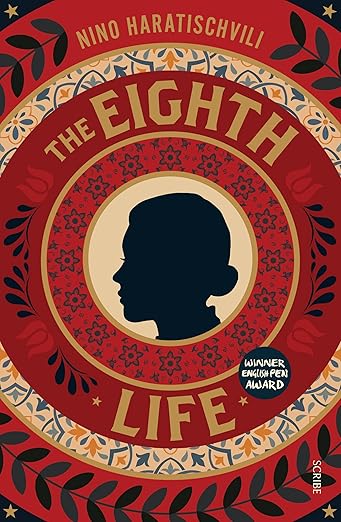
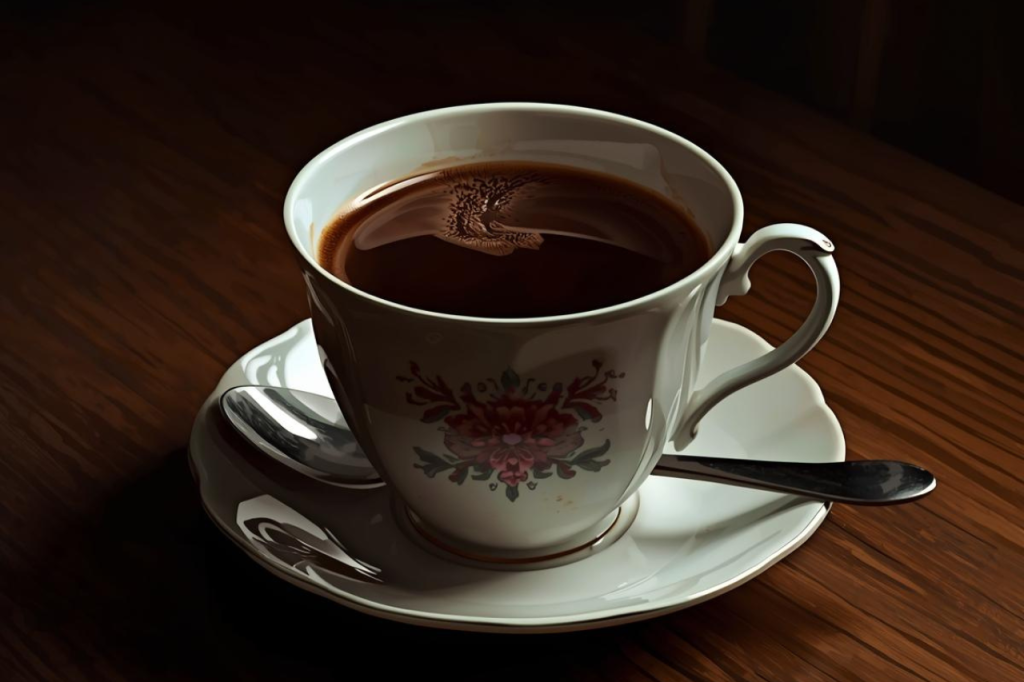
That beginning lies with Stasia, Niza’s great-grandmother, who grows up as the third daughter of a prosperous Georgian chocolatier, in a household defined by privilege, and an unusual inheritance: her father’s secret hot chocolate recipe. The recipe is said to be irresistible – and cursed. Believing that it brings misfortune, he entrusts it to Stasia alone, binding her to a legacy she never asked for.
We follow Stasia through marriage, revolution, and war, as Georgia’s fate becomes increasingly entangled with Russia and the Soviet Union. Alongside her stands her youngest sister, Christine. The dazzling, beautiful sister, who is painfully aware of the power her looks give her. But not of the danger they will put her in.
Stasia’s children, Kostya and Kitty, form the next generation. Kostya survives the horrors of World War II in Moscow and rises through the ranks to become a powerful figure in the Soviet system. His belief in discipline, control, and ideological purity shapes not only his career, but his family. Kitty’s story takes a far darker turn as she endures unimaginable brutality to protect the man she loves. The lasting damage of which ultimately forces her to flee her homeland for the West.
And Leon Trotsky, the man seen as Lenin’s successor, was still too preoccupied with the ‘idea of permanent revolution’ to notice that the former bank-robber from our homeland had started to gather power around himself.
All of Kostya’s hopes for the future is poured into his daughter, Elene, as he tries to mould her into his ideal of the modern Soviet woman. But the pressure proves unbearable. Elene drifts through relationships, her promise slowly eroding, and becomes the young unwed mother of two daughters: Daria and, finally, Niza.
Running alongside the Jashi family’s story is that of the Estravis. Stasia befriends Sopio Estravi after meeting her at one of Christine’s glittering parties, filled with power brokers and political players. When Sopio is arrested, Stasia promises to protect her son. A vow that will bind the two families together in ways that grow increasingly tangled, painful, and morally complicated as the generations pass.
The characters of this novel are so vividly drawn that they seem to step fully formed out of the page before your eyes. Even as generations shifted, I never felt lost.
And most of all, I cared.
Chocolate was now just a memory of another age, and without chocolate people forgot sweetness, and without sweetness they forgot childhood, and without childhood they forgot the beginning, and without the beginning they couldn’t see the end.
All of this is framed as a story being told to Brilka, Daria’s daughter and the eighth life of the title.
Brilka stands at the far end of this long chain of inheritance, burdened with knowledge, memory, and the question of what can be carried forward, and what must finally be left behind. And by the time Brilka’s place in the story fully crystallises, the emotional weight of everything that precedes her lands with full force.
A subtle thread of magical realism runs through the novel, most memorably through the cursed chocolate recipe. It never overwhelms the realism of the story, but adds a faintly mythic undertone, as if some histories are too charged to exist without a touch of the unreal.
I adored this book. Did I say that already?
I already know I’ll be pressing The Eighth Life into people’s hands for years to come, insisting they give it a chance. If you enjoy sweeping family sagas, beautifully integrated history, and stories that will stay with you long after the final page, this one is absolutely worth the 1000 page commitment!
I don’t usually give out stars, but on a scale of one to five, this one gets eight. One each for Stasia, Christine, Kostya, Kitty, Elene, Daria, Niza and Brilka.