Is there anything good to eat around here?
This book is 72% food.
If you don’t like food descriptions, you should definitely read something else from Taiwan.
I personally very much enjoy food descriptions, but this was bordering on too much even for me.
Besides the food, we’re looking at 13% descriptions of the intricacies of the Taiwanese railway system and maybe 10% actual plot …
But somewhere in there, between the endless parade of mouthwatering Taiwanese delicacies and detailed railway logistics, there is in fact a story. And a beautiful, heart wrenching one at that. Somewhat to my own surprise, I actually ended up loving this whole strange package very much. I even shed a little tear in the end.
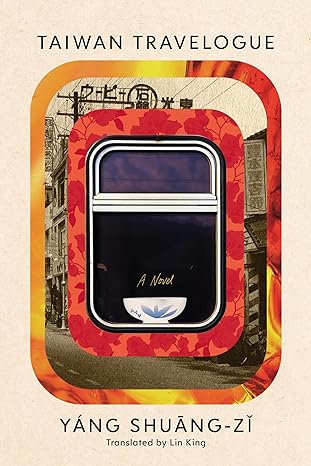
The novel follows young Japanese writer Aoyama Chizuko, who travels through Taiwan in the 1938 at the invitation of the colonial government. (Taiwan had then been under Japanese rule for 43 years.) Officially, she is to live there for a year to document the island and do lectures on her latest novel and the subsequent very popular film adaptation.
Unofficially though, the trip becomes something far more complicated, through her relationship with her Taiwanese interpreter and guide, a charming and meticulous young native Taiwanese women, whose Japanese name is Chizuru, lovingly nicknamed Chi-chan by Aoyama.
The main plot device is Aoyama’s insatiable appetite. She wants to “experience the island like a local” and that involves delicacies on every page. She also desperately wants to be friends with Chi-chan, but is repeatedly met with an unreadable resistance she does not understand.
The relationship between the two women carries the novel’s emotional weight. The blurb promised queer romance, and the romantic tension is present, but I would say in a very subtle, almost hushed way. This is not a sweeping love story. It lives in glances, tensions, and what remains unsaid. But it is very moving, and it adds a layer of tenderness that contrasts beautifully with Aoyama’s often frustrating arrogance and obliviousness.
Through this relationship, the book quietly unravels questions of colonial power and cultural blindness, and the layers of (often unconsciously) assumed superiority that inhabit the mind of a colonizer.
Let me put it this way: had arrows showered down on us instead of flowers,
I would have shielded Chi-chan’s body with my own.
However. What makes Taiwan Travelogue especially fascinating and propels it into a class entirely of its own, is its narrative trickery.
The book presents itself as a 2020 Chinese translation of a 1950s Japanese novel based on a series of 1930s articles of the same author. With mention of a previous out-of-print Chinese translation. Complete with translator’s notes and scholarly framing. And several afterwords written by different people connected to the story in some way.
Except… it isn’t. The entire translation apparatus is part of the fiction. Very clever. I see why this is shortlisted for the International Booker Prize.
And this is also where my audiobook experience betrayed me a little. Because the translation notes and very important afterwords are not in the audiobook! And they are absolutely not decorative extras!
The afterwords especially fundamentally reshape how you understand the story, the narrator, and the layers of story happening on the page. These are the 6% missing from my arithmetic starting this review, if anyone cared to do the math. And I am very thankful that a random Goodreads review alerted me to this fact a few days after I finished the audiobook, so I could get the whole story.
But the absurd thing about humanity is that we only feel pain
when we’re on the receiving end.
But let’s get back to the food!
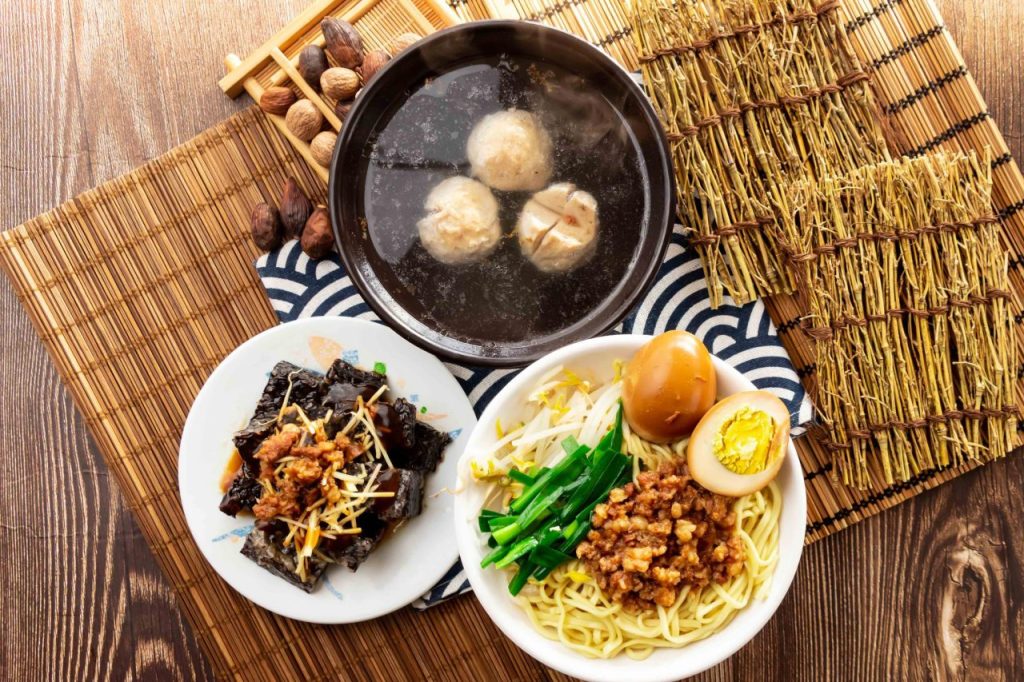
I am not exaggerating when I say that a very large portion of this book is dedicated to eating. Detailed, sensuous, mouthwatering eating. Intricate recipes. Markets, street snacks, banquets, elaborate meals lovingly prepared by Chi-chan. At times it almost feels absurd how much attention is given to food in this book. And yet… it works. The food becomes part of the colonial gaze, part of the sensory overload, part of the way Aoyama moves through Taiwan trying (and failing) to understand what she is experiencing.
As a fun aside: every chapter in this book is titled with a type of food. The same was true of my Turkish choice, The bastard of Istanbul, though for very different reasons. Should I compile a list of books about food?
Taiwan Travelogue is an unusual book. It is structurally playful. The layers of translation are brilliantly executed. It is possibly too indulgent in its culinary enthusiasm and tourist brochure pictures of Taiwan. But beneath the train schedules, salted clams and Hokkien braised pork is a sharp, thoughtful novel about colonialism and power dynamics. And a beautifully tragic love story. Though parts of the reading was frustrating, I can already feel that it is a story that will quietly stay with me.
And, slightly inconveniently, I now need to try approximately every single Taiwanese delicacy mentioned in this book.
Even the jute soup.