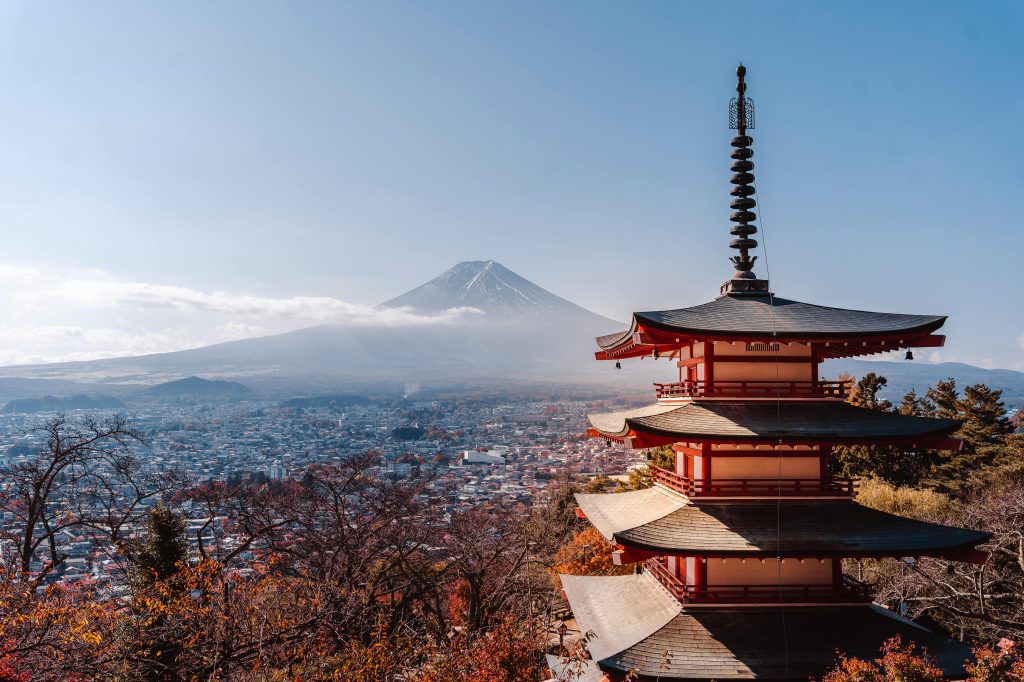
Choosing just ten books from Japan is honestly impossible. The range alone is overwhelming. We’re talking elegant early-20th-century classics, quietly devastating postwar novels, cult favourites, contemporary bestsellers, cozy coffee house reads and reality-bending speculative fiction. I could very easily have built a completely different list and still felt it made sense.
Some of these I’ve already read and loved enough to want to push them on you. The rest are mostly books which have been on my radar for a long time, so when I finally sat down to shape this list, they felt less like choices and more like inevitabilities.
Here goes:
A list of books to read from Japan
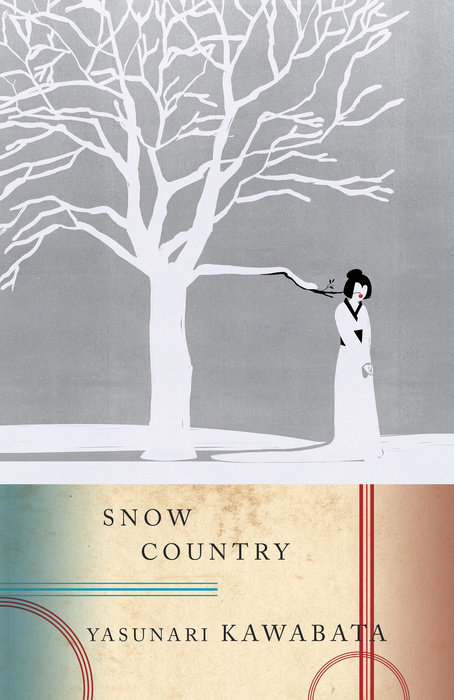
Snow Country
Author: Yasunari Kawabata
First published: 1948
Original title: 雪国
Genre: Classics / Romance
Nobel Prize recipient Yasunari Kawabata’s Snow Country is widely considered to be the writer’s masterpiece, a powerful tale of wasted love set amid the desolate beauty of western Japan.
At an isolated mountain hot spring, with snow blanketing every surface, Shimamura, a wealthy dilettante meets Komako, a lowly geisha. She gives herself to him fully and without remorse, despite knowing that their passion cannot last and that the affair can have only one outcome. In chronicling the course of this doomed romance, Kawabata has created a story for the ages, a stunning novel dense in implication and exalting in its sadness.
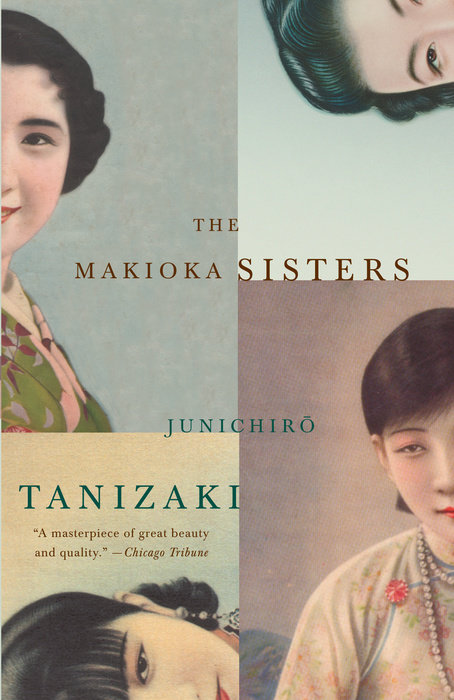
The Makioka Sisters
Author: Jun’ichirō Tanizaki
First published: 1948
Original title: 細雪
Genre: Classics / Historical Fiction
In Osaka in the years immediately before World War II, four aristocratic women try to preserve a way of life that is vanishing. As told by Junichiro Tanizaki, the story of the Makioka sisters forms what is arguably the greatest Japanese novel of the twentieth century, a poignant yet unsparing portrait of a family — and an entire society — sliding into the abyss of modernity.
Tsuruko, the eldest sister, clings obstinately to the prestige of her family name even as her husband prepares to move their household to Tokyo, where that name means nothing. Sachiko compromises valiantly to secure the future of her younger sisters. The unmarried Yukiko is a hostage to her family’s exacting standards, while the spirited Taeko rebels by flinging herself into scandalous romantic alliances. Filled with vignettes of upper-class Japanese life and capturing both the decorum and the heartache of its protagonist, The Makioka Sisters is a classic of international literature.
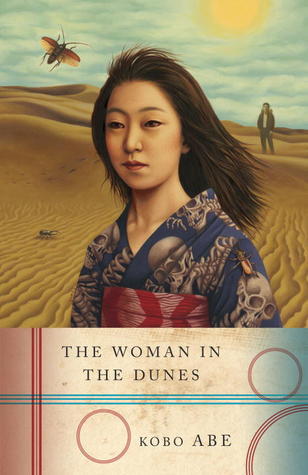
The Woman in the Dunes
Author: Kōbō Abe
First published: 砂の女
Original title: 1962
Genre: Classics / Literary fiction
One of the premier Japanese novels in the twentieth century, “The Woman In The Dunes” combines the essence of myth, suspense, and the existential novel.
In a remote seaside village, Niki Jumpei, a teacher and amateur entomologist, is held captive with a young woman at the bottom of a vast sand pit where they are pressed into shovelling off the ever-advancing sand dunes that threaten the village.
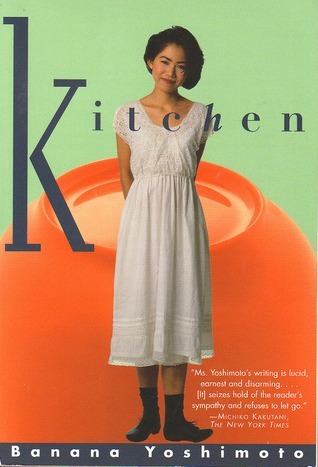
Kitchen
Author: Banana Yoshimoto
First published: 1988
Original title: キッチン
Genre: Literary Fiction / Contemporary
Banana Yoshimoto’s novels have made her a sensation in Japan and all over the world, and Kitchen, the dazzling English-language debut that is still her best-loved book, is an enchantingly original and deeply affecting book about mothers, love, tragedy, and the power of the kitchen and home in the lives of a pair of free-spirited young women in contemporary Japan.
Mikage, the heroine of Kitchen, is an orphan raised by her grandmother, who has passed away. Grieving, she is taken in by her friend Yoichi and his mother (who was once his father), Eriko. As the three of them form an improvised family that soon weathers its own tragic losses, Yoshimoto spins a lovely, evocative tale that recalls early Marguerite Duras. Kitchen and its companion story, “Moonlight Shadow,” are elegant tales whose seeming simplicity is the ruse of a writer whose voice echoes in the mind and the soul.
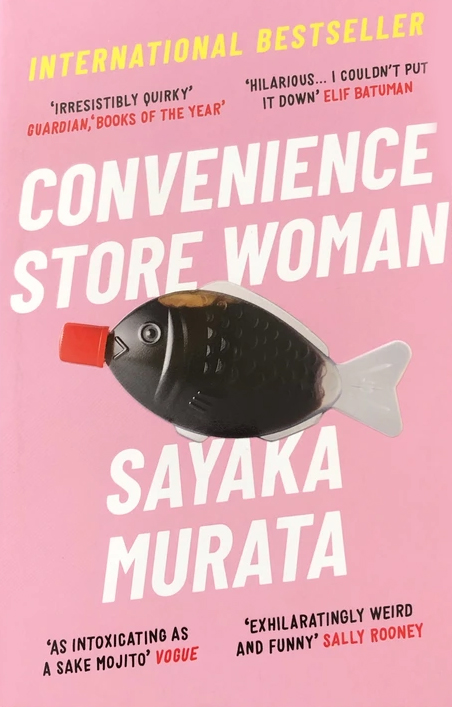
Convenience Store Woman
Author: Sayaka Murata
First published: 2016
Original title: コンビニ人間
Genre: Literary Fiction / Contemporary
The English-language debut of one of Japan’s most talented contemporary writers, selling over 650,000 copies there, Convenience Store Woman is the heartwarming and surprising story of thirty-six-year-old Tokyo resident Keiko Furukura.
Keiko has never fit in, neither in her family, nor in school, but when at the age of eighteen she begins working at the Hiiromachi branch of “Smile Mart,” she finds peace and purpose in her life. In the store, unlike anywhere else, she understands the rules of social interaction―many are laid out line by line in the store’s manual―and she does her best to copy the dress, mannerisms, and speech of her colleagues, playing the part of a “normal” person excellently, more or less. Keiko is very happy, but the people close to her, from her family to her coworkers, increasingly pressure her to find a husband, and to start a proper career, prompting her to take desperate action…
A brilliant depiction of a world hidden from view, Convenience Store Woman is an ironic and sharp-eyed look at contemporary work culture and the pressures we all feel to conform, as well as a charming and completely fresh portrait of an unforgettable heroine.
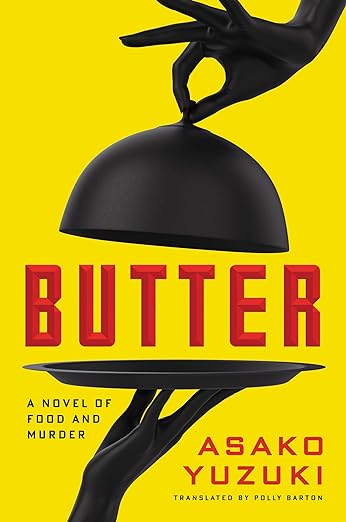
Butter
Author: Asako Yuzuki
First published: 2017
Original title: Butter
Genre: Mystery / Thriller
There are two things that I can simply not tolerate: feminists and margarine.
Gourmet cook Manako Kajii sits in Tokyo Detention Center convicted of the serial murders of lonely businessmen, who she is said to have seduced with her delicious home cooking. The case has captured the nation’s imagination but Kajii refuses to speak with the press, entertaining no visitors. That is, until journalist Rika Machida writes a letter asking for her recipe for beef stew and Kajii can’t resist writing back.
Rika, the only woman in her news office, works late each night, rarely cooking more than ramen. As the visits unfold between her and the steely Kajii, they are closer to a masterclass in food than journalistic research. Rika hopes this gastronomic exchange will help her soften Kajii but it seems that she might be the one changing. With each meal she eats, something is awakening in her body, might she and Kaji have more in common than she once thought?
Inspired by the real case of the convicted con woman and serial killer, “The Konkatsu Killer,” Asako Yuzuki’s Butter is a vivid, unsettling exploration of misogyny, obsession, romance and the transgressive pleasures of food in Japan.
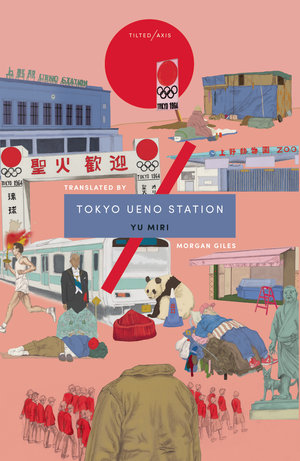
Tokyo Ueno Station
Author: Yū Miri
First published: 2014
Original title: JR上野駅公園口
Genre: Literary Fiction
Born in Fukushima in 1933, the same year as the Emperor, Kazu’s life is tied by a series of coincidences to Japan’s Imperial family and to one particular spot in Tokyo; the park near Ueno Station – the same place his unquiet spirit now haunts in death. It is here that Kazu’s life in Tokyo began, as a labourer in the run up to the 1964 Olympics, and later where he ended his days, living in the park’s vast homeless ‘villages’, traumatised by the destruction of the 2011 tsunami and enraged by the announcement of the 2020 Olympics.
Award-winning author Yū Miri uses her outsider’s perspective as a Zainichi (Korean-Japanese) writer to craft a novel of utmost importance to this moment, a powerful rebuke to the Imperial system and a sensitive, deeply felt depiction of the lives of Japan’s most vulnerable people.
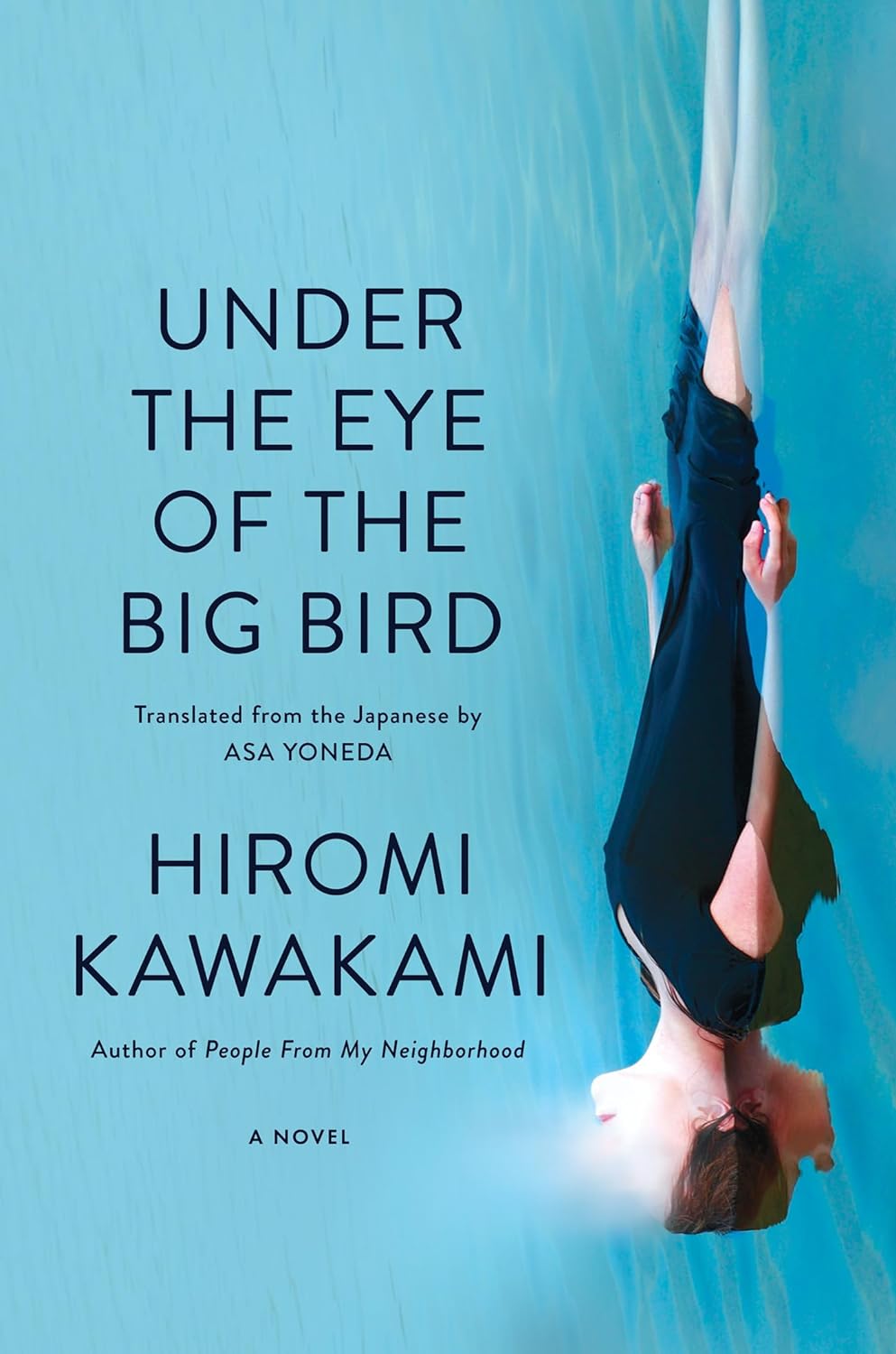
Under the Eye of the Big Bird
Author: Hiromi Kawakami
First published: 2016
Original title: 大きな鳥にさらわれないよう
Genre: Science Fiction
From one of Japan’s most brilliant and sensitive contemporary novelists, this speculative fiction masterpiece envisions an Earth where humans are nearing extinction, and rewrites our understanding of reproduction, ecology, evolution, artificial intelligence, communal life, creation, love, and the future of humanity.
In the distant future, humans are on the verge of extinction and have settled in small tribes across the planet under the observation and care of “Mothers.” Some children are made in factories, from cells of rabbits and dolphins; some live by getting nutrients from water and light, like plants. The survival of the race depends on the interbreeding of these and other alien beings–but it is far from certain that connection, love, reproduction, and evolution will persist among the inhabitants of this faltering new world.
Unfolding over fourteen interconnected episodes spanning geological eons, at once technical and pastoral, mournful and utopic, Under the Eye of the Big Bird presents an astonishing vision of the end of our species as we know it.
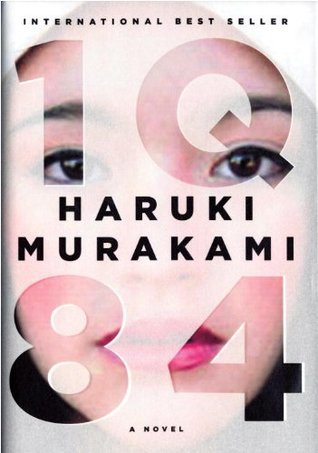
1Q84
Author: Haruki Murakami
First published: 2009
Original title: いちきゅうはちよん
Genre: Magical Realism / Contemporary
The year is 1984 and the city is Tokyo. A young woman named Aomame follows a taxi driver’s enigmatic suggestion and begins to notice puzzling discrepancies in the world around her. She has entered, she realizes, a parallel existence, which she calls 1Q84. “Q is for ‘question mark.’ A world that bears a question.” Meanwhile, an aspiring writer named Tengo takes on a suspect ghostwriting project. He becomes so wrapped up with the work and its unusual author that, soon, his previously placid life begins to come unraveled.
As Aomame’s and Tengo’s narratives converge over the course of this single year, we learn of the profound and tangled connections that bind them ever closer: a beautiful, dyslexic teenage girl with a unique vision; a mysterious religious cult that instigated a shoot-out with the metropolitan police; a reclusive, wealthy dowager who runs a shelter for abused women; a hideously ugly private investigator; a mild-mannered yet ruthlessly efficient bodyguard; and a peculiarly insistent television-fee collector.
A love story, a mystery, a fantasy, a novel of self-discovery, a dystopia to rival George Orwell’s 1984— 1Q84 was an instant best seller in Japan, and a tremendous feat of imagination from one of Japan’s most revered contemporary writers.
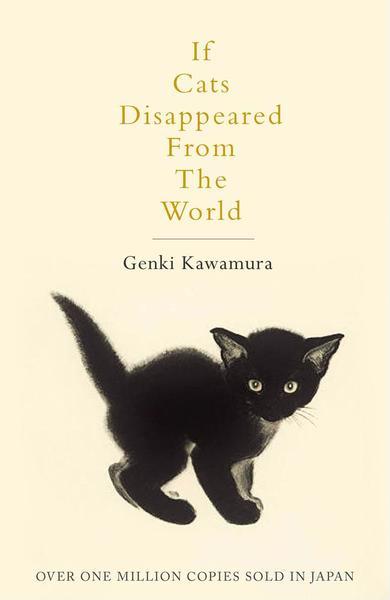
If Cats Disappeared from the World
Author: Genki Kawamura
First published: Genki Kawamura
Original title: 世界から猫が消えたなら
Genre: Magical Realism / Contemporary
Our narrator’s days are numbered. Estranged from his family, living alone with only his cat Cabbage for company, he was unprepared for the doctor’s diagnosis that he has only months to live. But before he can set about tackling his bucket list, the Devil appears with a special offer: in exchange for making one thing in the world disappear, he can have one extra day of life. And so begins a very bizarre week …
Because how do you decide what makes life worth living? How do you separate out what you can do without from what you hold dear? In dealing with the Devil our narrator will take himself – and his beloved cat – to the brink. Genki Kawamura’s If Cats Disappeared from the World is a story of loss and reconciliation, of one man’s journey to discover what really matters in modern life.
Join me, and read a book from Japan
And if you notice a slight tilt toward the strange, the speculative, and the socially uncomfortable… that’s not accidental. I’m always drawn to stories that question the systems we live inside. The expectations, the unspoken rules, the structures that quietly shape everyday life. And Japanese literature seems particularly skilled at exploring those fault lines, whether through snowbound longing, shifting family traditions, existential sand pits, lonely convenience stores, or futures that feel just a little too close to home.
Is this a perfectly representative overview of Japanese literature? Absolutely not.
Is it unmistakably me-coded? Very much so.