When I began researching North Korea, I assumed I might struggle to find books at all.
For obvious reasons North Korea doesn’t have a literary scene that flows freely into the rest of the world. Publishing is tightly controlled. Writers are expected to serve the state. Literature, first and foremost, is not an art form. It is a tool of control and propaganda. And translations are rare.
So I expected a list made entirely from outsiders and defectors. Journalists trying to piece things together and memoirs of escape. And yes, this list is indeed memoir- and journalism-heavy.
But much to my surprise, early on I stumbled upon an actual state sanctioned bestseller from North Korea translated into English!
A list of books to read from North Korea
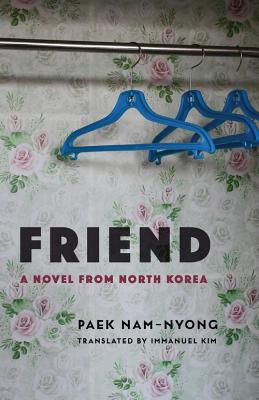
Friend
Author: Paek Nam-Nyong
First published: 1988
Original title: 벗
Genre: Literary fiction
This is the book I didn’t expect to find, so of course it must start this list. A best-seller in North Korea. Written, state sanctioned and published inside the country itself, and later translated into French and then English.
Paek Nam-nyong’s Friend is a tale of marital intrigue, abuse, and divorce in North Korea. A woman in her thirties comes to a courthouse petitioning for a divorce. As the judge who hears her statement begins to investigate the case, the story unfolds into a broader consideration of love and marriage. The novel delves into its protagonists’ past, describing how the couple first fell in love and then how their marriage deteriorated over the years. It chronicles the toll their acrimony takes on their son and their careers alongside the story of the judge’s own marital troubles.
This groundbreaking translation of one of North Korea’s most popular writers is described as a page-turner full of psychological tension as well as a revealing portrait of a society that is typically seen as closed to the outside world.
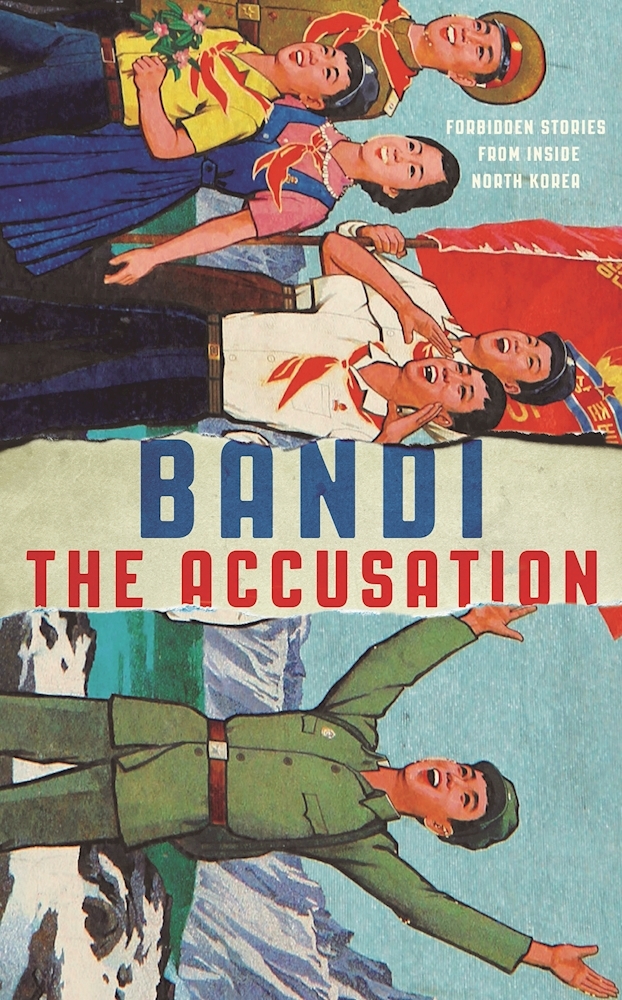
The Accusation: Forbidden Stories from Inside North Korea
Author: Bandi
First published: 2014
Original title: 고발
Genre: Short Stories / Dissident Fiction
The Accusation is a deeply moving and eye-opening work of fiction that paints a powerful portrait of life under the North Korean regime. Set during the period of Kim Il-sung and Kim Jong-il’s leadership, the seven stories that make up The Accusation give voice to people living under this most bizarre and horrifying of dictatorships.
The characters of these compelling stories come from a wide variety of backgrounds, from a young mother living among the elite in Pyongyang whose son misbehaves during a political rally, to a former Communist war hero who is deeply disillusioned with the intrusion of the Party into everything he holds dear, to a husband and father who is denied a travel permit and sneaks onto a train in order to visit his critically ill mother.
Written with deep emotion and writing talent, The Accusation is a vivid depiction of life in a closed-off one-party state, and also a hopeful testament to the humanity and rich internal life that persists even in such inhumane conditions.
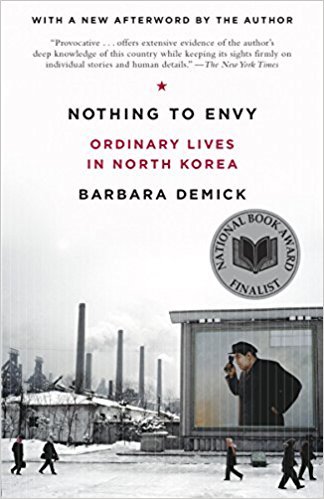
Nothing to Envy: Ordinary Lives in North Korea
Author: Barbara Demick
First published: 2009
Original title: Nothing to envy
Genre: Nonfiction / Oral History
In this landmark addition to the literature of totalitarianism, award-winning journalist Barbara Demick follows the lives of six North Korean citizens over fifteen years – a chaotic period that saw the death of Kim Il-sung, the rise to power of his son Kim Jong-il (the father of Kim Jong-un), and a devastating famine that killed one-fifth of the population.
Demick brings to life what it means to be living under the most repressive regime today – an Orwellian world that is by choice not connected to the Internet, where displays of affection are punished, informants are rewarded, and an offhand remark can send a person to the gulag for life. She takes us deep inside the country, beyond the reach of government censors, and through meticulous and sensitive reporting we see her subjects fall in love, raise families, nurture ambitions, and struggle for survival.
This is often recommended as an introduction to North Korea, and It reads with the emotional depth of a novel, drawing you into lives shaped by love, loss, survival, and quiet acts of resilience. If you’re looking for a human entry point into North Korea, this is a powerful place to start.
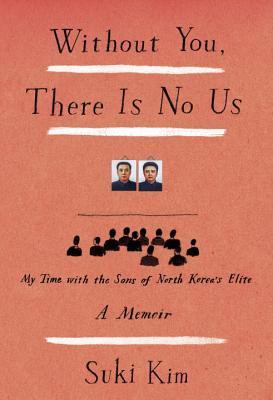
Without You, There Is No Us: My Time with the Sons of North Korea’s Elite
Author: Suki Kim
First published: 2014
Original title: Without You, There Is No Us
Genre: Nonfiction / Memoir
Every day, three times a day, the students march in two straight lines, singing praises to Kim Jong-il and North Korea: Without you, there is no motherland. Without you, there is no us. It is a chilling scene, but gradually Suki Kim, too, learns the tune and, without noticing, begins to hum it. It is 2011, and all universities in North Korea have been shut down for an entire year, the students sent to construction fields – except for the 270 students at Pyongyang University of Science and Technology (PUST), a walled compound where portraits of Kim Il-sung and Kim Jong-il look on impassively from the walls of every room, and where Suki has accepted a job teaching English. Over the next six months, she will eat three meals a day with her young charges and struggle to teach them to write, all under the watchful eye of the regime.
Suki Kim’s account of teaching at a university in Pyongyang offers a rare glimpse into North Korea from the perspective of an outsider who briefly lived within its carefully constructed reality. Her students, the sons of the elite, are intelligent, curious, and yet profoundly isolated from the outside world.
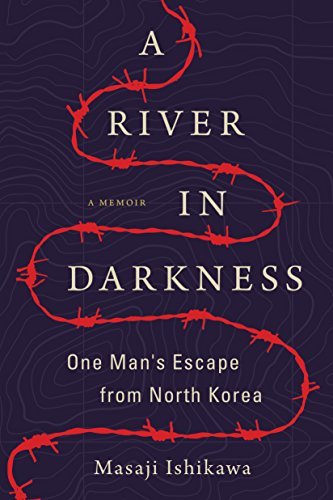
A river in darkness: One man’s escape from North Korea
Author: Masaji Ishikawa
First published: 2000
Original title: 北朝鮮大脱出 地獄からの生還
Genre: Nonfiction / Memoir
The harrowing true story of one man’s life in, and subsequent escape from, North Korea, one of the world’s most brutal totalitarian regimes.
Half-Korean, half-Japanese, Masaji Ishikawa has spent his whole life feeling like a man without a country. This feeling only deepened when his family moved from Japan to North Korea when Ishikawa was just thirteen years old, and unwittingly became members of the lowest social caste. His father, himself a Korean national, was lured to the new Communist country by promises of abundant work, education for his children, and a higher station in society. But the reality of their new life was far from utopian.
In this memoir translated from the original Japanese, Ishikawa candidly recounts his tumultuous upbringing and the brutal thirty-six years he spent living under a crushing totalitarian regime, as well as the challenges he faced repatriating to Japan after barely escaping North Korea with his life. A River in Darkness is not only a shocking portrait of life inside the country but a testament to the dignity, and indomitable nature, of the human spirit
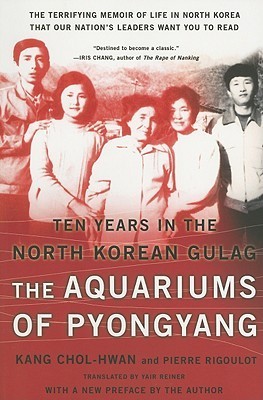
The Aquariums of Pyongyang: Ten Years in the North Korean Gulag
Author: Kang Chol-Hwan, Pierre Rigoulot
First published: 2000
Original title: Les aquariums de Pyongyang : dix ans dans le goulag nord-coréen
Genre: Nonfiction / Memoir
This harrowing memoir of life inside North Korea was the first account to emerge from the notoriously secretive country, and it remains one of the most terrifying.
Amid escalating nuclear tensions, Kim Jong-un and North Korea’s other leaders have kept a tight grasp on their one-party state, quashing any nascent opposition movements and sending all suspected dissidents to its brutal concentration camps for “re-education.”
Kang Chol-Hwan is the first survivor of one of these camps to escape and tell his story to the world, documenting the extreme conditions in these gulags and providing a personal insight into life in North Korea. Sent to the notorious labor camp Yodok when he was nine years old, Kang observed frequent public executions and endured forced labor and near-starvation rations for ten years. In 1992, he escaped to South Korea, and now advocates for human rights in North Korea.
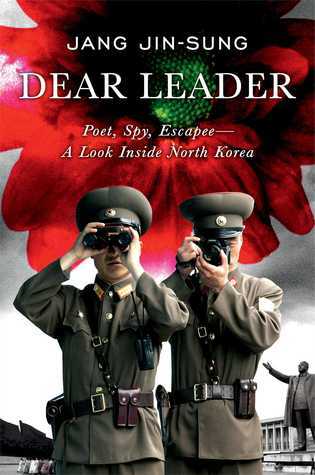
Dear Leader: Poet, Spy, Escapee – A Look Inside North Korea
Author: Jang Jin-sung
First published: 2014
Original title: Dear leader
Genre: Nonfiction / Memoir
In this rare insider’s view into contemporary North Korea, a high-ranking counterintelligence agent describes his life as a former poet laureate to Kim Jong-il and his breathtaking escape to freedom.
“The General will now enter the room.”
Everyone turns to stone. Not moving my head, I direct my eyes to a point halfway up the archway where Kim Jong-il’s face will soon appear.
As North Korea’s State Poet Laureate, Jang Jin-sung led a charmed life. With food provisions (even as the country suffered through its great famine), a travel pass, access to strictly censored information, and audiences with Kim Jong-il himself, his life in Pyongyang seemed safe and secure. But this privileged existence was about to be shattered. When a strictly forbidden magazine he lent to a friend goes missing, Jang Jin-sung must flee for his life.
Never before has a member of the elite described the inner workings of this totalitarian state and its propaganda machine. An astonishing expose told through the heart-stopping story of Jang Jin-sung’s escape to South Korea, Dear Leader is a rare and unprecedented insight into the world’s most secretive and repressive regime.
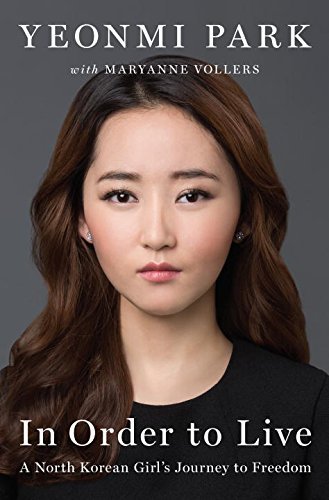
In order to live: A North Korean Girl’s Journey to Freedom
Author: Yeonmi Park
First published: 2015
Original title: In order to live
Genre: Nonfiction / Memoir
Human rights activist Yonmi Park, who fled North Korea with her mother in 2007 at age 13 and eventually made it to South Korea two years later after a harrowing ordeal, recognized that in order to be “completely free,” she had to confront the truth of her past.
It is an ugly, shameful story of being sold with her mother into slave marriages by Chinese brokers, and although she at first tried to hide the painful details when blending into South Korean society, she realized how her survival story could inspire others. Moreover, her sister had also escaped earlier and had vanished into China for years, prompting the author to go public with her story in the hope of finding her sister.
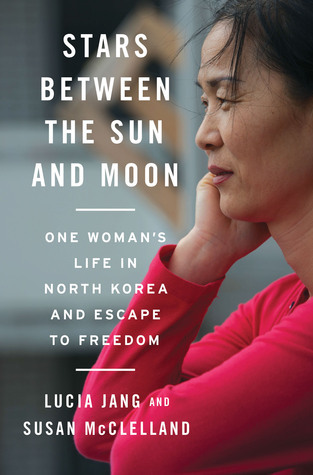
Stars Between the Sun and Moon: One Woman’s Life in North Korea and Escape to Freedom
Author: Lucia Jang
First published: 2014
Original title: Stars between the Sun and Moon
Genre: Nonfiction / Memoir
Born in the 1970s, Lucia Jang grew up in a common, rural North Korean household—her parents worked hard, she bowed to a photo of Kim Il-Sung every night, and the family scraped by on rationed rice and a small garden. However, there is nothing common about Jang. She is a woman of great emotional depth, courage, and resilience.
Happy to serve her country, Jang worked in a factory as a young woman. There, a man she thought was courting her raped her. Forced to marry him when she found herself pregnant, she continued to be abused by him. She managed to convince her family to let her return home, only to have her in-laws and parents sell her son without her knowledge for 300 won and two bars of soap. They had not wanted another mouth to feed.
By now it was the beginning of the famine of the 1990s that resulted in more than one million deaths. Driven by starvation—her family’s as well as her own—Jang illegally crossed the river to better-off China to trade goods. She was caught and imprisoned twice, pregnant the second time. She knew that, to keep the child, she had to leave North Korea. In a dramatic escape, she was smuggled with her newborn to China, fled to Mongolia under gunfire, and finally found refuge in South Korea before eventually settling in Canada.
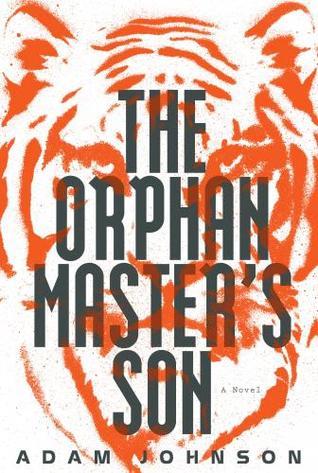
The Orphan Master’s son
Author: Adam Johnson
First published: 2012
Original title: The Orphan Master’s Son
Genre: Literary Fiction / Thriller / Satire
This is probably the most unconventional entry on the list. A novel written from the outside, yet deeply engaged with the idea of life inside North Korea. And it does have a couple of scathing one star reviews on Goodreads, which makes me want to reach for it for that reason alone …
Pak Jun Do is the haunted son of a lost mother – a singer “stolen” to Pyongyang – and an influential father who runs Long Tomorrows, a work camp for orphans. There the boy is given his first taste of power, picking which orphans eat first and which will be lent out for manual labor. Recognized for his loyalty and keen instincts, Jun Do comes to the attention of superiors in the state, rises in the ranks, and starts on a road from which there will be no return. Jun Do becomes a professional kidnapper who must navigate the shifting rules, arbitrary violence, and baffling demands of his Korean overlords in order to stay alive.
Part breathless thriller, part story of innocence lost, part story of romantic love, The Orphan Master’s Son is also a riveting portrait of a North Korea rife with hunger, corruption, and casual cruelty but also camaraderie, stolen moments of beauty, and love.
Join me, and read a book from North Korea
North Korean literature, at least in the form we can access it, is shaped by the tension between what is allowed and what must remain hidden. Official fiction tends to reinforce ideology, presenting model citizens and upholding the system, while anything critical has to find its way out in secret, often smuggled across borders at great personal risk.
This list moves between those perspectives, bringing together a rare state-sanctioned novel, stories reportedly written in secrecy, memoirs of escape, and accounts from those who entered the country and later left again.
It is not, and cannot be, a complete picture, but perhaps it offers a series of small windows into a place very few people get to see.
I know what I’m reaching for, but what would you pick?