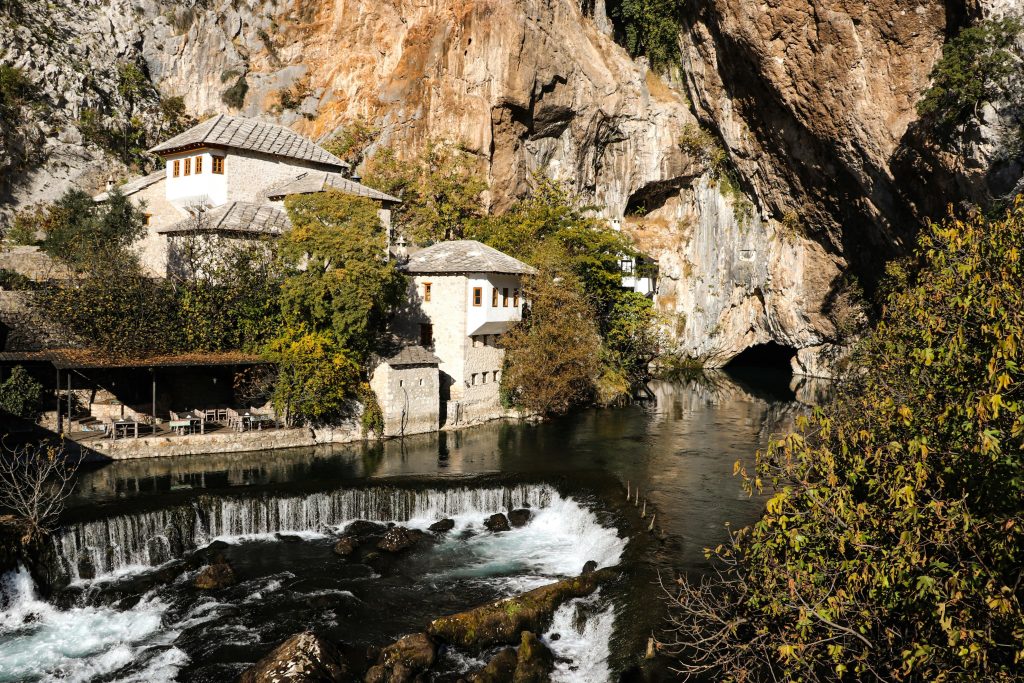
Bosnia and Herzegovina is a country I approached with equal parts curiosity and caution. Its recent past is marked by devastating war, but its cultural history stretches back centuries, layered with Ottoman, Austro-Hungarian, Yugoslav, and modern Bosnian influences.
As I finish up this region, one thing in particular has become clear to me: in the Balkans, authors rarely fit neatly into national boxes. Borders shift. People move. Ethnicity, language, and citizenship often pull in different directions. On this list Ivo Andrić, for example, was born in what’s now Bosnia and Herzegovina, won the Nobel Prize for Yugoslavia, and is claimed by both Serbia, Bosnia and sometimes Croatia. Lana Bastašić was born in Croatia, raised in Bosnia, writes in Serbian, and her debut novel was published by a Bosnian press. Saša Stanišić fled Višegrad as a child and became an acclaimed German author writing in his adopted language.
To claim to understand even a fraction of the complexity of a country like Bosnia and Herzegovina through one piece of literature is of course ridiculous. And yet, I will try.
A list of books to read from Bosnia and Herzegovina
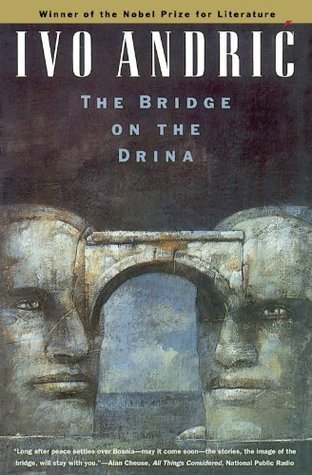
The Bridge on the Drina (Bosnian trilogy #1)
Author: Ivo Andrić
First published: 1945
Original title: Na Drini ćuprija
Genre: Historical Fiction
A great stone bridge built centuries ago by a Grand Vizier of the Ottoman Empire dominates the setting of this Nobel Prize-winning novel. Spanning generations, nationalities, and creeds, the bridge bears silent witness to the lives—and deaths—of those who cross it: Radisav, impaled for resisting its construction; Fata, who jumps from its parapet to escape a forced marriage; Fedun, the soldier who dies for a brief moment of peace.
Stretching from the 16th century to World War I, Andrić’s novel paints a vivid portrait of Bosnia’s entangled history. It’s a sweeping, melancholic epic, that earned Ivo Andric the Nobel Prize for Literature in 1961.
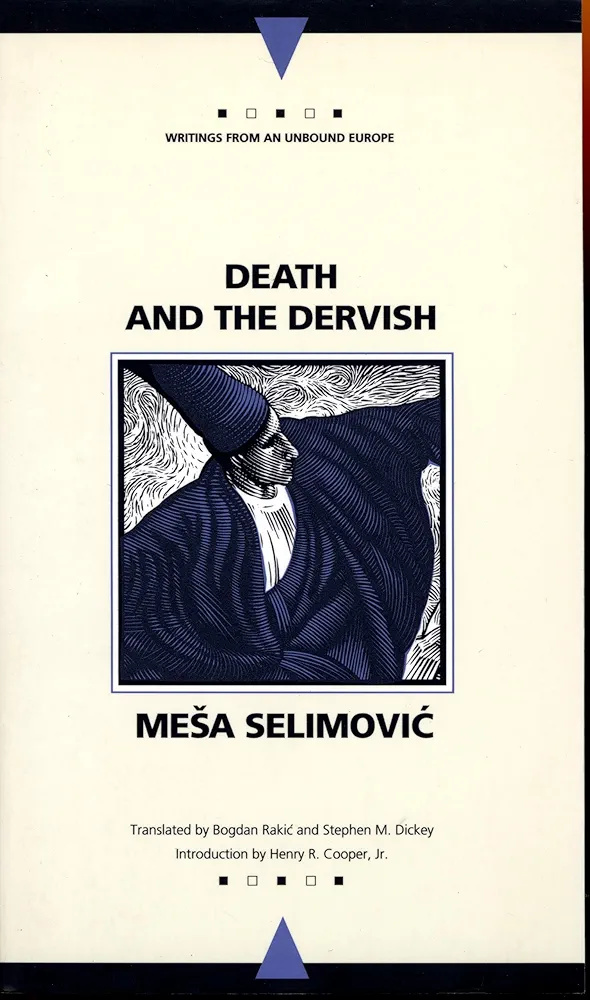
Death and the Dervish
Author: Meša Selimović
First published: 1966
Original title: Derviš i smrt
Genre: Historical fiction
This philosophical novel follows Sheikh Nuruddin, a dervish living in an Islamic monastery in Ottoman-era Sarajevo. When his brother is unjustly arrested, Nuruddin is drawn into the labyrinthine world of corruption, betrayal, and moral compromise.
Written as a suicide note, this haunting tale is part existential crisis, part political critique. With its introspective tone and Kafkian atmosphere, Death and the Dervish is widely regarded as one of the most important novels in Yugoslav literature. It was hugely successful when published in the 1960s, and made into a feature length film in 1974.
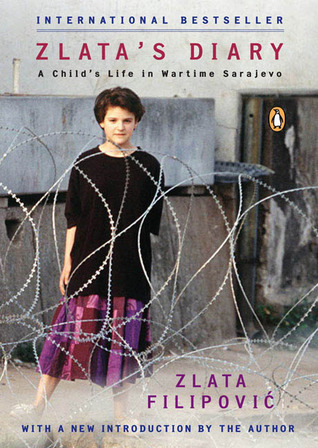
Zlata’s diary, A Child’s Life in Wartime Sarajevo
Author: Zlata Filipović
First published: 1993
Original title: Zlatin dnevnik
Genre: Memoir
Zlata Filipović was eleven years old when war came to Sarajevo. Her diary, at first filled with school, piano lessons, and birthday parties, quickly shifts to a record of survival—of shelling, loss, and life in a basement shelter.
Often compared to Anne Frank, Zlata’s voice is young but astute, frightened yet brave. Her words became a global wake-up call during the war, offering a human face to headlines and statistics.
How the soldier repairs the Gramophone
Author: Saša Stanišić
First published: 2012
Original title: Wie der Soldat das Grammofon repariert
Genre: Historical fiction
Aleksandar, a boy in the town of Višegrad, sees the world through the eyes of a dreamer and storyteller. But when war breaks out, his childhood is ruptured. Fleeing to Germany with his family, Aleks never forgets the girl he tried to save. Years later, he returns to Bosnia to seek answers and confront the ghosts of his past.
A lyrical, often surreal coming-of-age novel, How the Soldier Repairs the Gramophone reflects Stanišić’s own journey from Višegrad to exile. He was born in Višegrad and fled to Germany with his family in 1992. He writes in German.
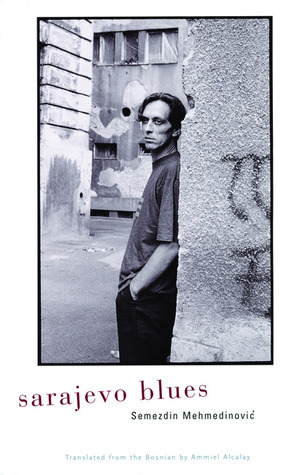
Sarajevo blues
Author: Semezdin Mehmedinovic
First published: 1992
Original title: Sarajevo blues
Genre: Poetry / Short stories / Nonfiction
From one of Bosnia’s most prominent poets and writers: spare and haunting stories and poems that were written under the horrific circumstances of the recent war in Bosnia and Herzegovina. Semezdin Mehmedinovic remained a citizen of Sarajevo throughout the Serbian nationalists’ siege and was active throughout the war in the city’s resistance movement, as one of the editor’s of the magazine Phantom of Liberty.
Semezdin Mehmedinovic says that “writing is, finally, quite a personal thing that doesn’t make much sense unless you are practicing for the last word.” For those Bosnians emerging from the siege or still in exile, these “last words” remain intimate possessions, one of the last bastions left against the commodification of tragedy.
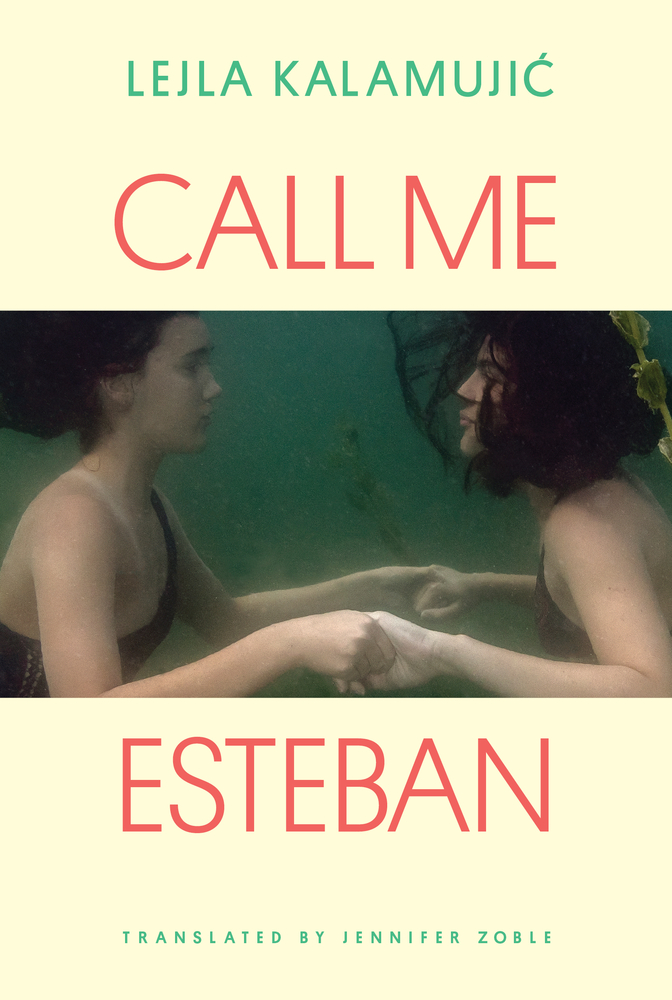
Call Me Esteban
Author: Lejla Kalamujic
First published: 2020
Original title: Zovite me Esteban
Genre: Short stories / Literaty fiction / LGBTQ
With unapologetic vividness, Lejla Kalamujic maps a fragmented Sarajevo and a fragmented self in this genre-bending collection. We follow a young woman as she grapples with her mother’s death, mental illness, and queer identity across a landscape of cozy apartments, psychiatric wards, and imagined dialogues with Kafka.
Tender and rebellious, Call Me Esteban is a queer meditation on grief, gender, and memory that blurs the line between fiction and autobiography.
Quiet flows the Una
Author: Faruk Šehić
First published: 2011
Original title: Knjiga o Uni
Genre: Historical Fiction
Quiet Flows the Una is the story a man trying to overcome the personal trauma caused by the war in Bosnia and Herzegovina between 1992 and 1995. The book covers three time periods, taking in the hero’s childhood before the war, the battle lines during the war, and his attempt to continue with normal life in a post-conflict society.
Part war novel, part poetic reflection, we follow this man as he tries to reconstruct his identity after surviving the war. The river Una becomes both symbol and setting, a place of childhood joy, frontline horror, and post-war numbness.
Šehić, himself a veteran and poet, crafts a deeply personal, dreamlike narrative of memory and trauma.
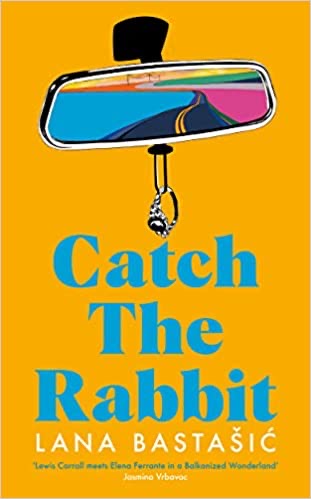
Catch the rabbit
Author: Lana Bastašic
First published: 2018
Original title: Uhvati zeca
Genre: Contemporary
Sara hasn’t seen or heard from Lejla in years. She’s comfortable with her life in Dublin, with her partner, their avocado plant, and their naturist neighbour. But when Lejla calls and demands she come home to Bosnia, Sara finds that she can’t say no.
What begins as a road trip becomes a journey through the past, as the two women set off to find Armin, Lejla’s brother who disappeared towards the end of the Bosnian War. Presumed dead by everyone else, only Lejla and Sara believe that Armin is still alive.
Confronted with the limits of memory, Sara is forced to reconsider the things she thought she understood as a girl: the best friend she loved, the first experiences they shared, but also the social and religious lines that separated them, that brought them such different lives.
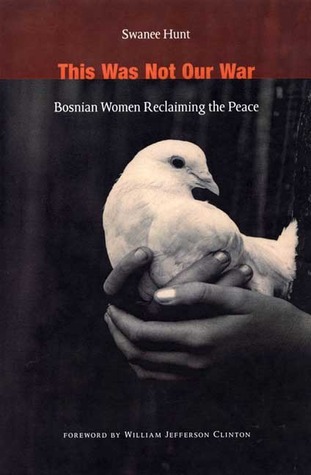
This Was Not Our War: Bosnian Women Reclaiming the Peace
Author: Swanee Hunt
First published: 2004
Original title: This Was Not Our War
Genre: Nonfiction / Interviews
Over seven years, diplomat and scholar Swanee Hunt interviewed 26 Bosnian women: students, politicians, farmers, doctors, who survived the war and dedicated themselves to rebuilding.
Their stories span a wide range of ages, religions, ethnicities, and professions, but all share one thing: the determination to reclaim peace on their own terms. A university student working to resettle refugees, a paramedic who founded a veterans’ aid group, a fashion designer running two nonprofit organizations, a government minister and professor who survived Auschwitz. These women are advocates, politicians, farmers, journalists, students, doctors, businesswomen, engineers, wives, and mothers. They are from all parts of Bosnia and represent the full range of ethnic traditions and mixed heritages. Their ages spread across sixty years, and their wealth ranges from expensive jewels to a few chickens. For all their differences, they have this much in all survived the war with enough emotional strength to work toward rebuilding their country.
Moving and powerful, this book centers voices often left out of war narratives.
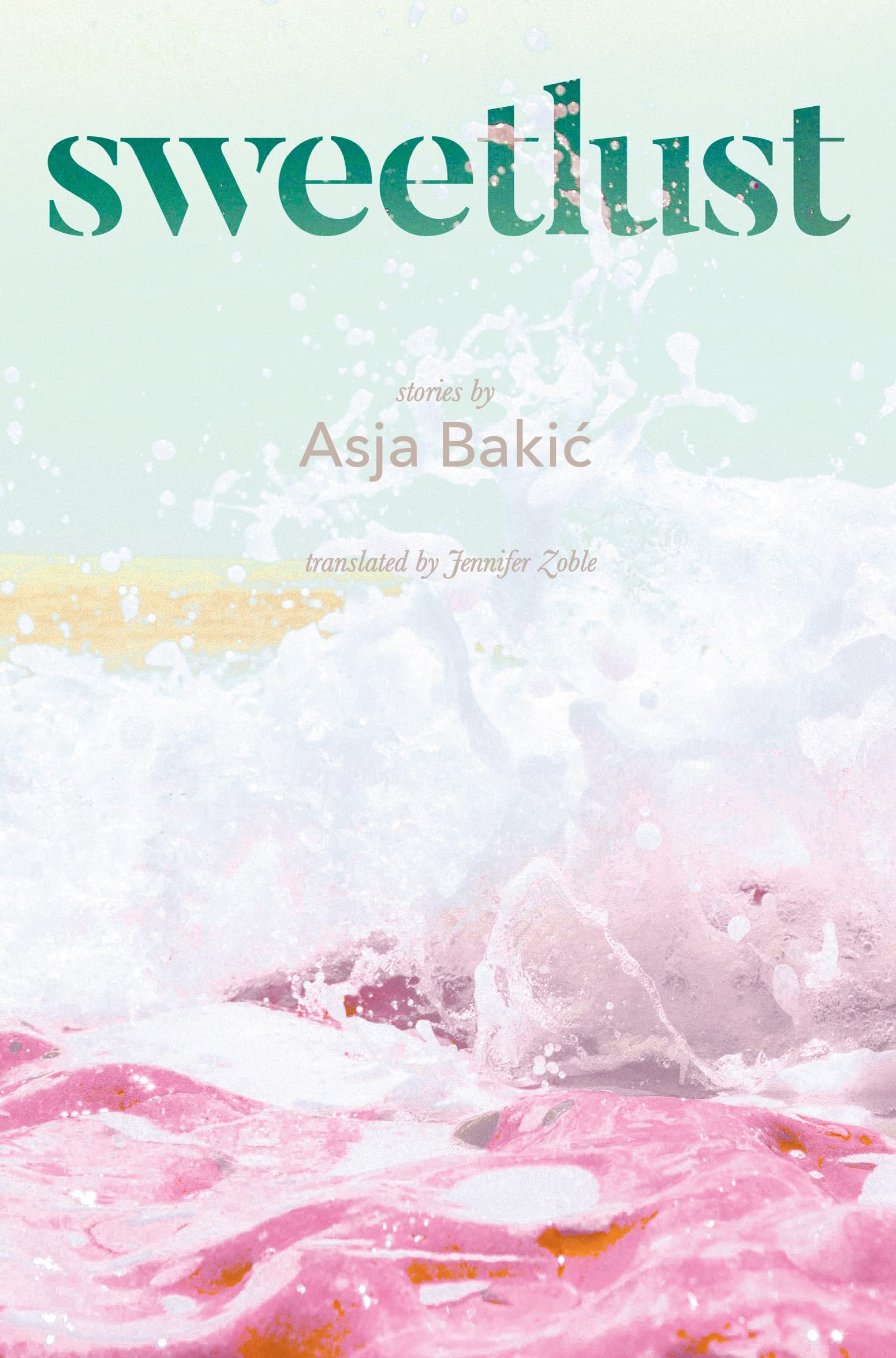
Sweetlust
Author: Asja Bakić
First published: 2020
Original title: Sladostrašće
Genre: Speculative fiction / Literary fiction
In these eleven irreverent, genre-blending stories, Asja Bakić reimagines the world with a feminist sci-fi twist. In one tale, women are “rehabilitated” in a sex-themed amusement park. In another, the Balkans are ravaged by climate disasters, and a woman builds a time machine.
With playful intelligence and sly eroticism, Bakić explores desire, control, and absurdity in a world shaped by patriarchy, technology, and trauma. A bold and unconventional entry in Bosnian literature, if you’re looking for something a little weirder!
Join me, and read a book from Bosnia and Herzegovina
Bosnia and Herzegovina isn’t easily summed up in ten books, but I hope this list opens a door. Whether you’re drawn to classics, contemporary fiction, memoirs, or something stranger, each of these works offers a different angle on a country shaped by layers of culture and history, and scarred by one of the most brutal conflicts in recent European memory.
Many of the authors on my list from the entire Post-Yugoslavian region write from a place of exile, displacement, or diaspora, and that experience of being in-between, between languages, countries, or identities is something I will take with me, as I wrap up this region on the Borderless bookshelf.
I hope you’ll join me in reading one of these books and discovering the voices behind the headlines.