Facing her, all words are miserably colorblind
Sarah is quietly happy in Dublin with her messy red haired computer programmer boyfriend and the avocado plant that survived against all odds. She left Bosnia twelve years ago. She also left behind Lejla, and she has spent those twelve years consciously putting physical and emotional distance between herself and both the country and her wild, unpredictable childhood best friend.
Until one day out of the blue Leila calls and demands that Sara come home and help her find her long lost brother, Armin.
Lejla’s brother was a few years older than the girls. He disappeared during the war, and as we are to find out, Sarah had a huge teenage crush on him. And now he is in Vienna, Leija says, and Sara needs to drive her there from Bosnia.
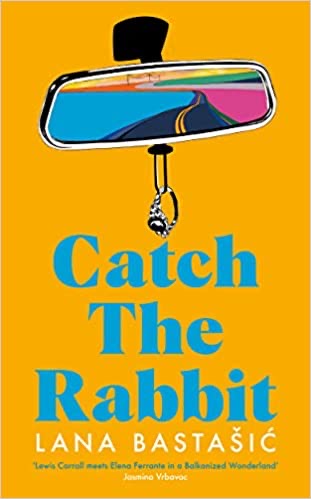
Next thing Sara knows, she’s on a road trip across Bosnia, and being forced to reconsider everything she remembers from her childhood and youth. Did she ever really know Lejla at all?
Road trips not your thing? Try another book from Bosnia and Herzegovina!
The road trip premise sounds straightforward, but the execution is anything but. The book shifts between the present-day journey, snapshots of their childhood and youth, and moments where Sara seems to speak directly to Lejla while writing this very story. It is masterfully executed. Lana Bastašić has a way with striking metaphors and poetic phrases that make you want to linger on the sentences.
And it’s not really about the road trip. It’s not even really about Bosnia, though the war and the broken country looms in the periphery of the Sara’s childhood memories. When the dogs of certain families show up dead, when Sara’s father, the police chief, talks about not being conscripted because of his bad leg. It is hinted that Sara and Lejla’s families are on opposite sides in the war, like when Lejla’s name changes overnight and when Sara’s mother tries to find Sara a different best friend from the right circles, but it is not discussed.
Memories might be like a frozen lake to me – blurry and slippery – but every now and then there’s a crack in its surface and I can put my hand through it and catch a detail, a recollection in the cold water. But frozen lakes are vicious. Sometimes you catch a fish, other times you fall through and drown.
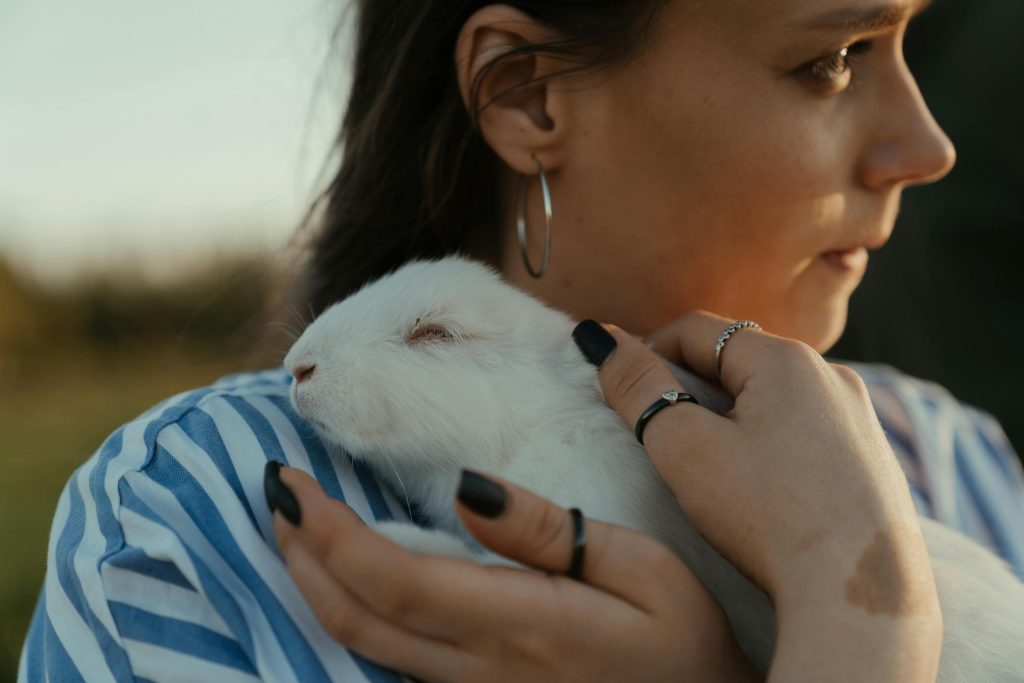
What is discussed, and at length, are the things that take up the minds of girls and young women – boys, your first period, school teachers and math tests, the time your best friend’s brother took your hand, the time you stole a white rabbit during an earthquake after having had sex for the first time behind a tree by the river, and the time you buried that same rabbit in the back yard and told your best friend to go fuck herself.
And the heart of this story is the complicated relationship between Sara and Lejla. This is a story about a female friendship so intense it borders on obsession, tangled up with rivalry, loyalty, and a fair bit of damage. The blurb on the book describes it as “Lewis Carroll meets Elena Ferrante in a Balkanized Wonderland”, and the Ferrante parallels are definitely spot on. The bond between the quiet bookish Sara and the rebellious Lejla very closely mirrors the bond between Elena and Lila in Ferrante’s Napoli Quartet. So much so, that it was almost too much for me. There’s a fine line between inspiration and plagiarism.
We’re always in Bosnia. Now we were spreading her all over Europe. Our country with its irreconcilable borders was in fact borderless. We had fought for nothing. Killed each other over nothing. We were never inside that country. She is the one inside us. Like a phantom itch. Our skin bleeds from futile scratching.
Somewhere in the middle of the book, I found myself getting a little impatient, and wishing the plot would hurry along. The character of Lejla is so extremely outrageous, selfish, and exhausting that I struggled to understand why Sara remained so drawn to her. To buy into the destructive friendships in fiction, I need to see the allure as well as the toxicity, and here that balance was a bit off for me.
But the story found its footing again, and the ending more than made up for my impatience. It has the kind of twist you don’t see coming until it’s right there in front of you. And then you realise the signs were there all along.
I went in expecting more detail about the war itself, but what I got instead was a sharp, strange, and layered portrait of two women bound together by a shared past they can’t escape. It’s about friendship, memory, identity, and what happens when you try to go back. To a place, to a person, or to a version of yourself you thought you’d left behind.