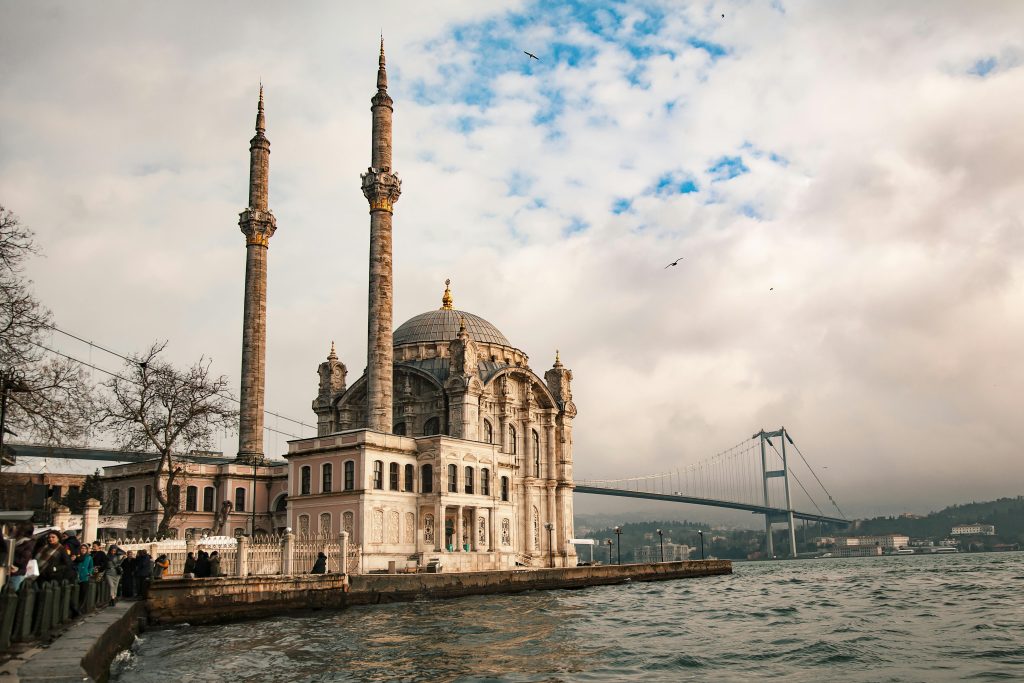
I am ending my Transcontinental Mosaic region in the country that contains a literal bridge between Europe and Asia. And I have in fact passed across this bridge in person many years ago. I have also read both the Nobel-winning author Orhan Pamuk and some other more recent Turkish literature before.
Turkish literature is remarkably rich, wide-ranging, and very well translated into English. The problem here really is not access but abundance.
This list is not claim to be a definitive statement on Turkish literature, but I have tried to put together a deliberately varied selection: classics and contemporaries, easy-reads and more demanding texts, the obvious ones and the ones that just happened to demand my attention.
A list of books to read from Türkiye
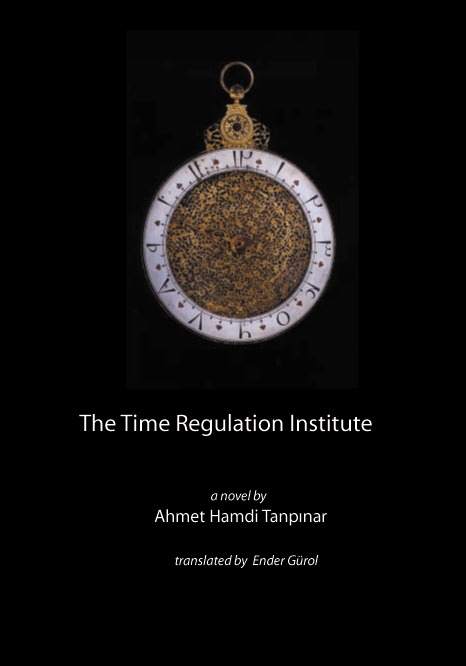
The time regulation institute
Author: Ahmet Hamdi Tanpınar
First published: 1961
Original title: Saatleri Ayarlama Enstitüsü
Genre: Literary fiction / Classics / Satire
Old Istanbul aristocrats, Turkish teashops, imperial diamonds, and great and humble mosques are juxtaposed with the almost non-descriptive portrayals of neighborhood friendships, family relations, and local public figures who could be found in any city in Turkey or, perhaps, any Eastern setting where the old way of life adopts new and Western counterparts.
The novel is a sharp, often absurd satire about Türkiye’s attempt to regulate itself into modernity. Through bureaucracy, clocks, and institutions that make little sense, Tanpınar captures the uneasy tension between tradition and reform that runs through much of Turkish history.
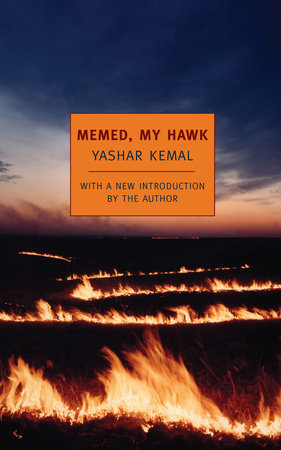
Memed, My Hawk
Author: Yaşar Kemal
First published: 1955
Original title: İnce Memed
Genre: Literary fiction / Classic / Social realism
A cornerstone of modern Turkish literature.
Memed, a high-spirited, kindhearted boy, grows up in a desperately poor mountain village whose inhabitants are kept in virtual slavery by the local landlord. Determined to escape from the life of toil and humiliation to which he has been born, he flees but is caught, tortured, and nearly killed. When at last he does get away, it is to set up as a roving brigand, celebrated in song, who could be a liberator to his people — unless, like the thistles that cover the mountain slopes of his native region, his character has taken an irremediably harsh and unforgiving form.
The novel draws on oral storytelling and epic tradition to depict rural Anatolia, injustice, and rebellion. It is expansive, political, and deeply rooted in landscape and community.
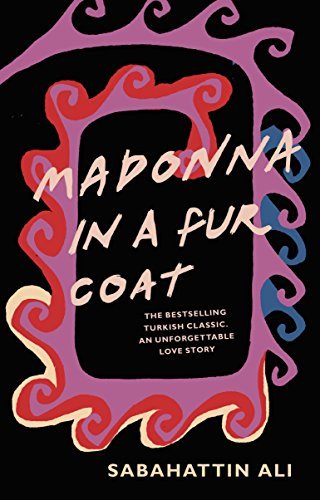
Madonna in a fur coat
Author: Sabahattin Ali
First published: 1943
Original title: Kürk Mantolu Madonna
Genre: Literary fiction / Classics
The bestselling Turkish classic of love and longing in a changing world.
A shy young man leaves his home in rural Turkey to learn a trade in 1920s Berlin. The city’s crowded streets, thriving arts scene, passionate politics and seedy cabarets provide the backdrop for a chance meeting with a woman, which will haunt him for the rest of his life.
Emotionally powerful, intensely atmospheric and touchingly profound, Madonna in a Fur Coat is an unforgettable novel about new beginnings and the unfathomable nature of the human soul, and its enduring popularity speaks to its emotional clarity and understated political undercurrent.
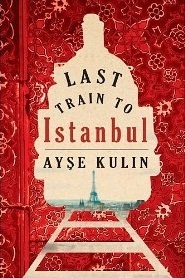
The last train to Istanbul
Author: Ayşe Kulin
First published: 2001
Original title: Nefes Nefese
Genre: Historical fiction
International bestseller by one of Türkiye’s most beloved authors.
As the daughter of one of the last Ottoman pashas, Selva could win the heart of any man in Ankara. Yet the spirited young beauty only has eyes for Rafael Alfandari, the handsome Jewish son of an esteemed court physician. In defiance of their families, they marry, fleeing to Paris to build a new life.
But when the Nazis invade France, the exiled lovers will learn that nothing – not war, not politics, not even religion – can break the bonds of family. For after they learn that Selva is but one of their fellow citizens trapped in France, a handful of brave Turkish diplomats hatch a plan to spirit the Alfandaris and hundreds of innocents, many of whom are Jewish, to safety. Together, they must traverse a war-torn continent, crossing enemy lines and risking everything in a desperate bid for freedom. From Ankara to Paris, Cairo, and Berlin, Last Train to Istanbul is an uplifting tale of love and adventure.
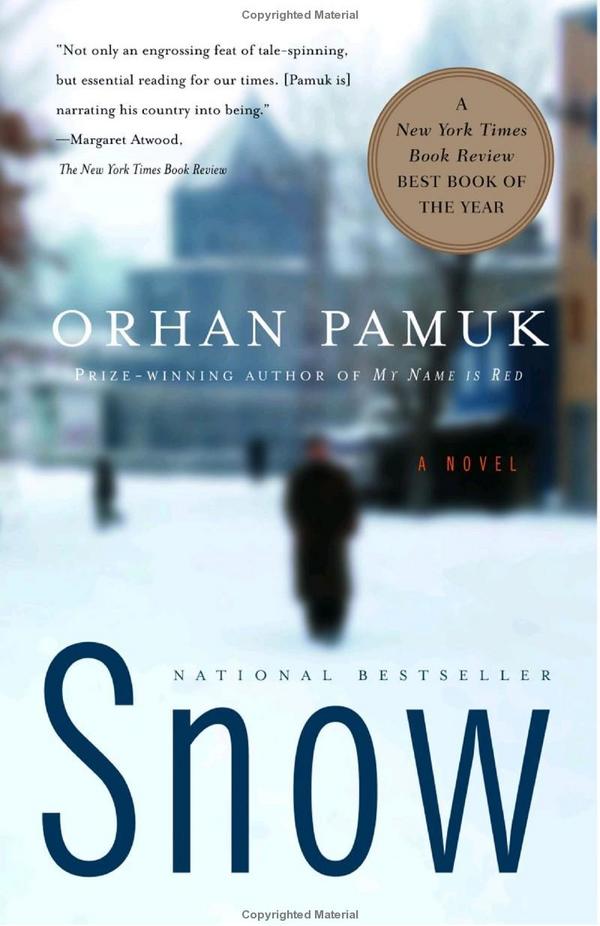
Snow
Author: Orhan Pamuk
First published: 2002
Original title: Kar
Genre: Literary fiction / Political fiction
After years of self-imposed exile in Western Europe, the poet Ka returns to Türkiye for his mother’s funeral and is soon drawn to Kars while investigating a series of suicides among young women banned from wearing headscarves at school. Cut off from the outside world by an unforgiving snowstorm, Ka finds himself increasingly entangled in the town’s tensions—and unexpectedly reunited with a woman from his past.
As political unrest escalates into a military coup and Ka’s own spiritual doubts intensify, his long-dormant creativity erupts in sudden bursts of poetry. Isolated, disoriented, and searching for meaning, he is forced to confront questions of belief, belonging, and whether happiness is still within reach.
Orhan Pamuk received the 2006 Nobel Prize in Literature and is arguably Turkey’s most important and prominent novelist, he has sold over 13 million books in 63 languages. Snow sits at the centre of this list for good reason: few novels capture Türkiye’s ideological tensions as starkly or as unsettlingly as this novel.
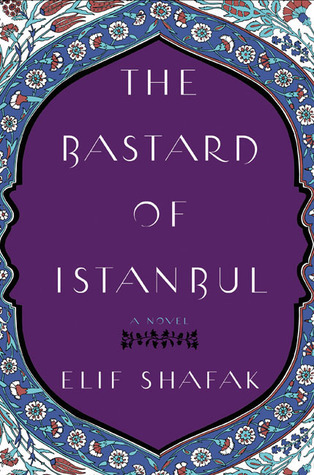
The Bastard of Istanbul
Author: Elif Shafak
First published: 2006
Original title: Baba ve Piç
Genre: Literary fiction / Contemporary
I have Elif Shafak down as a possibility for several countries accross the Middle East, (one book of hers was on my list for Cyprus) but she is in fact Turkish. And in The Bastard of Istanbul she confronts her country’s violent past in a vivid and colourful tale.
The “bastard” of the title, Asya, a nineteen-year-old who loves Johnny Cash and the French Existentialists, and the four sisters of the Kazanci family who all live together in an extended household in Istanbul: Zehila, the zestful, headstrong youngest sister who runs a tattoo parlor and is Asya’s mother; Banu, who has newly discovered herself as a clairvoyant; Cevriye, a widowed high school teacher; and Feride, a hypochondriac obsessed with impending disaster.
Their one estranged brother lives in Arizona with his wife and her Armenian daughter, Armanoush. When Armanoush secretly flies to Istanbul in search of her identity, she finds the Kazanci sisters and becomes fast friends with Asya. A secret is uncovered that links the two families and ties them to the 1915 Armenian deportations and massacres. Full of vigorous, unforgettable female characters, The Bastard of Istanbul is a bold, powerful tale that confirms one of Turkey’s most acclaimed and outspoken writers as a rising star of international fiction.
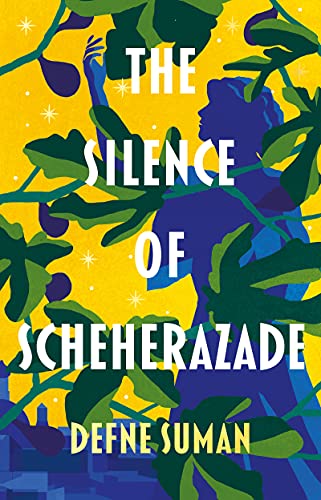
The Silence of Scheherazade
Author: Defne Suman
First published: 2016
Original title: Şehrazad’ın Sessizliği
Genre: Literary fiction / Historical fiction
On an orange-tinted evening in September 1905, Scheherazade is born to an opium-dazed mother in the ancient city of Smyrna. At the very same moment, a dashing Indian spy arrives in the harbour with a secret mission from the British Empire. He sails in to golden-hued spires and minarets, scents of fig and sycamore, and the cries of street hawkers selling their wares. When he leaves, seventeen years later, it will be to the heavy smell of kerosene and smoke as the city, and its people, are engulfed in flames.
Told through the intertwining fates of a Levantine, a Greek, a Turkish and an Armenian family, this unforgettable novel reveals a city, and a culture, now lost to time.
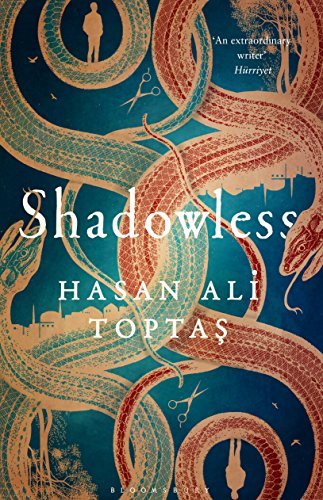
Shadowless
Author: Hasan Ali Toptaş
First published: 1999
Original title: Gölgesizler
Genre: Literary fiction / Magical realism
In an Anatolian village forgotten both by God and the government, the muhtar has been elected leader for the sixteenth successive year. When he staggers to bed that night, drunk on raki and his own well-deserved success, the village is prosperous. But when he is woken by his wife the next evening he discovers that Nuri, the barber, has disappeared without a trace in the dead of night, and the community begins to fracture.
In a nameless town far, far away, Nuri walks into a barbershop as if from a dream, not knowing how he has arrived. Try as he might, he cannot grasp the strands of his memory. The facts of his past life shift and evade him, and as other customers come and go, they too struggle to recall how they got there…
Blurring the lines of reality to terrific effect, Shadowless is both a compelling mystery and an enduring evocation of displacement from one of the finest, most exciting voices in Turkish literature today.
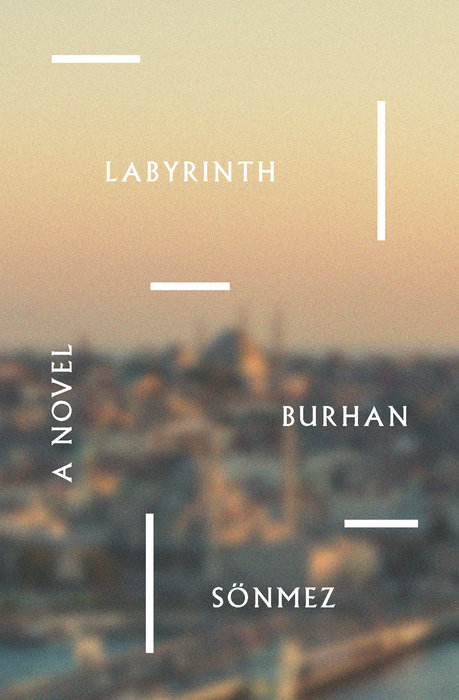
Labyrinth
Author: Burhan Sönmez
First published: 2018
Original title: Labirent
Genre: Literary fiction / Contemporary
A blues singer, Boratin, attempts suicide by jumping off the Bosphorus Bridge, but opens his eyes in the hospital. He has lost his memory, and can’t recall why he wished to end his life. He remembers only things that are unrelated to himself, but confuses their timing. He knows that the Ottoman Empire fell, and that the last sultan died, but has no idea when. His mind falters when remembering civilizations, while life, like a labyrinth, leads him down different paths.
From the confusion of his social and individual memory, he is faced with two questions. Does physical recognition provide a sense of identity? Which is more liberating for a man, or a society: knowing the past, or forgetting it?
A heady, political tale of one man’s search for identity and meaning from a prize-winning Turkish novelist.
The garden of the departed cats
Author: Bilge Karasu
First published: 1979
Original title: Göçmüş Kediler Bahçesi
Genre: Short stories / Experimental
And for something more obscure, let’s end the list with a surreal, and utterly unique Turkish novel.
In an ancient Mediterranean city, a tradition is every ten years an archaic game of human chess is staged, the players (visitors versus locals) bearing weapons. This archaic game, the central event of The Garden of the Departed Cats, may prove as fatal as the deadly attraction our narrator feels for the local man who is the Vizier, or Captain, of the home team.
Their “romance” provides the skeletal structure of this experimental novel. Each of their brief interactions works as a single chapter. And interleaved between their chapters are a dozen fable-like stories, that work independently of the main narrative but, in curious and unpredictable ways, echo and double its chief love, its recalcitrance and its cat-like finickiness
I’m intrigued, but will I be intrigued enough to pick this up as my Turkish choice?
Join me, and read a book from Türkiye
Novels from Türkiye engage with empire and modernisation, rural life and urban alienation, memory and silence, faith and power. They also exist in a space where literature and politics are never far apart, whether the author wants them to be or not. Putting this list together therefore felt less like a detective hunt for suitable books (like Armenia and Azerbaijan did) and more like an exercise in restraint, and a balance act on a political tightrope.
But Türkiye truly does have something for everyone, and I hope you will agree.
Have you read any of these? Or do you have other Turkish favourites? Let me know!