Coincidence is a word we use when we are ignorant of the real causes
(This review contains spoilers)
Albert Salvadó was an easy pick for Andorra. Because he’s the only native Andorran author I could find. That said, none of his books actually take place in Andorra. His most famous novel is The Teacher of Cheops, which is set in ancient Egypt, but I wasn’t really in the mood for pyramids.
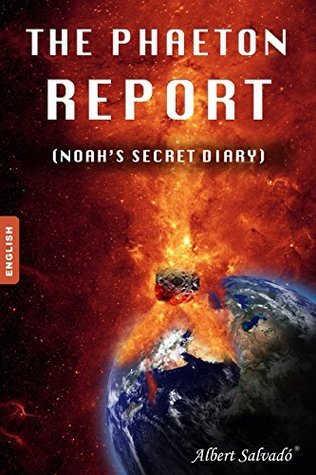
Instead, my eyes fell on his final book, The Phaeton Report, which caught my attention with its intriguing premise. I went in expecting something closer to nonfiction, but it turned out to be something completely different. In a good way!
What if everything we know about history is wrong?
You’ve probably heard that the continents used to be one giant landmass called Pangaea, surrounded by a single ocean called Panthalassa. That whole thing broke apart around 195 million years ago according to mainstream science.
But. What if it didn’t? What if the split actually happened just 13,000 years ago? And what if every major religious or mythical tradition around the world in fact contains pieces of this occurrence, and of the real reason why it happened.
That is the wild setup behind The Phaeton Report.
The main character of the book is an author who meets a mysterious man at a party. He ends up getting involved with a secret group called the Universal Scientific Community. They’ve supposedly been around since Galileo’s time, working in the shadows to protect scientific knowledge from censorship by church and state.
The mysterious man gives our author friend a few pointers, and he gets curious and starts following them. And soon he finds himself spiraling ever further into a web of more mysterious people, ancient documents, forgotten truths, and a theory that humanity once had an advanced civilization back when Pangaea was still intact.
According to these findings, that civilization caused its own downfall, through mistakes and human hubris, which led to a global flood. Not a punishment from the gods, but something we did to ourselves. And the book then continues to draw some unsettling parallels between then and now.
The demographic explosion, mushrooming megalopolises and expanding air transport made Man no longer content with creation alone. An increasing number of individuals looked only to their own personal and material wellbeing. Man had an overabundance of everything but he always wanted more and more. He did not stop producing things even when he did not need them and the more he had the more he clamored for.
It’s quite hard to sum up this novel because I’ve honestly never read anything like it.
Think: every world religion, multiple branches of science, a good dose of science fiction, and a health sprinkle of conspiracy theory. All stirred together and served in a wine glass.
The entire story is based on data that are available to the public and which can be checked. The amount of research that clearly went into this novel is truly impressive, and there were parts that genuinely blew my mind. The concept sounds a bit chaotic, but it somehow works. I was very well entertained.
I ended up liking this way more than expected and walked away with a lot to think about.
It’s not easy to make a list of books from Andorra, but I did try.