I’m an official idiot
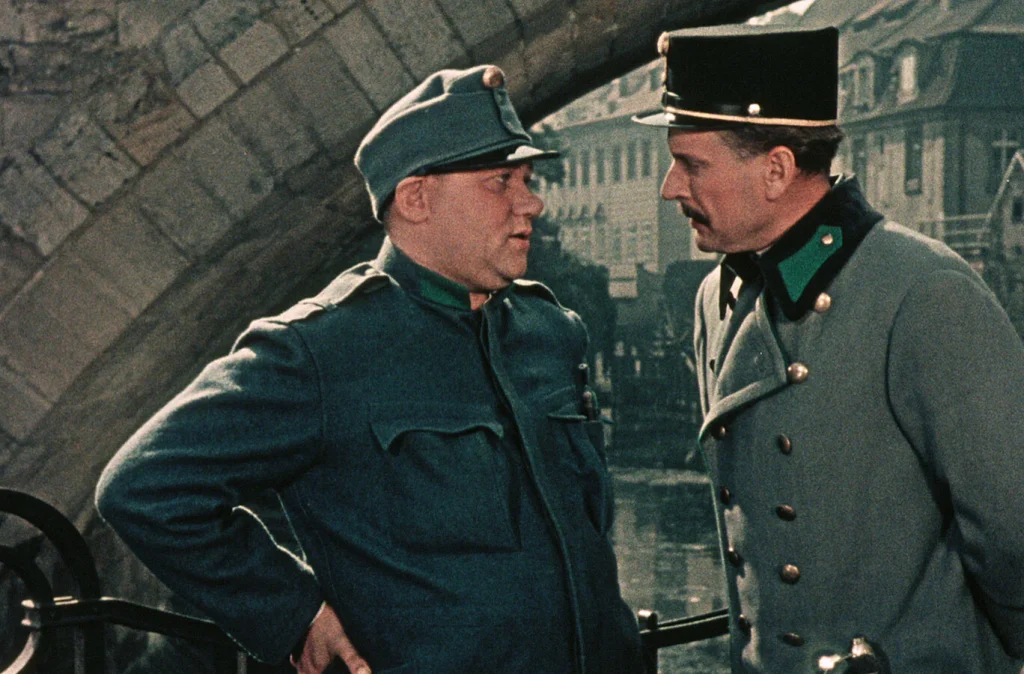
(Cover photo of this post is a screenshot from Karel Steklý’s film adaptation from 1956.)
Welcome to the Austro-Hungarian army, where nothing makes sense and the best way to survive is to act like a fool. Or possibly just to be one.
The Good Soldier Švejk is a Czech classic by Jaroslav Hašek, an anarchist and satirist who knew exactly how to poke fun at power. The novel follows the endlessly cheerful Švejk, who bumbles his way through World War I with a grin, a story for every occasion, and an uncanny knack for turning blind obedience into complete chaos.
The novel begins just after the assassination of Archduke Franz Ferdinand, the spark that ignites World War I. Švejk, a Czech dog-seller with aching joints and a suspiciously enthusiastic attitude, is quick to declare his loyalty to the Austro-Hungarian Empire, even though he’s already been officially declared an idiot by a military board. Undeterred, he’s swept up into the war effort.
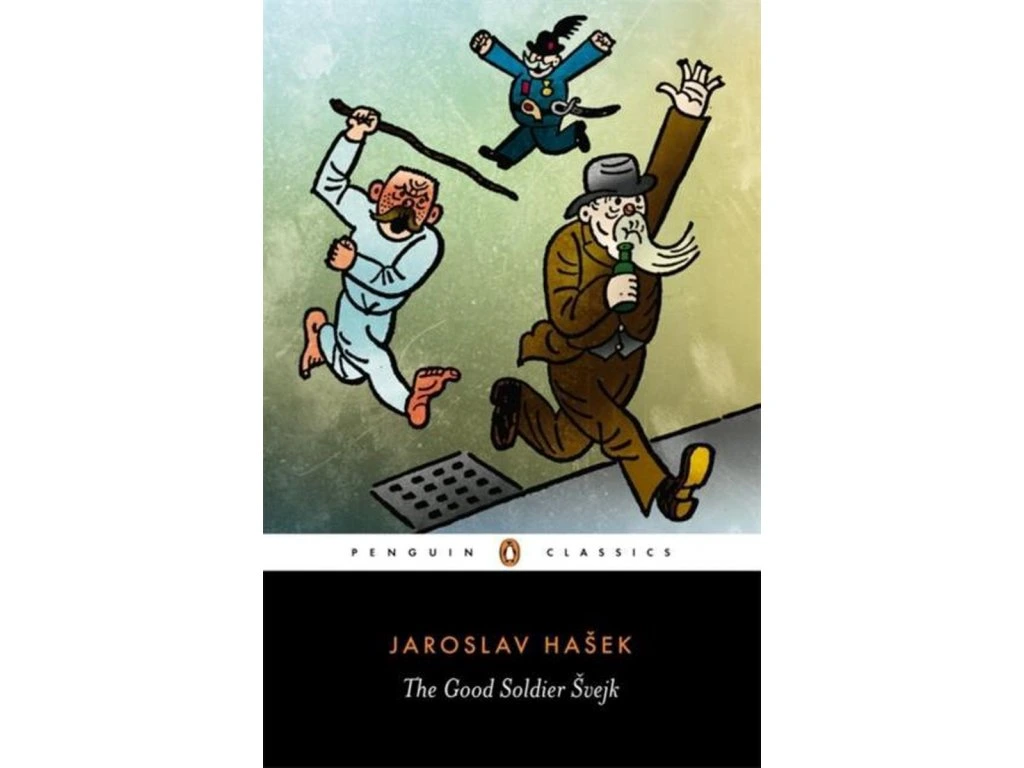
What follows is less of a structured plot than a chaotic string of misadventures. Švejk gets arrested for treason, thrown into a madhouse, transferred to various military units, and continually shuffled through a broken system of bureaucracy, incompetence, and absurdity. He tells endless irrelevant stories, obeys every command to the letter to disastrous or nonsensical effect, and seems to move further and further from the front lines, despite allegedly heading there.
And somewhere from the dim ages of history the truth dawned upon Europe that the morrow would obliterate the plans of today.
Each episode satirizes a different piece of the military machine, from clueless officers and hypocritical chaplains to senseless paperwork and corrupt police. The novel was intended to span the entire war, but Jaroslav Hašek died before he could finish it, so the book ends quite abruptly mid-saga, Švejk still in transit, still not quite where he’s supposed to be.
It’s a wildly absurd book, and I found much of it genuinely hilarious. Hašek’s dry humour and talent for turning bureaucracy into farce is impeccable. So is Švejk’s logic in the most ridiculous ways, and the world around him is so tangled in its own contradictions that his nonsense often ends up making the most sense.
I really don’t know why those loonies get so angry when they’re kept there. You can crawl naked on the floor, howl like a jackal, rage and bite. If anyone did this anywhere on the promenade people would be astonished, but there it’s the most common or garden thing to do. There’s a freedom there which not even Socialists have ever dreamed of.
The story behind the book is almost as interesting as the novel itself. It was banned in several countries for its irreverent take on military life and authority, but it’s since become one of the most important and beloved works in Czech literature.
So no, it didn’t exactly sweep me off my feet. But I did have a good time stumbling along behind Švejk. Official idiot, accidental genius, and one of the most absurd war heroes literature has to offer.
And I probably still need to actually read Kafka at some point, don’t I?