We are all children of the Horned Mother Deer
Oh my Lord.
This one broke my heart.
For Kyrgyzstan, there was never really a question of where to start. Chingiz Aitmatov is the towering figure of Kyrgyz literature. The writer who carried the country’s stories far beyond the country’s mountains and into the wider world. If you read just one Kyrgyz author, it will almost certainly be him.
After finishing The White Ship, I understand why. This book packs an emotional punch that should not be possible in 150 pages. It was so beautiful. And so sad.
Grandpa says people would give their lives for a song of their homeland. I’d like to see such people. Do they live in big cities?
Aitmatov wrote during the Soviet era and his stories often weave together folklore, myth, nature, and the inner lives of ordinary people.
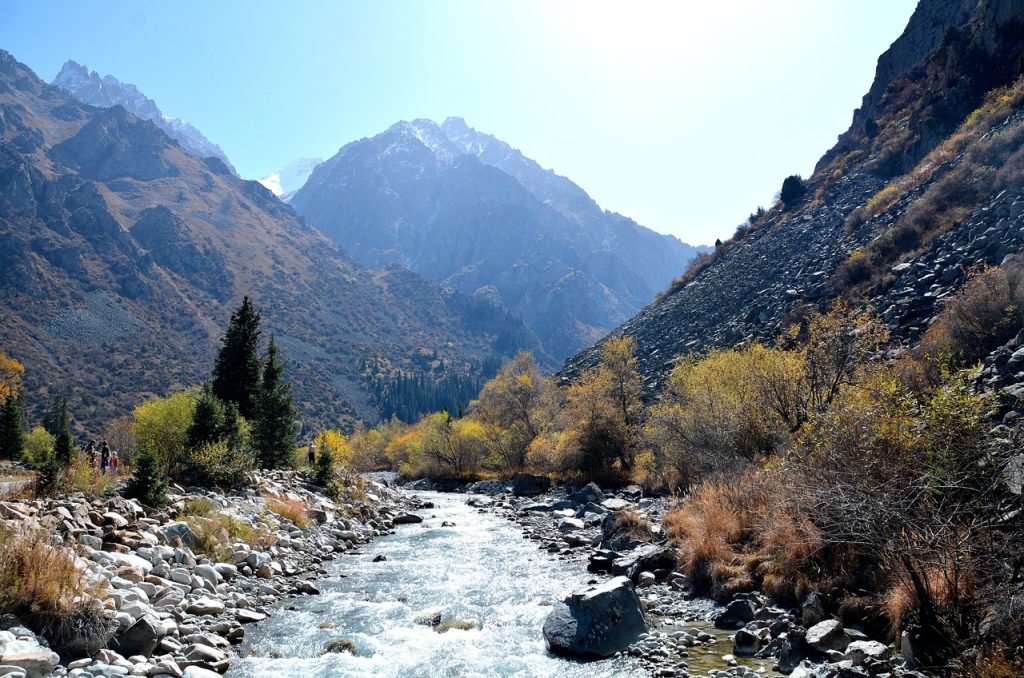
This particular little novel takes place at a small forest station high up in the Kyrgyz mountains near Lake Issyk-Kul. Here a small boy lives with his beloved grandpa and a handful of adults: His step grandmother, who has no warm feelings for him. His childless aunt and her husband, Uncle Orozkul, who is the leader of the place and fiercely beats and abuses his wife on a daily basis. And one other couple. All of the adults are too tired, too bitter, or too distracted to really care for the boy in any way.
His parents have abandoned him in favour of new families, he has no friends other than his grandpa, and very little warmth in his everyday life. The story does not even give him a name other than “the boy”. His best companions are some rock formations, his precious schoolbag and a pair of old binoculars.
So he turns to imagination.
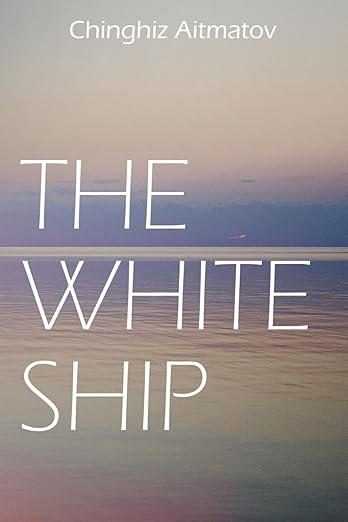
His grandpa has told him an old Kyrgyz legend about the sacred Mother Deer, and the boy clings to it with all his heart. Myth becomes comfort. And through his binoculars, every day he watches a white ship crossing the distant lake and imagines turning into a fish and swimming down there, where his father will surely welcome him.
The plot is simple and quiet, almost deceptively so. We mostly follow the boy’s thoughts, his dreams, and his small daily routines. Interspersed with the thoughts and depressing lives of his grandfather and Uncle Orozkul, and one quite dramatic incident with a group of young men caught in a snowstorm.
But then one day three of the beautiful horned dear show up by the river for real.
The night behind our house is black, black and bitter cold. The wind is raging. Even the highest mountains are frightened on such nights.
The boy’s desperate loneliness is so raw and so sincere that I kept wanting to reach into the pages and protect him. And all the while, in all of the simple beauty of this story, there’s a soft sense of dread and foreboding humming underneath the story. You can feel how fragile his world is, and you are holding your breath knowing how easily something could break.
And without giving too much away: this is not a book that ends lightly. By the last page, I just sat there staring for a while with tears running down my cheeks. This is a book that will hurt you in that quiet, inevitable way that stays with you long after you close it.
If this is what Aitmatov can do in one short novel, I desperately want to read more of his books. I can’t imagine a more fitting, or more unforgettable, introduction to Kyrgyz literature than this.
But, though I had to dig a little, there are alternatives to Aitmatov you can read for Kyrgyzstan.