Here they only understand one thing
Guys, hear me out. This was so good!
This, for me, is one of those books where you immediately feel the need to read everything this author has ever written. Which is slightly inconvenient, because apparently he publishes a book only once every seventeen years, and this is his second.
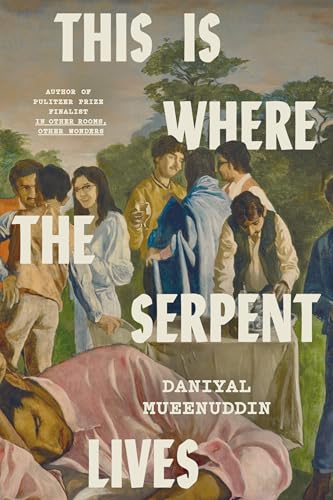
This Is Where the Serpent Lives consists of four interconnected novellas, following a group of people across several decades in Pakistan. They are separate stories, but someone who was the main character in one becomes a minor character in another. Someone you barely noticed suddenly gets his own story. And all four stories belong firmly to the same world.
I liked this structure more than I expected to.
At the centre of it all is the wealthy Atar family and an enormous collection of people surrounding them: landowners, servants, drivers, estate managers, politicians, gangsters, wives, girlfriends and assorted relatives. Think Downton Abbey, but Pakistani, considerably darker and with a class divide far more brutal.
Less cups of tea, more violence.
That was a bitter day when he accepted years later that there might have been no hand, no desperate parent seeking him in the crowd. He might have been abandoned, not lost.
The first novella introduces Yazid, an abandoned little boy taken in by a tea-stall owner in Rawalpindi. He is clever, charming and extraordinarily good at working out what people want from him. Eventually he finds his way into the household of the powerful Atar family as a chauffeur.
Later in the book he becomes almost a father figure to the servant boy, Saqib, whose story eventually takes over the last part of the book.
But in between these two characters’ stories, we move upstairs to meet the wealthy men whose families have owned land for generations, their wives and mistresses, and the sketchy people they need to negotiate with to hold their power. There is money, privilege, corruption, love, jealousy and violence.
First we meet Rustom, a young man who has returned to Pakistan after his education in America, trying to manage the family estate he has inherited while navigating the power structures of the Pakistani gangsters. This was the weakest part of the novel for me, I did not entirely connect with Rustom’s story, and wanted to return to Yazid.
But when Rustom’s older cousin Hisham and his formidable wife Shahnaz took the scene in the third part, I was completely sold. These people are the absolute top of the class pyramid, and in flashbacks we get the story of how they came to be husband and wife.
And all the while the servants are still there. Moving in the periphery. Yazid is now their trusted chauffeur, and by this point, the characters and relationships have begun overlapping so much that the book feels less like four separate stories and more like walking around an enormous house and opening different doors.
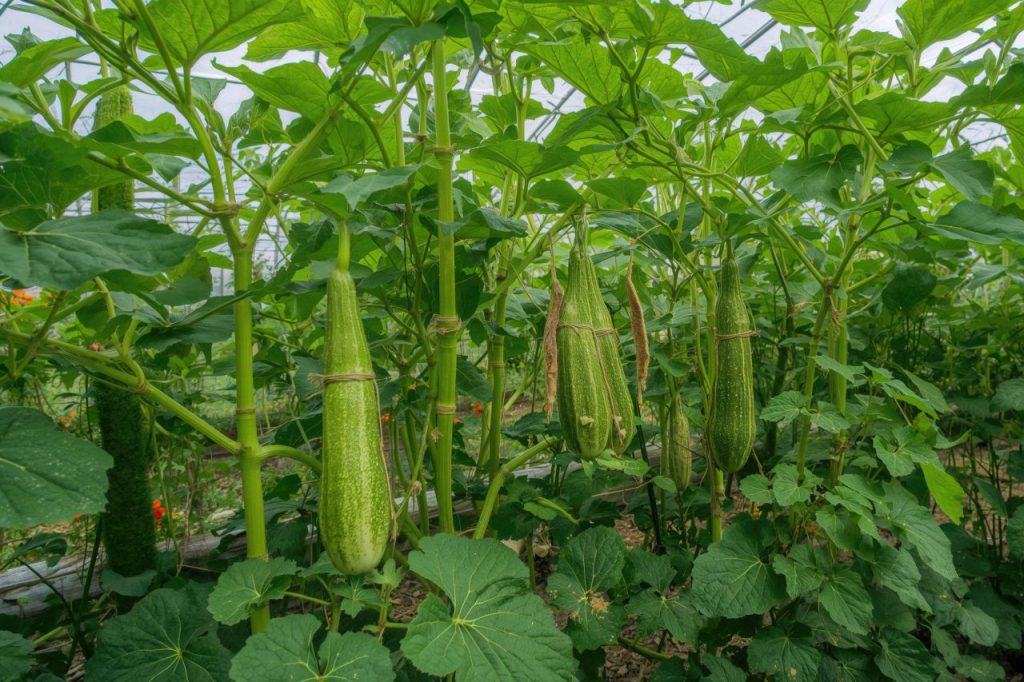
The final and longest novella belongs to Saqib, who works his way from servant boy into a position of considerable responsibility. When he is put in charge of a cucumber-growing project, he makes an enormous success of it.
And this is where I became surprisingly invested in Pakistani tunnel farming.
But Saqib wants more, and now the book really tightens its grip and becomes very, very dark.
It horrified him that he’d done this, becoming just like the landlords … Six months taking care of business in Pakistan, and already Rustom was coming to accept these violations.
I love how Mueenuddin paints his characters. Nobody here is particularly easy to divide into good and bad. The rich exploit the poor. The poor exploit people poorer than themselves. People steal, bribe, cheat, manipulate and betray each other on every level. But they are also clever, loyal, generous, loving and capable of enormous kindness. Sometimes all within a few pages.
You will come to like a character and then turn a page and watch in horror as he does something completely appalling.
I won’t tell you what happens in the end. But there were pages I almost could not read, and I finished the book feeling genuinely shaken.
So pick up this book and step into a world of enormous wealth and desperate poverty. Of servants who know their employers intimately but never become their equals. Of inherited land, old families, extreme corruption and people constantly trying to move a little higher up the ladder in any way possible.
Highly recommended.
But if you insist, here are some other choices for Pakistan.