Rose of a hundred petals
As a child, Ozar did not understand why people called his father Akhriman behind his back. Because Akhriman means evil spirit in ancient Iranian texts. Like the devil in Christianity. And Ozar’s father was not an evil man. Right?
This book was not what I would call a five-star experience. It is a mostly bleak, heavy, and emotionally draining story. And yet, I’m still glad I read it. Partly because it is one of the frustratingly few novels I can find by female authors from Central Asia, and partly because it tackles a very real and very painful issue in Tajikistan.
“I am to blame for the tragic death of my daughter”, mother lamented (…) “We shouldn’t have married the girl against her will. It turns out that we, the parents, are to blame for the unhappiness of our children.”
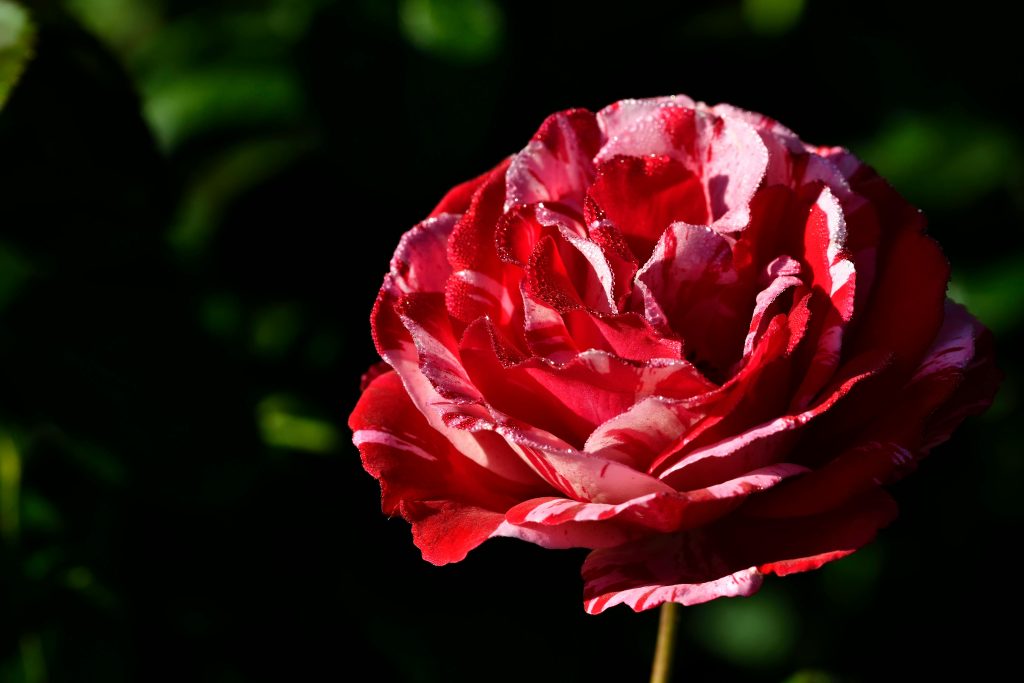
The story is framed as a letter, written by a young man, Ozar, to his new wife, based on his old diaries. He tells her of episodes from his childhood and the history of his family. These tales center around his mother Sadbarg, meaning Rose of a hundred petals, and on the long-term abuse she suffered at the hands of his father, aunts and grandmother.
He also tells her of his father’s constant infidelity and cruelty, which has fatal consequences for more than one woman in the story. And of his sister’s arranged marriage, which ends in complete tragedy.
Ozar also tells stories about his brothers and his grandparents, and we are meant to understand how patterns of cruelty, silence, and endurance repeat themselves across generations, and how the new generation is finally finding new ways and breaking old patterns.
The subject matter is undeniably important. This is a novel about domestic violence and female suicide, which as I said is a very real issue in Tajikistan. This is very much a novel about generational trauma, and about how difficult it is to break free from it once it has taken root.
That said, I did struggle a bit with the reading experience itself.
I found large parts of the novel emotionally flat. And I wonder why that is, because given the dramatic material, it sounds like a very odd complaint. But I often wished for a stronger sense of place. I wished for more texture, more atmosphere, more grounding in the physical world.
The language of this book feels very stiff and formal to me, which I suspect may be due to the translation rather than the original prose. On top of that, there are quite a lot of typos and small errors. It may seem minor, but it repeatedly pulled me out of the story, and in some cases even obscured the meaning of a sentence.
He considered all women not as humans, but as a different species. Where did he get this mentality from? Was it because of how easily he used them? Though most likely, it was thanks to his grandmother, she who buried a worm of narcissism into his body that settled in his soul and constantly ate away at him.
But I think my main problem with the story is the choice of a young man, as opposed to a female voice, as the narrator. It makes most of the story a second-hand experience. Or even third- or fourth-hand, because it is framed as a letter, telling his new wife what he wrote in his diary about what someone told him about someone else …
I simply don’t understand this choice.
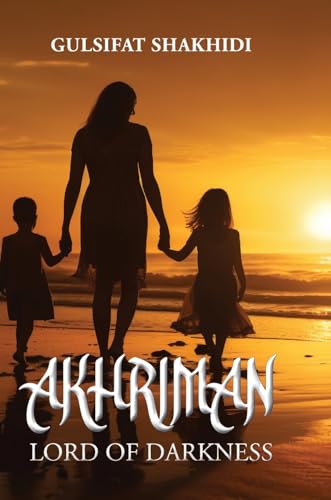
(I also don’t understand the cover choice of a woman and two children on a tidal beach for a book set in land-locked Tajikistan nowhere near water of any kind, but maybe that’s just me …)
The ending offers a cautious glimmer of light. There is regret and repentance and forgiveness.
And in the final chapter, a young woman (Ozar’s new wife) speaks publicly about the need for education, legal reform, and new ways of thinking about challenging the traditions that enable abuse. Knowing that similar initiatives are, in fact, slowly beginning to emerge in Tajikistan made this ending feel relevant and hopeful.
But still oddly emotionally distant. At least for me.
So all in all this is a book with a very important message, but lacks a little in execution. I won’t be pressing this book into anyone’s hands, but as a window into a difficult reality, and as a rare example of a female Tajik voice reaching an international audience, I’d still say it was worth reading.
But if it sounds too bleak for you, here are some other options for Tajikistan.