Today I lost the children
I broke my own rules for this one. Because while Tahmima Anam is of Bangladeshi descent, she did not grow up there, and she writes in English.
Normally, that would have been enough for me to choose something else for the Borderless Bookshelf. I have tried, wherever possible, to read authors who grew up in the country they are writing about rather than writers looking back from the diaspora. And books of that sort are in fact available for Bangladesh. But the description of A Golden Age just kept calling me, and in the end I decided to make an exception.
And I am really glad I did.
“This war that has taken so many sons has spared mine. This
age that has burned so many daughters has not burned mine.
I have not let it.”
The novel takes place during the 1971 Bangladesh Liberation War, a piece of history I knew absolutely nothing about before picking up this book. Embarrassingly I even had no idea that Bangladesh was once “East Pakistan”.
The struggle for independence, the brutal military crackdown, the millions of refugees fleeing into India, and the eventual birth of Bangladesh were all completely blank spaces in my knowledge.
Now I know more.
And A Golden Age taught me about all of this. But rather than battles and war zones, it let me experience it through Rehana Haque, a widowed mother whose world revolves around her two grown children, Sohail and Maya.
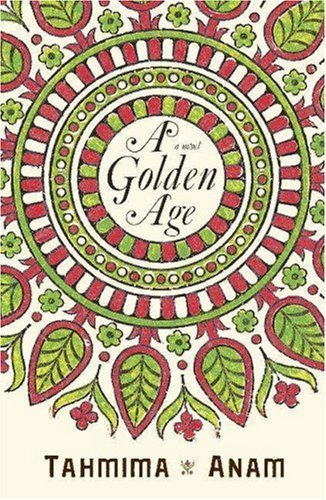
Rehana has already lost them once before. After her husband’s death, she temporarily lost custody of her two young children, because she could not convince a court that she could support them. She eventually managed to bring them home, and that experience hangs over everything that follows.
Unfortunately for her, Sohail and Maya have now reached an age where protecting them is becoming impossible.
Both young people are drawn into the independence movement, and gradually the war enters Rehana’s carefully constructed domestic world. What begins with political discussions and student activism soon becomes something far more dangerous. Her home becomes entangled with the resistance movement, and Rehana herself is forced to decide how far she is willing to go for her children, for the people they love and eventually for the country being created around them.
There are battles, atrocities, torture, refugees, deaths and resistance fighters here, but the stories of them are mostly secondhand, and the emotional centre of the story is really just a mother watching her children make choices she cannot control.
Rehana herself isn’t initially driven by grand ideas about nationalism or independence. She just wants Sohail and Maya alive. And also, she herself is an outsider, as she was born in India, and her sisters now live in Pakistan.
As she recited the pickle recipe to herself, Rehana wondered what her sisters would make of her at this very moment. Guerrillas at Shona. Sewing kathas on the rooftop. Her daughter at rifle practice. The thought of their shocked faces made her want to laugh. She imagined the letter she would write. Dear sisters, she would say. Our countries are at war; yours and mine. We are on different sides now. I am making pickles for the war effort. You see how much I belong here and not to you.”
It is a very intimate perspective on the war. In some way it feels similar to The Mountains Sing for Vietnam or In the Shadow of the Banyan for Cambodia, though it definitely did not reach those heights for me. Both of those affected me more deeply and stayed with me more strongly after I finished them. A Golden Age felt a little less moving, and there were parts where I wished for more depth.
But I genuinely liked it. The history was interesting, the characters believable, the sensory imagery lush and beautiful. The highlight for me was Rehana’s second chance of love. I will not spoil that part of the story for you, but it is beautifully done, and was absolutely the best part of the book for me.
So once again, the Borderless Bookshelf has taken me into a country, a war and a period of history about which I knew nothing. In this case, through one woman trying desperately to keep her family together while the country around her is being torn apart and remade.
So yes. I broke my own rules.
And I think this one was worth it.