The thing men most fear is independent females
Well. That was … strange.
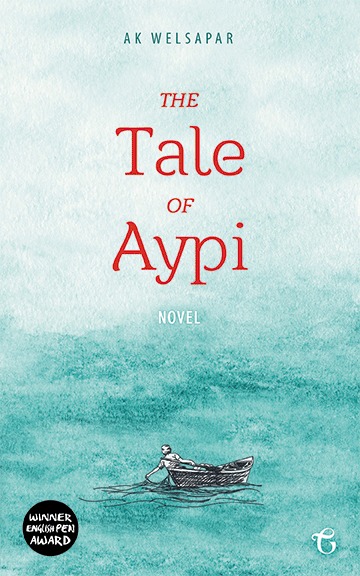
One of the realities of reading your way around the world is that a book can feel important simply because it exists in translation at all. The Tale of Aypi was one of those reads for me. Ak Welsapar is close to being the only Turkmen writer available in English. He has lived in exile in Sweden since 1996, but he writes in Turkmen. His books are all banned in his native country.
My list for Turkmenistan did not have much to choose from.
The novel is set in Soviet-era Turkmenistan, in a small fishing village on the Caspian Sea. The villagers here receive notice from the authorities that they must leave their homes, because a sanatorium is to be built along the coast, and the village is in the way. Most people comply, reluctantly but obediently. All of their children and grandchildren are already living in the city anyway.
We’re old men now, it’s obvious. Most of us are gone and few remain. That’s justice anyway: You ate, you lived, you saw good and evil, you suffered what you had to suffer, and you had your children. Then, all at once and before you know it, you’re sent on your way. As for you lot though, this is what I’m trying to say: It’s better to be ignorant and useful than learned and useless.
Only one man resists.
Arraz, a fisherman, stubbornly continues to go out to sea every morning despite an official fishing ban. His defiance is quiet rather than heroic, and it is this everyday resistance that became the emotional centre of the book for me. Through him the novel paints a convincing picture of a community slowly being dismantled by forces far beyond its control.
So far so good.
But running alongside this very grounded story is another, and much much stranger, narrative.
According to village legend, centuries ago, a young woman named Aypi was unjustly executed, drowned in the sea, for giving information to foreignors.
And as the village now enters its final days, Aypi rises from the depths as a ghost. She wanders through the settlement and beyond, berating the men, shouting feminist slogans, and causing general chaos.
You dare to judge women? You, the source of wisdom?! You, who seen an unattached woman and stalk after her without a thought of your household, wife or children? Predators! … Remember, if men are the bulwark of nations, women are the bulwark of life!
On paper, this sounds like a fun idea, and I liked it in theory. A wronged woman returning from the dead to unsettle the power structures is not a bad concept at all. But as I read on, I found myself much more interested in the very real, very human story of displacement and loss, while the legend of Aypi felt oddly disconnected and irrelevant. To me it felt like two completely unrelated stories mashed together, and I personally didn’t really understand the point of doing that. Feels like like the author never quite commits to which story he wants to tell.
In the end, what stayed with me was not the angry and vengeful feminist ghost, but the portrait of a small Turkmen fishing community on the brink of erasure. And I really wish that story would have been given more weight.
The novel is told almost exlusively through dialogue the inner monologues of various characters, constantly shifting between perspectives, and the whole thing feels a little jumpy and scattered to me. I would have liked more descriptions of the physical world, because after reading this book I honestly have no clear picture of the place at all.
The Tale of Aypi gave me a glimpse of a place and a history I knew nothing about, and for that alone I’m glad I read it. But as a complete novel, it sadly didn’t really work for me.
Paradoxically I think I probably would have liked The Tale of Aypi better without Aypi.