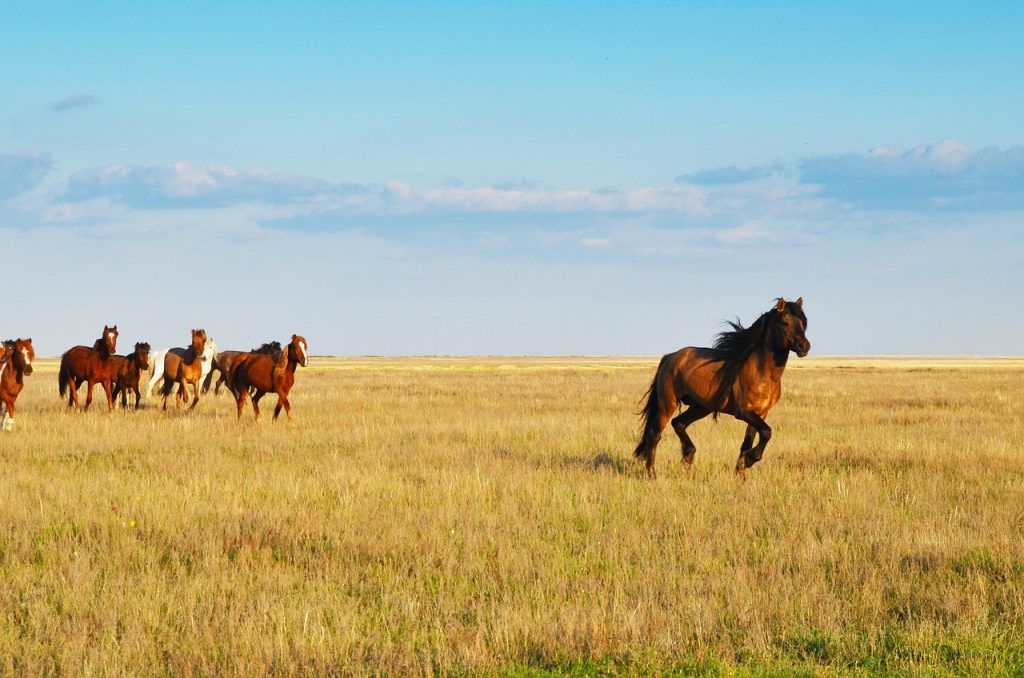
If Turkmenistan felt strange, Kazakhstan feels almost unreal … A vast stretch of land roughly the size of Western Europe, mostly flat steppe and open sky. Where horses still outnumber people and rockets launch into space from Baikonur …
It’s a country of extremes. Nomadic epics and Soviet prison camps. Nuclear test sites and disappearing seas. Silk Road crossroads and glittering new cities built from oil money. A place where borders are young, identities layered, and history feels both ancient and like it’s just beginning to unfold.
These ten books travel from ancient oral traditions and nomadic life through Stalinism, nuclear testing, ecological disaster, and into modern, independent Kazakhstan. And yes, a book set in Kazakhstan might very well be written by an Uzbek born in Kyrgyzstan now living in London. That is just the reality of this region.
Let’s step onto the steppe!
A list of books to read from Kazakhstan
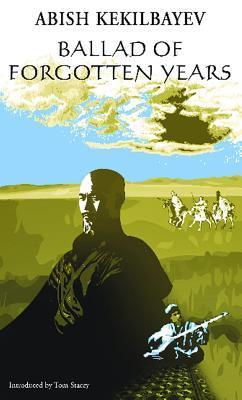
Ballad of Forgotten Years
Author: Abish Kekilbayev
First published: 1988
Original title: Ballad of forgotten years
Genre: Historical fiction / Novella
We could start by stepping straight into the storytelling roots of the steppe, and pick up this little novella set in ancient times.
Ballad of forgotten years draws on Kazakh oral traditions to tell a brutal story of feud, vengeance, and tribal honour between Kazakhs and Turkmen. At the center is Daulet, a young heir who believes music — not violence — might break the cycle of bloodshed. His weapon is the lute, not the sword. It’s a stark, almost mythic tale, full of cruelty and beauty, and with a most powerful morale.
Blood and Sweat
Author: Abdi-Jamil Nurpeisov
First published: 1970
Original title: Қан мен тер
Genre: Historical fiction
Often described as one of the great Kazakh novels, Blood and Sweat is a sweeping epic about a village caught in the upheavals of the early 20th century, as empire collapses and a new nation struggles to be born.
Through personal rivalries, love, betrayal, and sheer survival against the elements, Nurpeisov paints a vivid picture of a disappearing way of life. Big, dramatic, and deeply rooted in place, it’s frequently compared to And Quiet Flows the Don in scope and ambition. and is said to be the only novel that truly describes in soul of the Kazakh people, and the birth of a nation with defined boundaries.
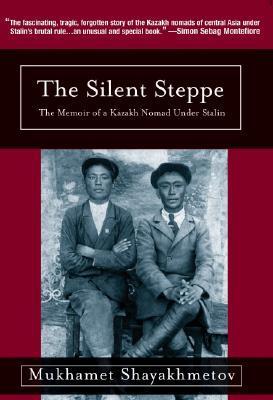
The Silent Steppe: The Memoir of a Kazakh Nomad Under Stalin
Author: Mukhamet Shayakhmetov
First published: 2006
Original title: The Silent Steppe
Genre: Nonfiction / Memoir
This memoir tells the story of Kazakhstan’s nomadic communities under Stalin, when collectivisation, famine, and labour camps shattered traditional life.
Shayakhmetov writes about his family’s displacement, his father’s arrest, and the slow unraveling of an entire culture. It’s both personal testimony and historical record. A quiet but devastating account of what Soviet rule meant for ordinary people on the steppe.
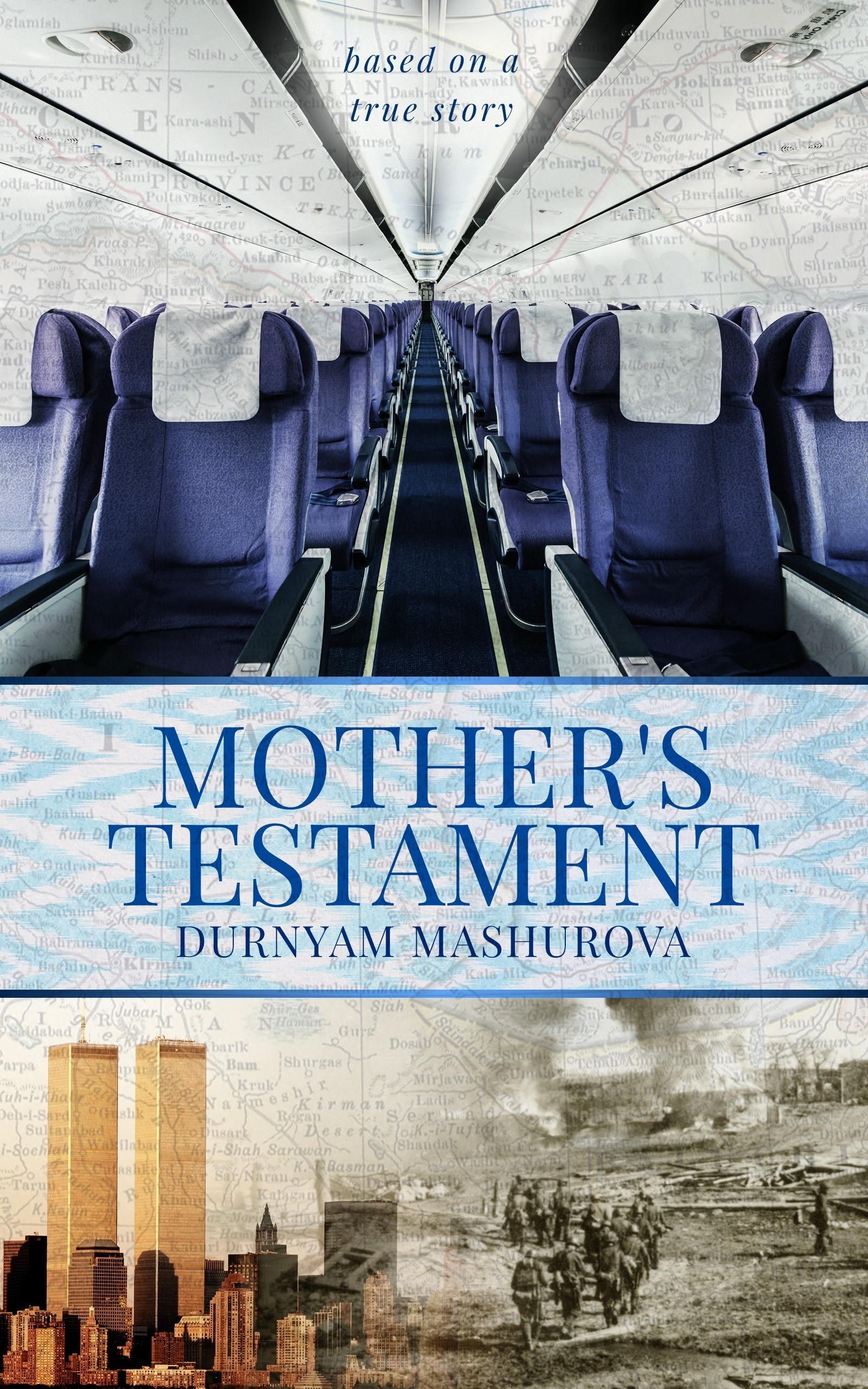
Mother’s Testament
Author: Durnyam Mashurova
First published: 2018
Original title: Mother’s testament
Genre: Historical fiction / Semi-autobiography
Mehriban is born into an Uighur family in a village in eastern Kazakhstan in which everybody works on the local collective farm. She tells of the people among whom she grows up, and in particular of the women – daughters, sisters, mothers, aunts, grandmothers – their lives and loves, their resilience in the face of bereavement, injustice, hunger and cold, their folk wisdom and their irrepressible spirit.
Covering three generations, from the Stalinist repressions of the 1930s and the Great Patriotic War through to the chaos of perestroika and the new order following independence, A Mother’s Testament is an intimate and richly drawn portrait of life and customs in those times, told through a cast of memorable characters. It is also the tale of how Mehriban comes to write the story down and of how she follows her own daughter far from the village into the unknown, and realises her own true destiny.
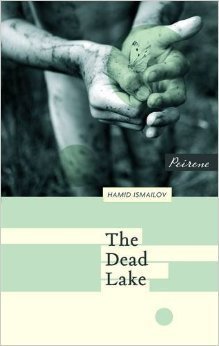
The dead lake
Author: Hamid Ismailov
First published: 2011
Original title: Вундеркинд Ержан
Genre: Historical fiction / Literary fiction
Yerzhan grows up in a remote part of Kazakhstan where the Soviets tests atomic weapons. As a young boy he falls in love with the neighbour’s daughter and one evening, to impress her, he dives into a forbidden lake. The radio-active water changes Yerzhan. He will never grow into a man. While the girl he loves becomes a beautiful woman.
Part love story, part Cold War nightmare, this strange and haunting novel explores the human cost of nuclear testing with a touch of magical realism. It’s unsettling in the quietest possible way.
(And yes, Hamid Ismailov is the Uzbek author from Kyrgyzstan living in London …)
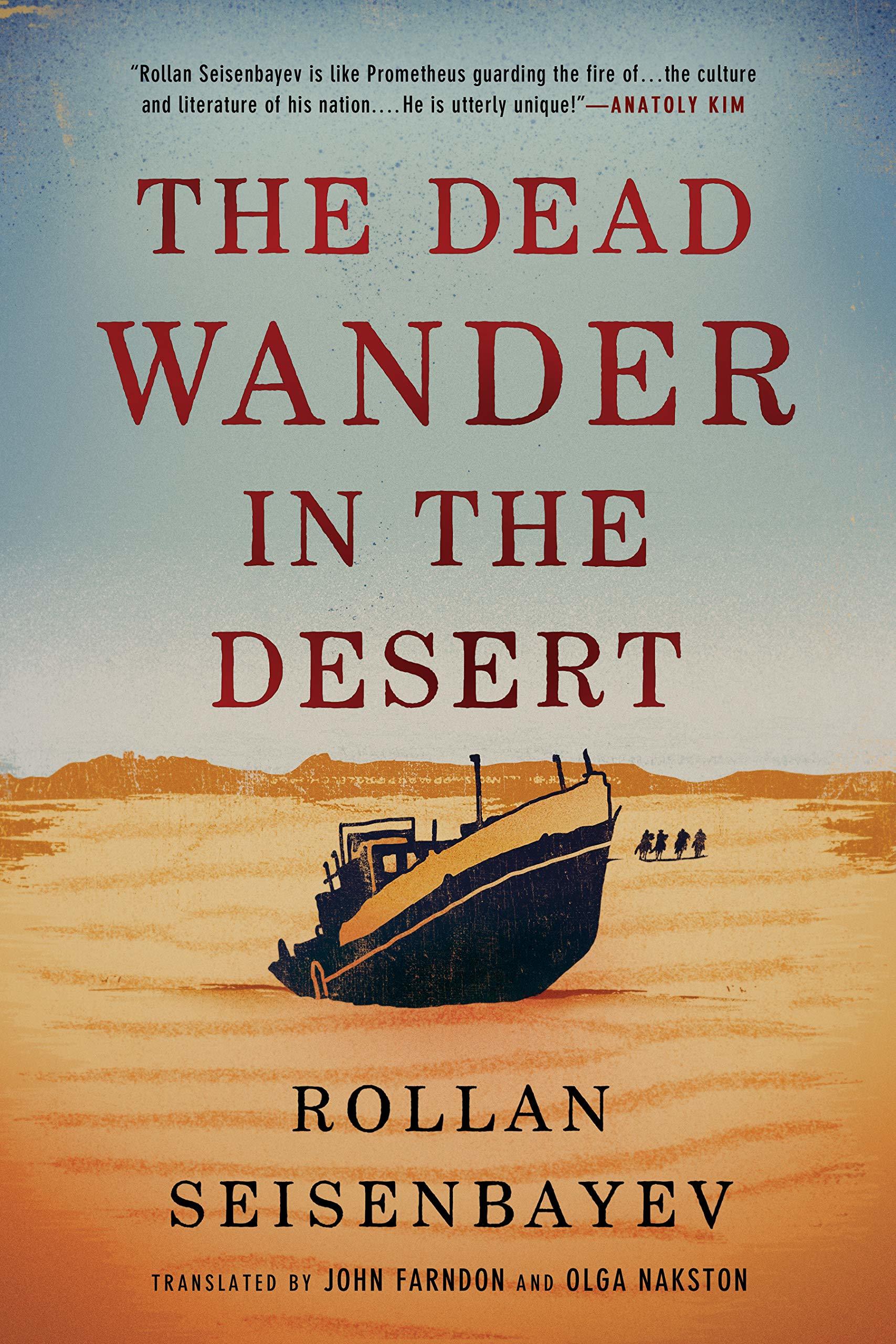
The Dead Wander in the Desert
Author: Rollan Seisenbayev
First published: 2019
Original title: originally written in Kazakh but first published in translation
Genre: Historical fiction
From one man-made disaster to another …
This novel follows a father and son watching their fishing community collapse as the water retreats. Once the fourth largest lake on earth, The Aral Sea is now an impending environmental catastrophe. Starved of water by grand Soviet agricultural schemes, the sea is drying out, and the land around it is turning into a salt desert. The livelihood of the fishermen who live on its shores is collapsing. Vanishing with the water is a whole way of life.
Despite overwhelming odds, Nasyr looks to Allah for guidance, while his son Kakharman wages a battle against an indifferent bureaucracy. Even as the consequences mount, their quixotic fight proves more daunting, and the sea itself seems to roil in despair.
Amanat: Women’s writing from Kazakhstan
Author: Zaure Batayeva, Shelley Fairweather-Vega (Editor)
First published: 2022
Original title: Amanat
Genre: Short stories
A man is arrested for a single typo, a woman gets on buses at random, and two friends reunite in a changed world…. Amanat brings together the voices of thirteen female Kazakhstani writers, to offer a glimpse into the many lives, stories, and histories of one of the largest countries to emerge from the breakup of the Soviet Union.
The twenty-four stories in Amanat, translated into English from Kazakh and Russian, comprise a groundbreaking survey of women’s writing in the Central Asian country over its thirty years of independence, paying homage to the rich but largely unrecorded oral storytelling tradition of the region. Contemplating nostalgia, politics, and intergenerational history, Amanat acutely traces the uncertainties, struggles, joys, and losses of a corner of the post-Soviet world often unseen and overlooked.
To Hell With Poets
Author: Baqytgul Sarmekova
First published: 2024
Original title: Originally written in Kazakh but published in translation
Genre: Contemporary / Short stories
Sarmekova offers a sharp and honest rendering of daily life in Kazakhstan. A wry, darkly humorous portraits of ordinary Kazakh people held in the snare of patriarchy, cultural tradition, and postsocialist upheaval.
Vivid, hilarious and unsettling, the tragicomic characters of To Hell With Poets reflect the inner discord of the modern Kazakh. The stories move between the city and the aul, postsocialist and capitalist worlds, tradition and modernity. Incisive and unapologetic.
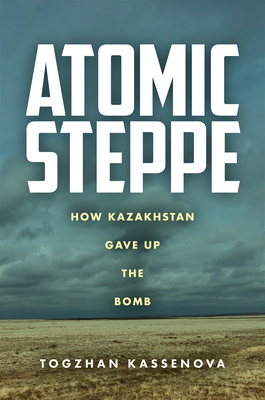
Atomic Steppe: How Kazakhstan gave up the bomb
Author: Togzhan Kassenova
First published: 2022
Original title: Atomic Steppe
Genre: Nonfiction / History
Atomic Steppe tells the untold true story of how the obscure country of Kazakhstan said no to the most powerful weapons in human history. With the fall of the Soviet Union, the marginalized Central Asian republic suddenly found itself with the world’s fourth largest nuclear arsenal on its territory. Would it give up these fire-ready weapons, or try to become a Central Asian North Korea?
Equipped with intimate personal perspective and untapped archival resources, Togzhan Kassenova introduces us to the engineers turned diplomats, villagers turned activists, and scientists turned pacifists who worked toward disarmament. With thousands of nuclear weapons still present around the world, the story of how Kazakhs gave up their nuclear inheritance holds urgent lessons for global security.
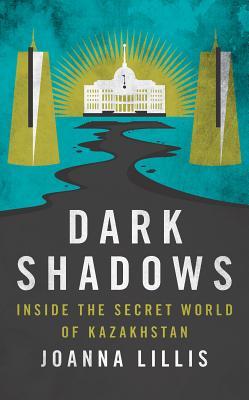
Dark Shadows: Inside the secret world of Kazakhstan
Author: Joanna Lillis
First published: 2019
Original title: Dark Shadows
Genre: Nonfiction / Journalism
And finally, another compelling nonfiction option. In Dark Shadows Journalist Joanna Lillis paints a vibrant picture through vivid reportage based on 13 years of on-the-ground coverage, and travels across the length and breadth of this enigmatic country that lies along the ancient Silk Road and at the geopolitical and cultural crossroads where East meets West.
Featuring tales of murder and abduction, intrigue and betrayal, extortion and corruption, this book explores how a president, Nursultan Nazarbayev, transformed himself into a potentate and the economically-struggling state he inherited at the fall of the USSR into a swaggering 21st-century monocracy. A colourful cast of characters brings the politics to life: from strutting oligarch to sleeping villagers, from principled politicians to striking oilmen, from crusading journalists to courageous campaigners. Traversing dust-blown deserts and majestic mountains, taking in glitzy cities and dystopian landscapes, Dark Shadows conjures up Kazakhstan as a living, breathing place, full of extraordinary people living extraordinary lives.
Join me, and read a book from Kazakhstan
Kazakhstan was most definitely not on my literary radar before this project, but now it feels impossible to ignore, doesn’t it?
A country where an inland sea can vanish within a lifetime. Where villagers lived for decades beside nuclear explosions. Where nomadic songs survive next to spaceports and oil towers.
Sweeping historical sagas. Quiet village memoirs. Environmental warnings. Sharp contemporary voices. Journalism that reads like political thrillers … Honestly, this might be one of the most varied lists I’ve made so far. There’s really something here for every reading mood, no?
I’m not sure which one I’ll start with yet. The nuclear and Aral Sea books are calling to me… but so are the women’s short stories … and then again the nonfiction options look so interesting here … oh the joys of being a borderless bookworm spoilt for choice 🙂
Which would you pick first?