
I already had ten books from India.
They covered six Indian languages. They took me from Kerala to Arunachal Pradesh, from rural villages to Bangalore, from the nineteenth century to an imagined future. I had caste and religion, sexuality and technology, Partition and climate change.
It was a perfectly respectable list. I was happy with it.
And then I looked at everything I had left out.
There was no Arundhati Roy. No Train to Pakistan. No Dalit autobiography. No Assamese literature. No Booker awarded Muslim women writing about Muslim women’s lives. And I had somehow made a list of Indian books without either of India’s great epics making an appearance.
But what tipped the scale were the flying anarchists.
Reader, I tried.
So. For the first time ever on the Borderless Bookshelf …
Here are ten more books from India.
A(nother) list of books to read from India
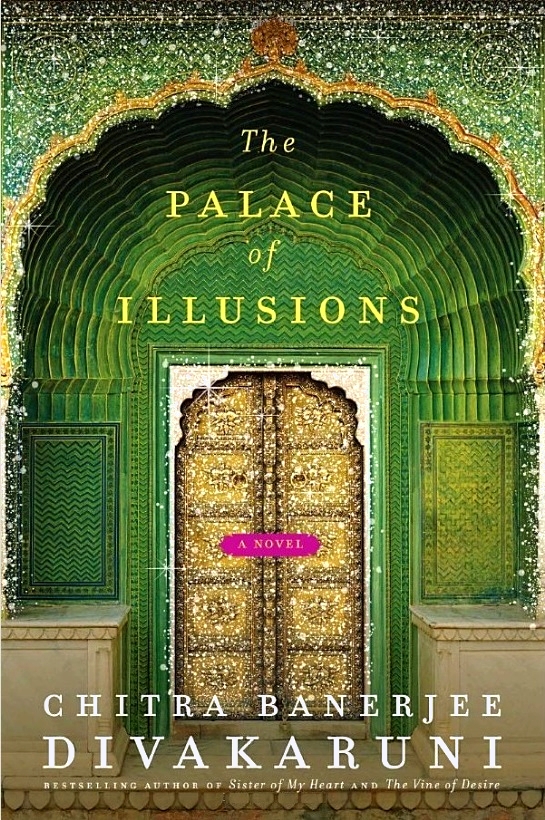
The Palace of Illusions
Author: Chitra Banerjee Divakaruni
First published: 2008
Original title: The Palace of Illusions
Genre: Mythological Fiction / Historical Fantasy
Let’s start with the Mahabharata.
One of India’s great epics has been told and retold for centuries, but Chitra Banerjee Divakaruni hands the story to Panchaali, better known as Draupadi: born from fire, married to five brothers and eventually caught at the centre of a war that will tear families and kingdoms apart.
The Palace of Illusions follows her from her unusual childhood through marriage, exile and war, while giving considerably more space to her ambitions, anger, desires and complicated relationships, including one with the enigmatic Krishna and another with a man she really shouldn’t be thinking about at all.
Divakaruni was born and raised in India but has lived in the United States since she was nineteen, so this is one of the diaspora voices among my twenty. But the chance to enter the enormous world of the Mahabharata through one of its most fascinating women earned it a place.
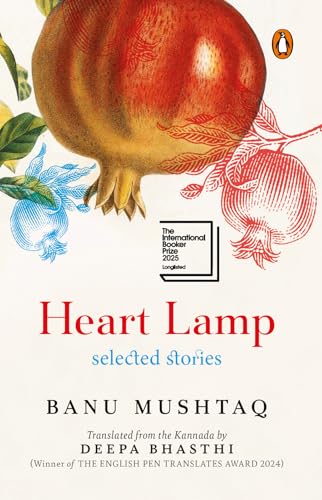
Heart Lamp: Selected stories
Author: Banu Mushtaq
First published: 2025
Original title: Heart Lamp
Genre: Short Stories / Literary Fiction
Twelve stories. Three decades of writing. Muslim women and girls in southern India.
Banu Mushtaq writes in Kannada and has spent much of her life not only writing about women’s rights, caste and religious oppression but working with these issues as a journalist, lawyer and activist. The stories collected in Heart Lamp were originally published between 1990 and 2023 and translated into English by Deepa Bhasthi.
The characters include mothers and daughters, grandmothers, husbands, religious leaders and assorted troublesome relatives, with humour sitting alongside much darker realities.
In 2025, Heart Lamp became the first short-story collection ever to win the International Booker Prize.
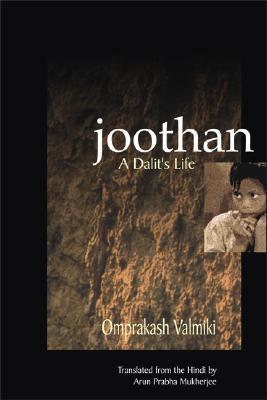
Joothan: A Dalit’s life
Author: Omprakash Valmiki
First published: 1997
Original title: Joothan (जूठन)
Genre: Autobiography
Omprakash Valmiki was born into a Dalit family in Uttar Pradesh in 1950. In Joothan, originally written in Hindi, he describes growing up in a society where untouchability had officially been abolished but caste still determined where his family could live, what work they could do, how he was treated at school and even what they were expected to eat.
The title refers to scraps of food left on other people’s plates. Food that Dalit families were expected to collect and eat.
There are several books across my India lists that deal with caste, but Joothan is fundamentally different because Valmiki isn’t constructing fictional characters through whom to examine it. This is his own life.
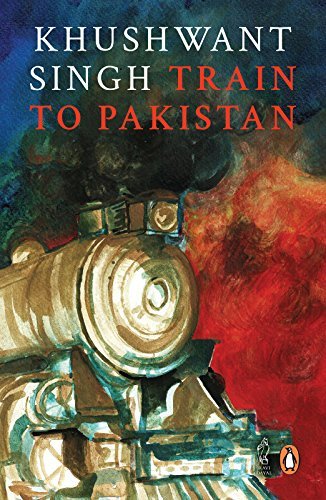
Train to Pakistan
Author: Khushwant Singh
First published: 1956
Original title: Train to Pakistan
Genre: Historical Fiction
In the summer of 1947, the small village of Mano Majra sits near the newly created border between India and Pakistan. Its Sikh and Muslim inhabitants have lived alongside one another peacefully for generations. Politics happening somewhere else is just that: somewhere else.
Then a train arrives, filled with the bodies of refugees.
Suddenly Partition is no longer an abstract political event, and fear and suspicion begin to transform the village. At the centre of the story is also a relationship between a Sikh man and a Muslim woman who now find themselves on opposite sides of a border that didn’t exist before.
Train to Pakistan was published in 1956, less than a decade after Partition, and has become one of the classic fictional accounts of its violence.
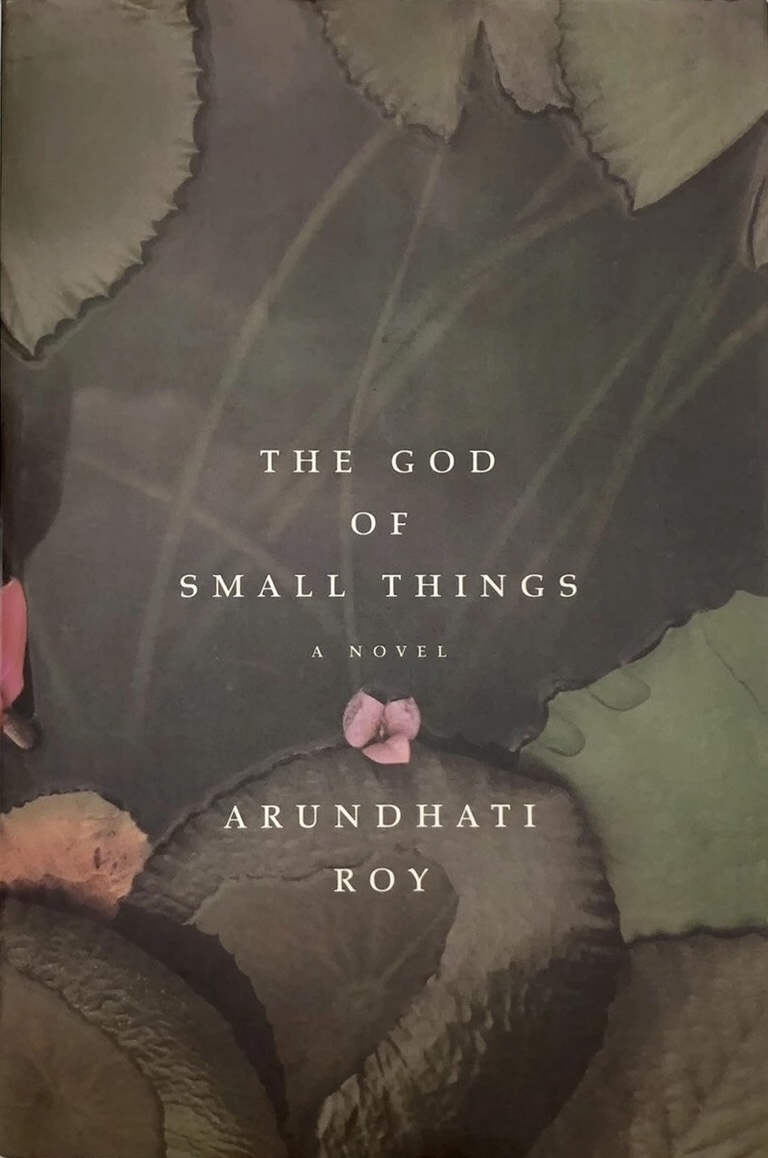
The god of small things
Author: Arundhati Roy
First published: 1997
Original title: The God of small things
Genre: Family Saga / Literary Fiction
Twins Estha and Rahel grow up in Kerala surrounded by a family full of secrets, resentments, love and rules. Then their English cousin Sophie Mol comes to visit, and something terrible happens.
Arundhati Roy’s Booker-winning novel moves between the twins’ childhood and adulthood, gradually revealing the events that shattered their family. At its heart are questions about who is allowed to love whom, and what happens when people cross boundaries of caste, class and social respectability.
This is one of the most internationally famous Indian novels of the last few decades, which almost worked against it when I was making these lists. There were so many less familiar books I wanted room for. But leaving it out entirely seemed equally absurd. Especially since I have in fact read this one, and loved it.
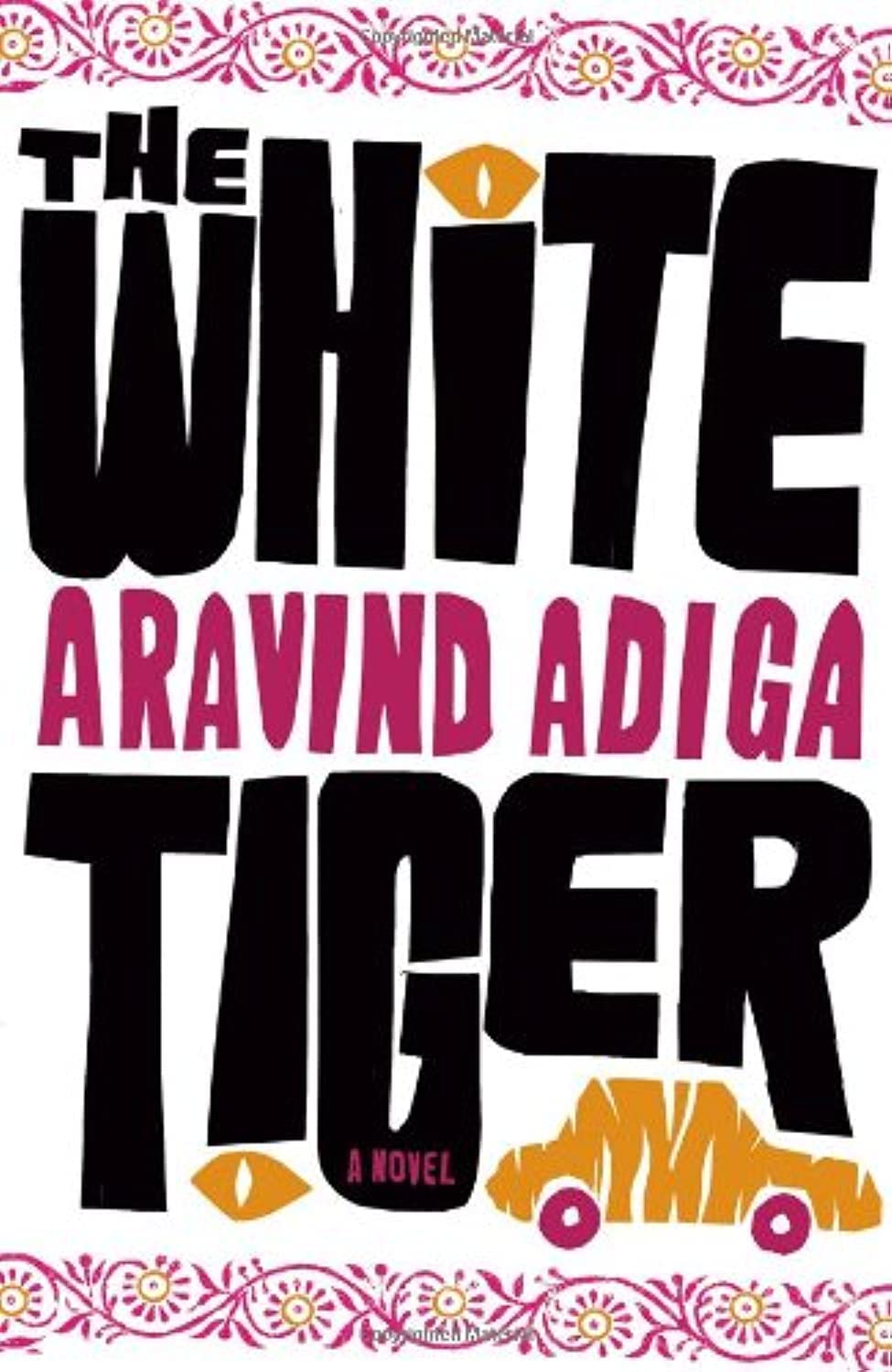
The White Tiger
Author: Aravind Adiga
First published: 2008
Original title: The White Tiger
Genre: Literary Fiction / Social Satire
Balram Halwai is a complicated man. Servant. Philosopher. Entrepreneur. Murderer. Over the course of seven nights, by the scattered light of a preposterous chandelier, Balram tells us the terrible and transfixing story of how he came to be a success in life, having nothing but his own wits to help him along.
Born into poverty in a village on the Ganges, Balram sees education and intelligence as possible escape routes, but neither gets him particularly far. Eventually he becomes chauffeur to a wealthy landlord’s son and gets a much closer look at the lives of India’s rich.
The White Tiger is Balram’s own account of how he escaped what he calls the Rooster Coop: the system of poverty and servitude that keeps people like him in their place. It takes us through village India and Delhi’s malls, traffic jams, servants’ quarters and wealthy enclaves, with Balram providing a distinctly cynical commentary along the way.
It won the Booker Prize in 2008.
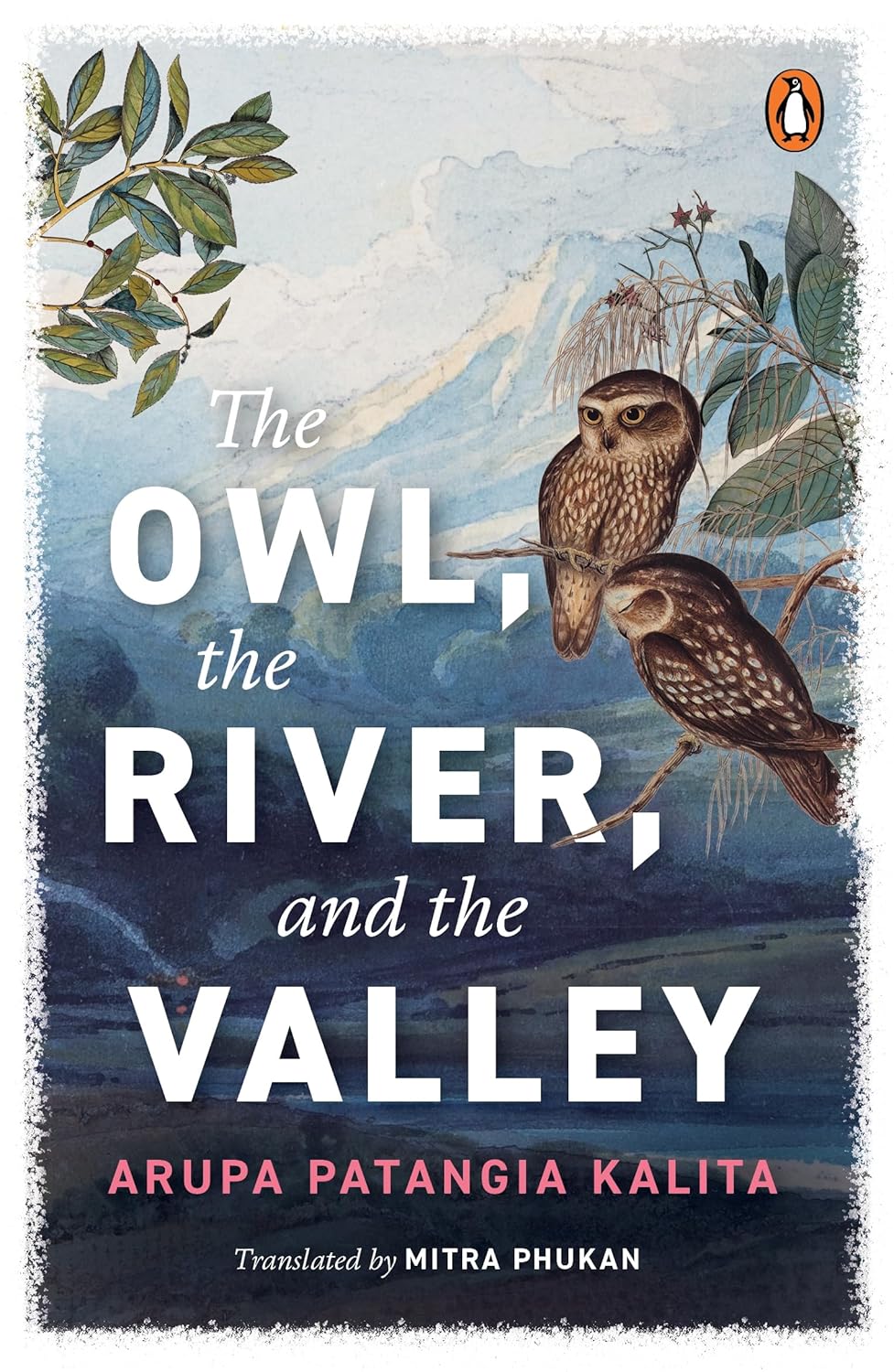
The Owl, the River, and the Valley
Author: Arupa Patangia Kalita
First published: 2025 as this collection
Original title:
Genre: Short Stories
One thing became very obvious while I was researching India: the Northeast could easily disappear from these lists altogether. So here we go to Assam.
The Owl, the River, the Valley collects twelve stories by Assamese writer Arupa Patangia Kalita, translated by Mitra Phukan. Contemporary women take centre stage, while the stories move through subjects including migration, employment, surrogacy, poverty, history and the legacy of colonialism.
Kalita has written extensively about ordinary Assamese lives as well as insurgency and women’s experiences, and won India’s Sahitya Akademi Award in 2014.
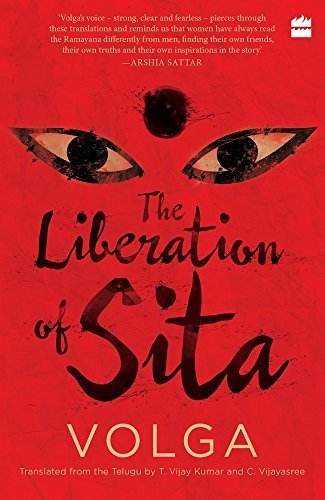
The Liberation of Sita
Author: Volga (Popuri Lalitha Kumari)
First published: 2010
Original title: Vimukta (విముక్త)
Genre: Mythological fiction / linked short stories
WhereThe Palace of Illusions gives Draupadi the microphone, The Liberation of Sita does something similar for the women of the Ramayana.
Originally written in Telugu by feminist writer Volga, this short collection begins after Sita has been abandoned by Rama.
As she moves towards a life of her own, Sita encounters women who are often secondary figures in traditional tellings of the epic: Surpanakha, Renuka, Urmila and Ahalya. Each has had to reconsider ideas about husbands, motherhood, beauty, sexuality, duty and what a woman’s life is supposed to be.
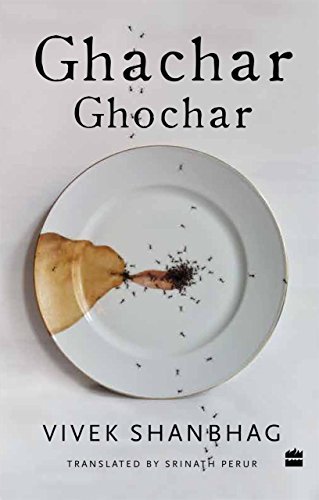
Ghachar Ghochar
Author: Vivek Shanbhag
First published: 2013
Original title: Ghachar Ghochar (ಘಾಚರ್ ಘೋಚರ್)
Genre: Literary Fiction / Family Drama
A family in Bangalore is poor.
Then Uncle Venkatachala starts a spice business, and suddenly they aren’t poor anymore. You might expect this to solve their problems. It does not.
The family’s new wealth changes the balance between them. Dependencies shift, marriages become strained, loyalties rearrange themselves and money begins exposing things that were easier to ignore when everyone was struggling together.
The title is a nonsense expression meaning something hopelessly tangled, a knot that can’t be undone, which sounds increasingly appropriate as the story progresses.
Originally written in Kannada and translated by Srinath Perur, Ghachar Ghochar manages all this in about 120 pages.
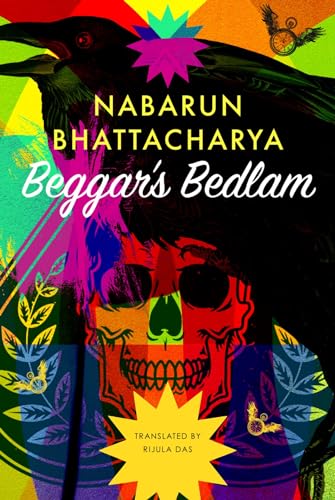
Beggar’s Bedlam
Author: Nabarun Bhattacharya
First published: 2003
Original title: Kangal Malsat (কাঙাল মালসাট)
Genre: Speculative fiction / Political Satire
And finally there is … this. I don’t quite know how we got here, but hear me out.
Marshall Bhodi Sarkar is the leader of a secret black-magic sect called the Choktars. While digging beside the Ganges in search of oil, he and his lieutenant uncover weapons and a Portuguese cannon. Naturally, the next step is to join forces with a group of flying men with a fondness for alcohol and petty vandalism and declare war on the Marxist-Leninist government of West Bengal.
Originally written in Bengali, Beggars’ Bedlam is an absurdist, magical-realist political satire set in Calcutta, filled with sorcerers, ghosts, revolutionaries, flying troublemakers and assorted people behaving badly.
Join me, and read a book from India
Between this and my other list from India, there are books originally written in Hindi, Bengali, Kannada, Malayalam, Tamil, Marathi, Telugu and Assamese, alongside Indian literature written in English.
There are villages and megacities, forests, mangrove islands and Himalayan borderlands. There are Dalit lives, Muslim women, queer characters, Indigenous communities, refugees, families getting rich, families falling apart, ancient heroines demanding another version of their stories and at least one group of flying revolutionaries.
We’ve travelled through colonial India, independence and Partition, contemporary India and an imagined future Bangalore.
And I could still make another list.
That, more than anything, is what researching India has taught me. There was never going to be a definitive ten books from India. There probably isn’t a definitive twenty either.
But twenty is where I’m drawing the line.
Because despite all this research, all these languages and all these books, the rules of The Borderless Bookshelf remain horribly unfair:
I still only get to choose one to read.

Yes, India is big! I’ve been thinking of breaking it up into subcountries somehow and trying to read a book for each one to make sure I get a decent overview. And you have inspired me to do it mostly by language. My first draft has 11 areas—I may combine some of these as I read more.
I love your lists and have already found one of the books at my local library, which I will read right away.
I actually have already read several novels and even watched a few movies set in India. None of these are quite what you’re looking for, but I don’t regret starting there. In case you are interested, I’ll tell you about them:
Rudyard Kipling’s Kim (1901) – About an orphan from Lahore who gets involved in various adventures. I read this long ago on the advice of my partner, but I didn’t enjoy it as much as he did. Of course Kipling was British.
Vaseem Khan’s The Unexpected Inheritance of Inspector Chopra (Baby Ganesh Agency Investigation #1) (2015) – Set in Mumbai, Inspector Chopra is retiring and also inherits a baby elephant. He can’t help continuing to work on his last case, and also taking care of this elephant. His wife and the elephant take part in the adventure and it was good fun, some serious, some silly. The author was born in England but worked in India.
Vaseem Khan’s The Strange Disappearance of a Bollywood Star (Baby Ganesh Agency Investigation #3) (2017) – Now the inspector has been hired to investigate the disappearance of a Bollywood movie star, still with his elephant sidekick. And there’s another case with a community of eunuchs. I remember not liking this book as much as #1, but there were still interesting things to learn, especially about eunuchs in India.
Sonali Dev’s A Bollywood Affair (Bollywood #1) (2014) – An arranged marriage is at the center of this book. The wife hasn’t seen her husband since she was promised to him at age 4 and doesn’t know that he thinks the marriage was annulled. When he finds out it wasn’t, his brother finds her to try to talk her into a divorce. I can’t find my notes, but I didn’t love the book. The author is American.
Sonya Lalli’s A Holly Jolly Diwali (2021) – I think this was recommended by a book club. A normally practical gal decides on a whim to come to her friend’s wedding (and to celebrate Diwali) in Mumbai and meets a guy from London. They all continue to a group honeymoon in Goa, an area I’d learned about in a videogame of all things. As I recall there were some really fun scenes and some eye-rolly scenes. I learned some but didn’t love the book. The author is Canadian.
Tarquin Hall’s The Case of the Missing Servant (Vish Puri #1) (2009) – Set in Delhi, a private investigator inspired by an Indian detective from more than 2000 years ago mostly screens prospective marriage partners, but now investigates a murder. I did enjoy this book; I’d read more in the series but it’s not on my list of books to buy. The author is a British journalist who works around the world and whose family lives in both London and Delhi.
I also enjoyed George Orwell’s short story “Shooting an Elephant,” where I learned a bit about elephant mating. Of course Orwell is another Englishman who worked in India.
I’ve also watched several movies set in India:
“Gandhi” (1982) with Ben Kingsley – A fun way to learn about the life of Gandhi, but this was an American project.
“Slumdog Millionaire” (2008) – A game contestant must explain how he knew the answers to the questions, so we learn about his life history. This was interesting and won awards, but was a British project.
“The Best Exotic Marigold Hotel” (2011) – The manager of a hotel in Jaipur decides that since westerners love outsourcing jobs, they might also like outsourcing the care of their elderly to his hotel. This works for him. I absolutely adore this movie but it’s mostly about the elderly westerners who come to live there and it’s a UK project. We do get to see bits of India and can almost imagine all the aromas, too. (I also saw the sequel, which continued the stories, but was less fun).
“Detective Byomkesh Bakshy!” (2015) – This is a Hindi mystery thriller. I remember that I didn’t love this movie, but I often get lost in thrillers. This was actually an Indian project! But it’s a movie, not a book.
Ohh, Thank you. I’ll note them all down for the India side quest I am surely having to do at some point!
Huh, I thought they weren’t up to your standards, and you have so many already! I really like the way you’ve found so many great-sounding books by Indian authors with Indian characters, and many (most?) of them are books I can easily find at libraries. Of the ones that sound good to me, The Hungry Tide, was actually available at the local branch of my city’s library (I can walk there!) and so I’m starting with that one. (Ironically, this is the one with one of the three major characters not being Indian, but it’s still good so far.)
Then at the central branch of my library, which I visit regularly (but not right now because I’m still in the middle of other books I’d checked out before I discovered your blog), are The Ten Percent Thief, Tomb of Sand, Samskara: A Rite for a Dead Man, and Cobalt Blue, so there are more in my future. I’ll comment again when I finish a book.
You have a well stocked library! 🙂
Yes, I’m so lucky! I’m in a pretty big city that does think libraries are important. And I also have access to a very nice university library, which I haven’t even checked yet for India books.