Sometimes it seems to me that humans is nature’s great mistake
This one was heavy, guys. Heavy in every sense of the word.
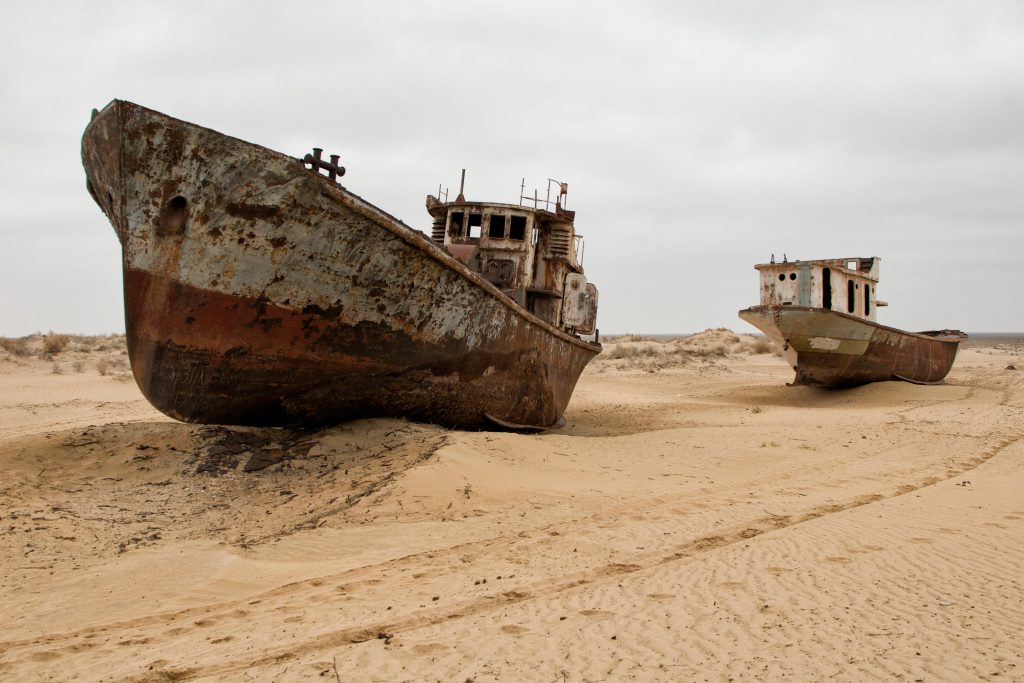
This story centres on the catastrophe of the Aral Sea. Once one of the largest lakes in the world, the Aral Sea was almost completely destroyed by Soviet irrigation projects that diverted its feeder rivers to serve large-scale cotton and rice farming in what is now Uzbekistan. A plan conceived far from the region itself, with no regard for local lives or landscapes. Because “the Soviet Union needs cotton, not fish”.
The novel is set in a fishing community whose way of life is already unravelling as the sea recedes. Fishing villages are left stranded, livelihoods disappear, and people are forced to either leave or adapt to an increasingly hostile environment. Mysterious illnesses runs rampant, polluted water kills the children, salty dust storms and impenetrable fogs render life impossible.
What a fool was Man who descended from Adam and Eve! How foolish and arrogant. Long ago, he stopped respecting Nature as a mother and began to force her to his will, attacking her again and again, ignorantly and irreparably, with increasing violence. And even though she was patient and benevolent, like a mother with her recalcitrant child, she was now taking revenge for his folly and cruelty.
The main characters of the story are Nasyr, a former fisherman who becomes a mullah, praying endlessly to Allah to restore the sea, and his son Kakharman, who tries and fails to work from within the Soviet authorities to better life for the villagers. Forcibly removed from his post, he moves to another part of the country and spirals into alcoholism and complete despair.
But around these two men, there is a large range of characters, including other fishermen, the blacksmith, the healer, the former mullah turned mafia drug dealer, the crazy woman who lost her family to the sea many years ago and now wanders the shore every day with her goat, the Russian scientist and his son, the American scientist, the orphaned son of a nomad … and of course all the honourable, obedient and endlessly adaptable wives.
Oh, and there’s also a particularly wild black stallion and a couple of sentient mythical fish.
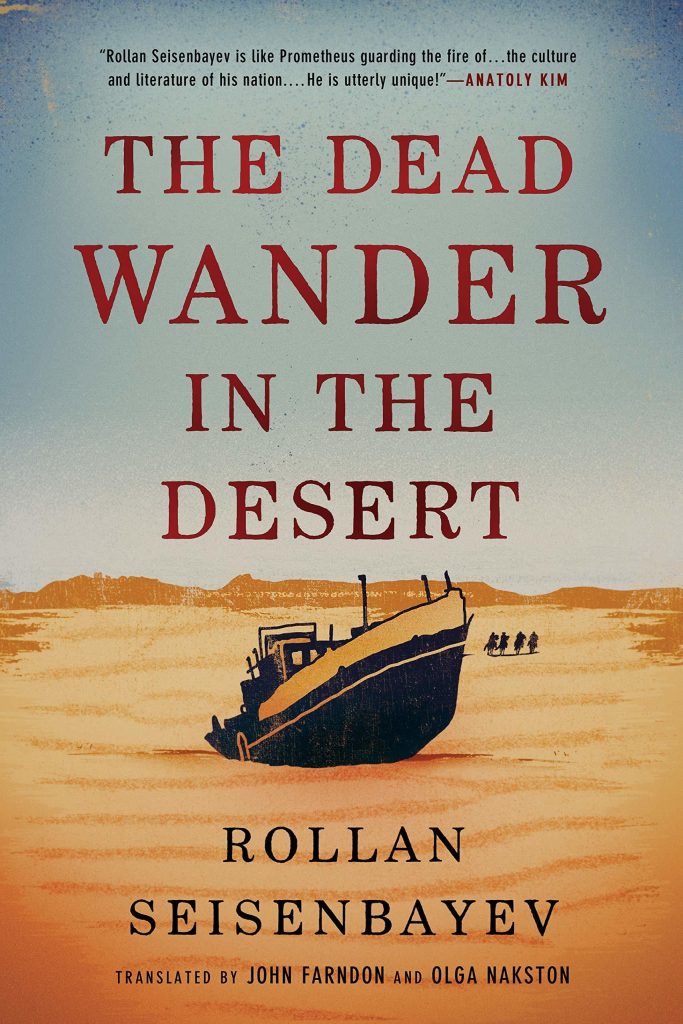
The author uses frequent inclusion of prayers, poems, and songs, that set the tone beautifully and root the novel firmly in Kazakh cultural and religious traditions, standing in quiet opposition to Soviet rationalism and bureaucratic language. But their sheer number can feel overwhelming, and like the “action” of the book is being brought to a screeching halt for pages and pages.
I found the book very interesting, but also deeply depressing, extremely long, and at times genuinely confusing. It took me a long while to get a handle on the many characters, and even then I was often unsure who was who, or why certain voices suddenly moved into focus. That combined with the fact that there is no clear linear stucture, multiple unexplained diversions and a lot of jumping around in time and space. It makes for a demanding reading experience.
In the foreword, the translator notes that the book is based around traditional Kazakh oral storytelling, and that the narrative structure is not what many Western readers are used to. After reading it, I can only agree. This is not really a plot-driven novel. It reads more like a dystopian meditation on environmental destruction and moral responsibility. With a lot of song verses scattered throughout.
Wretched, hungry, and thirsty, many fall and cannot get up. But nobody stops. Nobody pays attention. The dying don’t plead for help. They know there’s no help for them.
I will say that perhaps my reading experience is shaped by the fact that, if you know the real history of the Aral Sea in Kazakhstan, you know from the start that there can be no reprieve. The sea does not return. The damage is permanent. That knowledge drains the novel of all suspense and replaces it with devastating inevitability. There is no hope. You are not reading to discover what will happen, but to bear witness of a slow and painful death.
I very much admire the ambition of this novel, and I understand why it matters as a Kazakh response to a disaster imposed from outside, and as a record of severe cultural and environmental loss. It is a relevant and important book. But that understanding does not make it an easy or satisfying reading experience. It is a book that demands patience and endurance.
It left me thoughtful, and occationally quite moved, but mostly it left me exhausted.
Relentlessly heavy from beginning to end.
If this sounds too heayvy, maybe try another book from Kazakhstan?