Cities die just like people
The first word that came to my mind when I sat down to write this review was tapestry. An intricately woven piece where every chapter takes hold of a thread and follows it past all the characters it touches and affects. Sometimes the threads become tangled, sometimes they disappear for a while, but gradually they come together to form a picture of a family, a city, and a country slowly falling apart.
And what a heartbreaking tapestry it is.
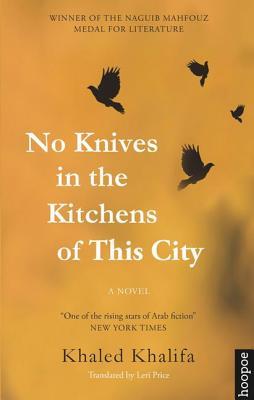
Khaled Khalifa takes us to Aleppo, Syria, following one family across several generations as the country sinks deeper and deeper into political repression, fear, and disillusionment.
The story begins around the time of the Ba’athist coup in 1963 and stretches across decades of increasingly oppressive rule. But the major political events are always in the background, and instead Khalifa shows what happens to ordinary people trying to live their lives while everything around them falls apart.
A house containing nothing but misery doesn’t need a door to protect it from petty thieves.
There’s the mother, who gives up her privileged upbringing and defies her family to marry a man from a different religious and social background, only for him to abandon her and their four children for another woman in America. Left to raise the children alone, she clings desperately to memories of her family’s former wealth and status. Ashamed of her disabled daughter Suad, she hides the girl away from the neighbours, almost wishing for her death so the family can escape the humiliation.
When Suad does die, instead of bringing relief, it drives a terrible wedge between the mother and her surviving children, particularly Sawsan, who adored her older sister.
Sawsan is perhaps the most fascinating character of the book. Fierce, rebellious, and desperate to find her place in the world, she throws herself first into the regime’s violent militia, affairs with various men, and later into religious devotion. Her transformations are extreme, but somehow Khalifa makes them believable. She seems to spend her entire life searching for something to believe in, something that might finally give her a sense of belonging.
Another very prominent character is Nizar, the gay uncle whose longing for love and acceptance is repeatedly crushed by a society that refuses to let him be himself. His brief taste of freedom in Beirut, and the letters from his friend who moves to France and finds a husband there, makes his story all the more painful.
Sawsan’s younger brother Rashid who, like Nizar, is a talented violinist initially tries to escape the ugliness around him through music, only to eventually abandon that world and embrace religious extremism, fighting the Americans in Baghdad.
And besides them, the story touches on dozens of other characters briefly or more extensively. Friends, lovers, extended family members, the grandmother who died of laughter and the goat heard who crosses the Turkish border to bring back pistaccios.
Interestingly, the story is told by a first-person narrator (the brother of Sawsan and Rashid) who remains surprisingly far in the background. We learn so much about everyone around him, yet practically nothing about the person telling us their stories. I kept wondering about that choice. He’s less a protagonist than a keeper of memories, someone trying to preserve the lives of people who might otherwise be forgotten. He’s the one weaving all those threads together, but only in small glimpses do we get to see the person holding the needle.
Khalifa jumps back and forth through the decades, revisiting events and characters from different angles. I found that every bit as confusing as the shifting timeline in Between Beirut and the Moon, which I recently read for Lebanon. But where that book sometimes struggled to hold my attention, this one completely pulled me in. I was invested enough in these characters that I didn’t particularly mind having to work out where I was in their stories.
I genuinely cared about all of these people, wanted to understand why they made the often terrible choices they did, and felt the weight of everything they lost along the way.
The alley was witness to the destruction of my mother’s dreams, and the idea of this alley grew to encompass the length and breadth of the country.
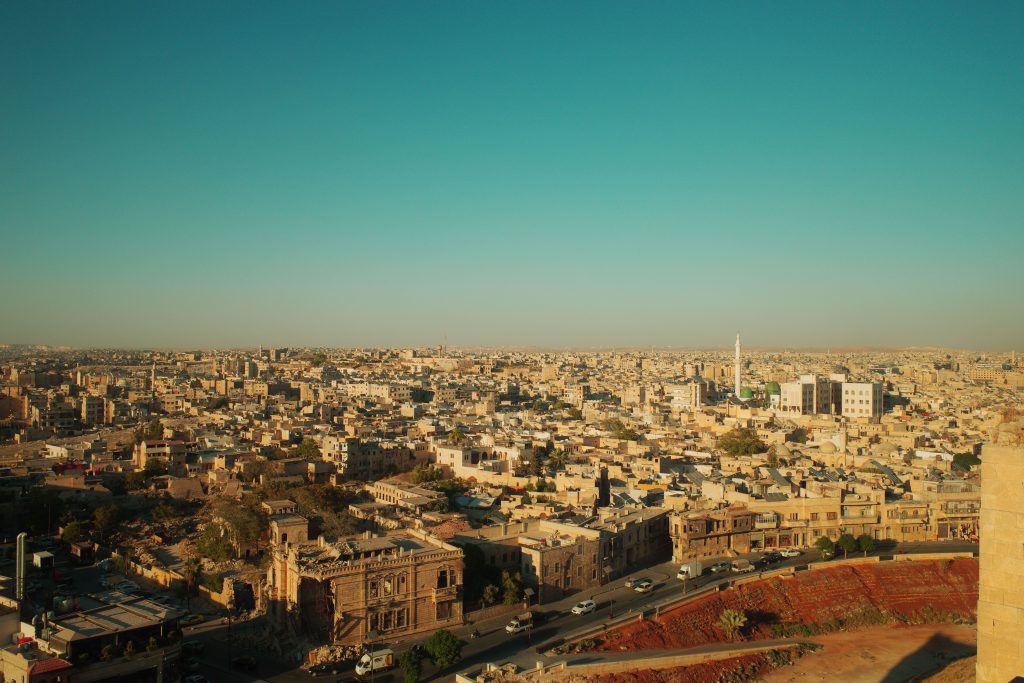
And then there’s Aleppo itself. More than just a backdrop, the city feels like another character. Its streets, neighbourhoods, music, cafés, and traditions gradually disappear or change beyond recognition. As the family fractures, so does the city around them. The destruction isn’t sudden. It happens little by little, through compromises, fear, silence, and the gradual loss of things that once made life worth living.
It’s easy to think of the Syria’s tragedy as something that began in 2011, but Khalifa shows a society that had been suffering and unravelling for decades before that. The violence and destruction didn’t come out of nowhere.
No Knives in the Kitchens of This City is a very sad book.. I would not recommend it if you like happy endings. But it is also deeply human, beautifully written, and full of characters who will absolutely stay with me.
A tangled, intricate, heartbreaking tapestry of a family and a city. One I’m very glad I took the time to unravel.