I breathed in pain and breathed out painting
I visited Nepal in 1994, only two years before the country descended into a civil war that would last a decade. And I knew nothing about it.
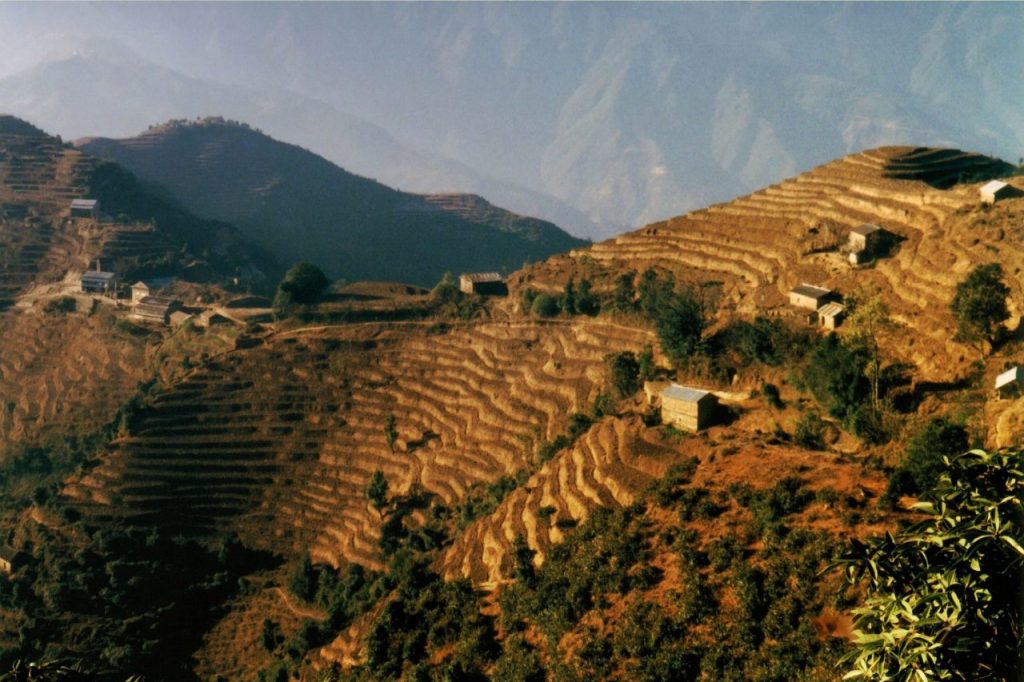
That was what made me choose Palpasa Café as my read for Nepal. I wanted to return to a country I remembered, and understand the violent times I so narrowly missed. And the story did give me so many “I’ve been there!”-moments of recognising place names and landscapes.
The footprints of my ancestors were imprinted on these trails. (…)
If I screamed in loneliness here, the chirping of the birds and the humming of insects would cover the sound of my scream. If I went mad here, my madness would be drowned by the crashing of waterfalls. If I were to weep, anyone who heard me would think it was the cry of a bird.
The book itself was published in 2005, while the conflict was still ongoing.
If you already know that you want something else, here are some other options for Nepal.
The main character is Drishya, who’s an artist living in Kathmandu. But we start out with the author, who’s writing a book about Drishya, receiving news that he has been abducted by 5 unknown men.
Then we jump back in time to where Drishya met a woman called Palpasa in Goa. She is young, independent, has been living in America, dreams of becoming a documentary filmmaker, and already has intimate knowledge of Drishya’s art. They flirt, they separate, later find each other again, and their relationship gives the first part of the novel much of its energy. Palpasa’s grandmother makes an appearance and might very well be my favourite character of the entire work.
And Wagle writes dialogue really well.
But Palpasa Café becomes a different book after the royal family is murdered in 2001. An old friend of Drishya has joined the Maoist rebels and challenges him to leave his comfortable life in Kathmandu and travel into rural Nepal. Drishya leaves without telling Palpasa and travels deep into the western hills of his childhood, through villages caught between Maoist and government forces. Here families have lost children. Schools have been destroyed. Young people have joined the insurgency, willingly or otherwise. Almost everyone Drishya encounters has been touched by violence.
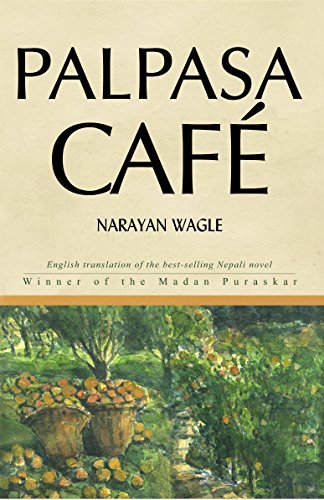
I’m not sure I finished Palpasa Café understanding the Nepalese Civil War much better than I did before. What I did get was the universal image of war being absolutely devastating for ordinary people who never asked for any of it. Where choices that look simple from a safe distance become impossible when either choice can get you killed.
And this, unfortunately, is where the novel started losing me. Time and place become increasingly slippery. Realism gives way to something more symbolic and philosophical.
And then Drishya meets a man on the trail, who looks exactly like … Drishya. I had to look up smarter people’s interpretations to understand that this is Drishya confronting a hallucinated version of himself, his identity and sense of reality fracturing under everything he has witnessed. A man whose understanding of himself and his country is falling apart. Which also fits with the novel’s wider playing around with doubles and perspectives, right down to Narayan Wagle inserting himself into the story …
But honestly my initial reaction while reading was closer to “wait, … what?” These deeply symbolic sections were difficult to reconcile with the very realist parts of the novel. At least for me. But maybe that is exactly the point Wagle is making.
The river we hear in the afternoon is different from
the river we hear in the silence of the night.
So. All in all Palpasa Café comes across as a little unevenly written.
There is a lot going on in Wagle’s novel. War, romance, art, politics, Nepal’s educated young people leaving the country, those who choose to return, the difference between rural people and city-dwellers. The question of whether an artist can remain outside politics.
And suddenly there will be a sentence or an image that is almost painfully beautiful. Wagle can make a landscape feel achingly lovely and then place something terrible inside it. There is a tenderness to some of his descriptions of Nepal that makes the violence happening there feel even more brutal. Again and again I found myself stopping over a line simply because it was so beautifully written.
And of course the burning question is this: Will Drishya and Palpasa ever find each other again? I will not spoil this for you, should you choose to read the book. Personally I did not see the emotional gut punch coming at all.
I liked this book. I just thought I was going to love it.