Our lack of physical independence was not the only impediment to our individuality
Using conjoined twins as a supposed metaphor for the fractured republics of Yugoslavia was too wild of a setting for me to pass up, so I went and ordered this book as soon as I heard of it.
If this is not your thing try another book from North Macedonia!
Also, someone on Goodreads compared this author to Ferrante and Szabó, both of which I love, and while I don’t think this is anywhere near their league, I do see where the comparison comes from, in the psychological depth, the intense female bond, and the way ordinary lives are shaped by social and historical forces.
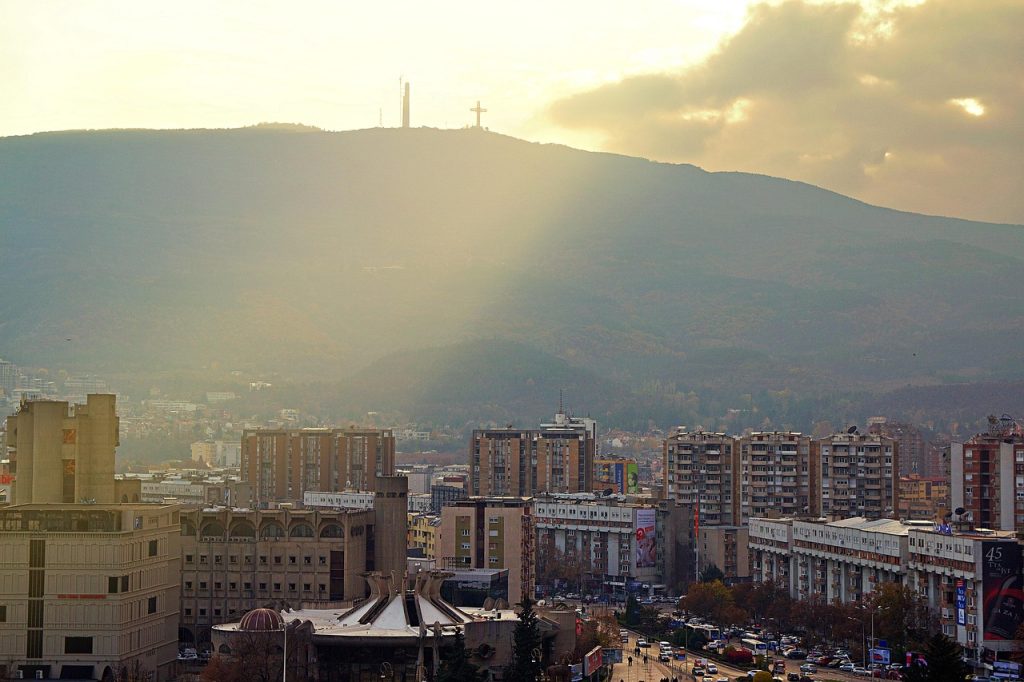
But to set the scene: Zlata and Srebra are conjoined twins, fused at the temple, growing up in 1980s Skopje, now the capital of North Macedonia. The book uses their story to blend the personal with the political, using the two girls’ physical connection as a powerful, if somewhat heavy-handed, metaphor for a country struggling with its own identity.
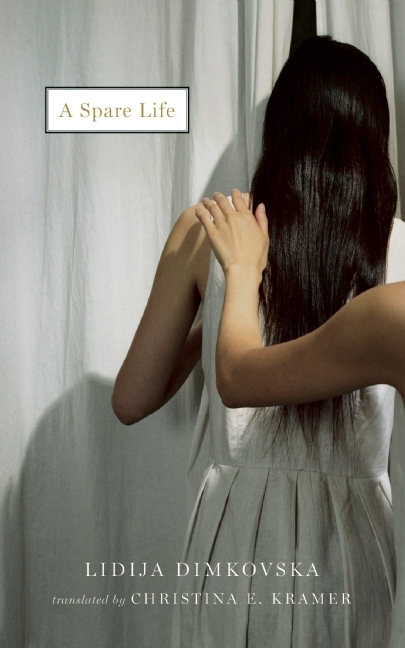
The twins’ Bulgarian‑Slavic names, Zlata” and Srebra means gold and silver, ironically contrasting with the harshness and bleakness of their lives. And the bleakness of it all really is unrelenting in the first half of the book! Powerty is oppressing and the girls’ parents are so awful that it is almost comical. And outside the family there is an extensive (sometimes borderline exhausting) catalogue of minor characters with more or less interesting fates, explored in minute detail.
»Block-head Zlata, Ribless Srebra!,« the children would say, taunting us in the street and, apart from Roze and on occasion Bogdan, no one else ever played with us. Some were forbidden to by their parents to prevent them from having nightmares by playing with us – the weirdos – during the day, and others fled from us of their own free will and threw pebbles at us from a distance, shouting »retards«
But at the centre of the book we have the coming of age story of Zlata and Srebra. And the very premise of them being conjoined at the head lends itself to a certain amount of body horror. It is clear that the author did extensive research into conjoined twins, and I’ll admit I was morbidly fascinated by the uncomfortable details of the sisters’ daily lives.
When one wants to study law, the other is dragged along. When one falls in love, the other has to drug herself to endure it. Every bodily function, every private thought, is compromised. It’s deeply claustrophobic, and perversely compelling.
The sisters often talk about the risky operation in London that might separate them, but the potential consequences are severe, and the odds are not in their favour. And while the stakes rise and the inevitable operation draws ever nearer, (the end result of which I cannot disclose here without spoiling too much), the book branches out into a wealth of other themes too: friendship, love, Orthodox Christianity, guilt, the value of education, the strange power of dreams, and the quiet beauty of reading.
As the story progresses into the post-Yugoslav years, the plot starts getting a little wonky. This final part of the book was definitely the weakest for me. There are abrupt detours to the United States and China that felt a little jarring, like the author was using them as platforms for political commentary rather than telling the story she started out telling. I got the sense that she wasn’t quite sure how to wrap things up, and sadly it made the last part of the feel a little disjointed and emotionally distant to me. So after an intense and intimate beginning, I’ll admit I did sadly finish the book with a certain sense of disappointment over lost potential.
We loved each other, we hated each other, we were ashamed of each other, we felt contempt for each other, we were afraid of each other, we were close and we were distant. Everything was mixed up in our hearts, our heads; yet, surprisingly, it had all become unimportant, nearly meaningless in the face of our desire to be separated once and for all.
Still, I’m glad I read it. It’s certainly a unique and unusual story, and it It gave one of the strangest and character dynamics I’ve come across in a long time as well as a me a vivid portrait of life in a fading socialist state.
I’ll say it has earned its place on the Borderless bookshelf, and has allowed me to cross North Macedonia of the list. Moving on!