We all leave something behind. Or someone.
Sometimes impulsive choices turn out better than you thought.
I hadn’t actually planned to read this one. My original pick for Slovenia was The Fig Tree by Goran Vojnović, but the thought of a sprawling multigenerational saga just felt like a bit too much this week.
So when I noticed that my local library app had a Danish translation of I Saw Her That Night, I picked it up on a whim. And ended up completely mesmerized from the very first paragraph. I read the whole thing practically in one sitting.
It’s a powerful and beautifully written novel that taught me a lot of things about a part of World War II history I knew absolutely nothing about: Slovenia under occupation, torn between German and Italian forces, communists, collaborators, peasant partisans and those just trying to stay alive.
In those crazed times you didn’t need a good reason to kill someone.
But more than that, it gave me a wonderful gallery of characters I genuinely cared for and rooted for and cried with. Because this is not a traditional war novel. Yes, it is set during the war and yes much of the plot happens because of the war in some sense, but what makes this novel amazing is the exploration of very relatable human choices and relationships.
The book centres around Veronika Zarnik, a young, charismatic woman from a well-to-do family in Ljubljana, who disappears one night in the winter of 1944. The kind of woman who walks with her pet alligator on a leash, knows how to fly a plane, travels to the coast to swim without telling anyone and runs away from her husband with her riding instructor, who is the first narrator of the book.
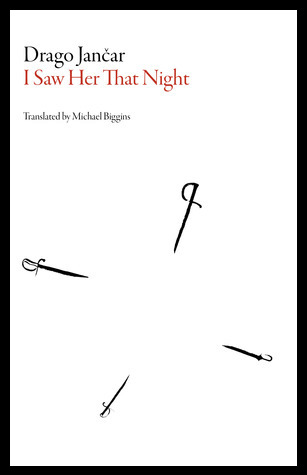
Because we never hear Veronica’s voice directly. Instead we hear her story through five different narrators. First her lover who’s a Serbian cavalry officer in the army. Then her mother, doddering in her old age, still watching out the window years later for her daughter to magically reappear. Then a German doctor, who attended the lavish gatherings with music and poetry readings in the mansion where Veronica lives with her husband, and who was completely smitten with the young woman. Then the loyal housemaid of the mansion and finally the local farm hand who tended her horses, was also in love with her and later joined the “forest men”: the communist peasant partisans in the mountains.
And as their voices layer over one another, a portrait emerges, not just of Veronika, but of a fractured country in a time of moral ambiguity and impossible choices.
If ever, it was then that I should have done something, at the very least demonstrated my dissent. But I did nothing. I often wake up at night on account of that incident. It’s not the deeds you’ve done that haunt you, it’s the ones you didn’t do. That you could have done, or at least tried to do, but didn’t.
I Saw Her That Night is based in part on a real person, which makes the emotional weight all the more devastating. It’s not a thriller, but I was breathless by the end. Not because of plot twists, but because of the slow, steady accumulation of dread, quiet tragedy, sorrow, regret, and missed chances.
Jančar is one of Slovenia’s most acclaimed authors, and after this I very much want to read more of his books. There’s a quiet elegance to his prose, even when describing brutality, and he captures the tension of the time without ever slipping into melodrama.
I went into this book knowing absolutely nothing about Slovenia during the war, and I came out with a deepened empathy and curiosity. This is one book I can recommend wholeheartedly. Just don’t expect to come out of it unshaken.
Have you read anything set in Slovenia, or any other books that use multiple narrators in this way? I’d love to hear your thoughts.
And if this is not your thing, try out another book from Slovenia!