Moving further south now … are you ready for heat, humidity, river deltas, jungle-covered mountains, golden temples, and cities buzzing with scooters, street vendors and tangled electrical wires?
The next stretch of the Borderless Bookshelf will be exploring mainland South-East Asia: Vietnam, Cambodia, Laos, Myanmar (Burma) and Thailand.
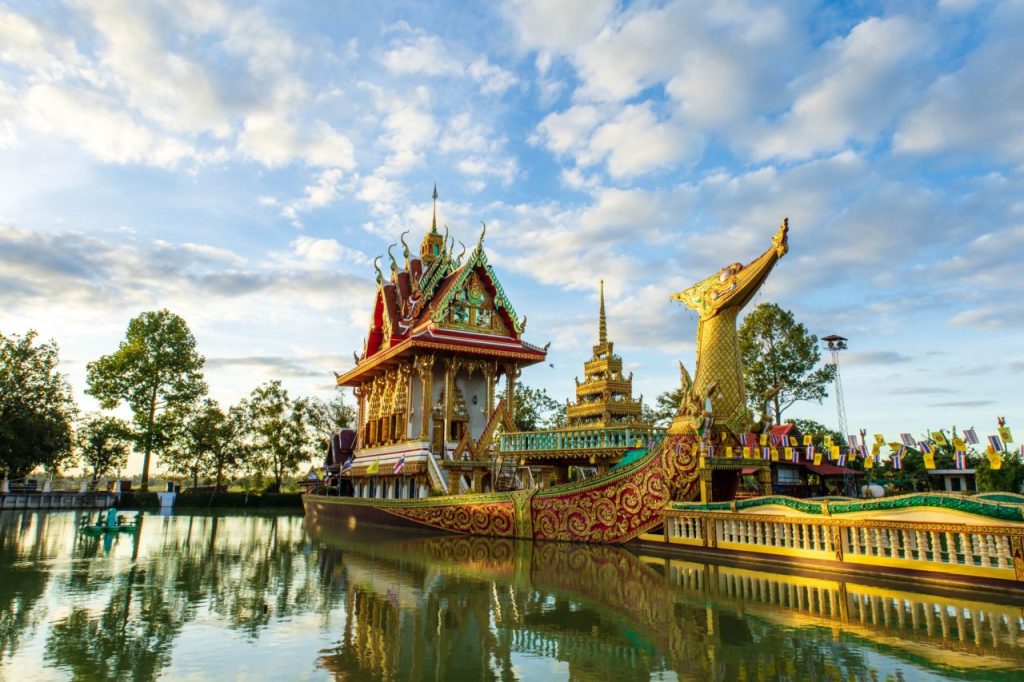
We will be moving between Ancient temples swallowed by tree roots, floating markets, Buddhist monks in saffron robes, tropical storms rolling in over rice fields, backpackers on overnight buses, and of course the long shadows of colonialism and war. A region with layered histories and enormous cultural complexity.
I’ve only visited one of these countries in person (Thailand – twice back in the nineties), and off the top of my head I don’t think I’ve read a single book from this region before. So I’m excited to get started!
So where exactly are we going?
Geographically, mainland South-East Asia stretches down south of China, bordered by mountains, jungle, enormous river systems, and coastlines facing the Andaman Sea, the Gulf of Thailand, and the South China Sea.
The Mekong River runs through much of this region like a kind of lifeline, connecting countries while also dividing them.
Historically, South East Aisa has always been shaped by movement and exchange. Indian religions and Chinese political systems travelled here centuries ago. Kingdoms rose and fell. Colonial powers carved up borders. Wars brought devastation and reshaped entire societies.
Even today, the region still contains enormous contrasts: booming tourism next to rural poverty, glittering modern capitals beside villages where life still moves slowly and traditionally.
It’s also a region where political realities differ dramatically from country to country. Constitutional monarchies, socialist states, military juntas, fragile democracies.
Vietnam
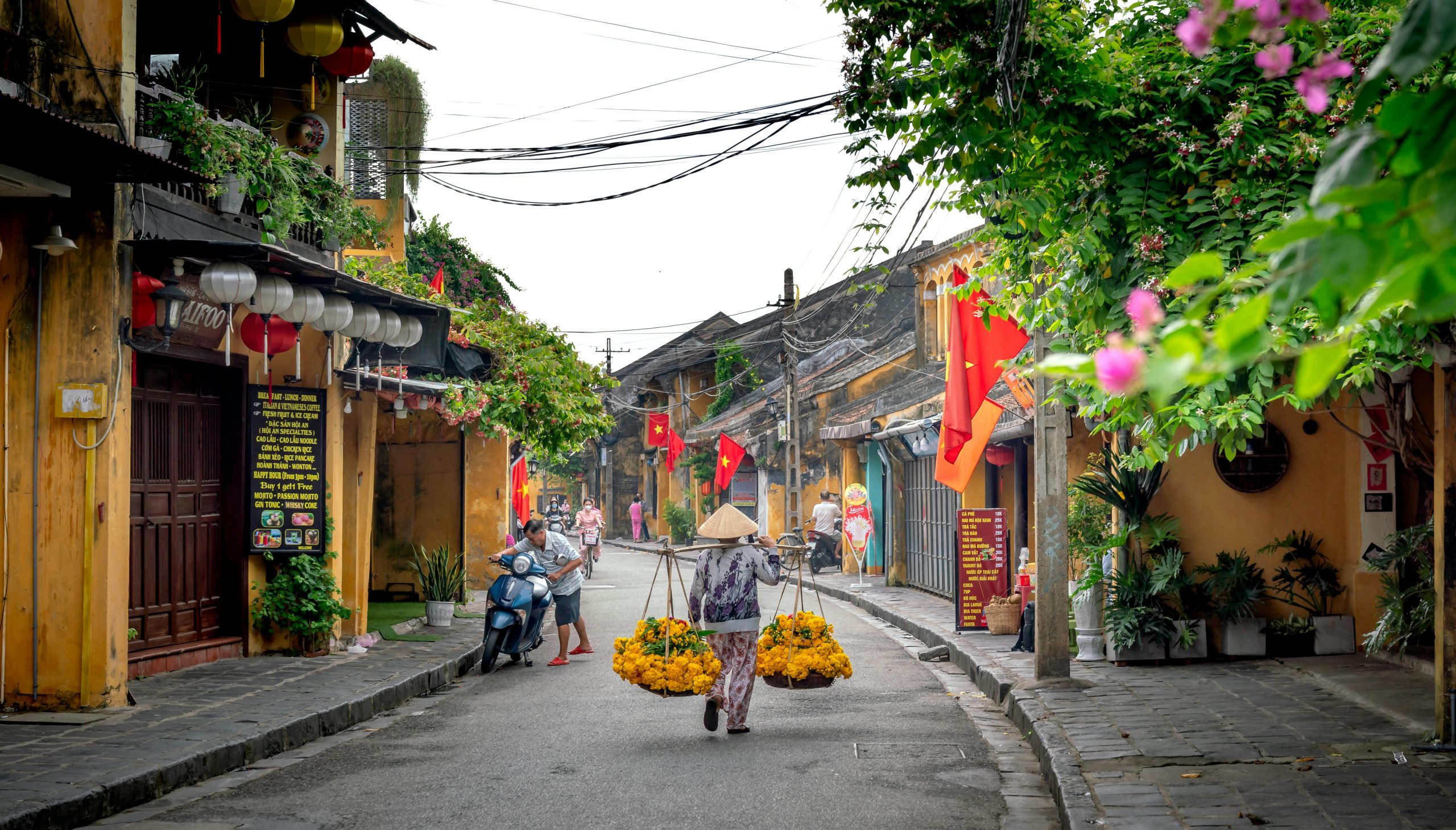
Vietnam stretches like a long ribbon along the coast, from misty northern mountains to the fertile Mekong Delta in the south. The landscape changes dramatically depending on where you are.
This is the country most of us know mainly through the lens of the Vietnam war, watched from a Western perspective shaped by war films and history documentaries. Which is, of course, both understandable and deeply unfair.
Because Vietnam is far older and richer than the conflict most Westerners immediately associate it with. This is a country with thousands of years of history, shaped by Chinese influence, French colonialism, communism, resistance movements, and an incredibly strong sense of national identity.
Culturally we’re looking at a mix of Buddhist traditions, ancestor worship, French cafés, communist symbolism, hyper-modern cities, and deep rural traditions all existing simultaneously.
See book suggestions for Vietnam here!
Cambodia
The Khmer Empire once built some of the most astonishing temple complexes in the world, most famously Angkor Wat, a place so enormous and intricate it almost seems unreal. For centuries, this was one of the great centres of South-East Asia.
And then came the twentieth century.
The Khmer Rouge regime and the Cambodian genocide devastated the country in ways that are difficult to comprehend. In just a few years nearly a quarter of the population died through execution, starvation, forced labour, and violence.
It’s impossible to approach Cambodia without carrying some awareness of that history.
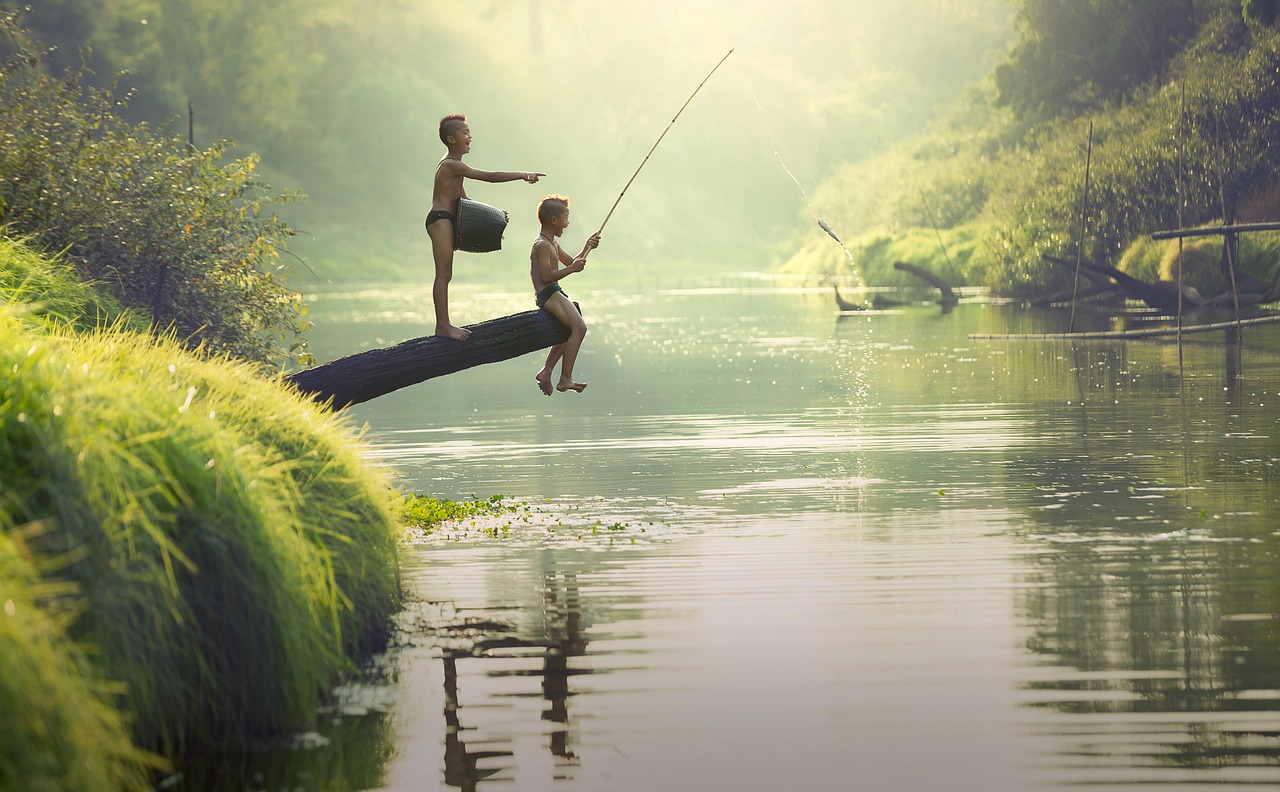
But Cambodia is not only tragedy. It’s also resilience, rebuilding, and cultural survival. And I imagine the literature will reflect both the trauma and the persistence of ordinary life afterwards.
See book suggestions for Cambodia here!
Thailand
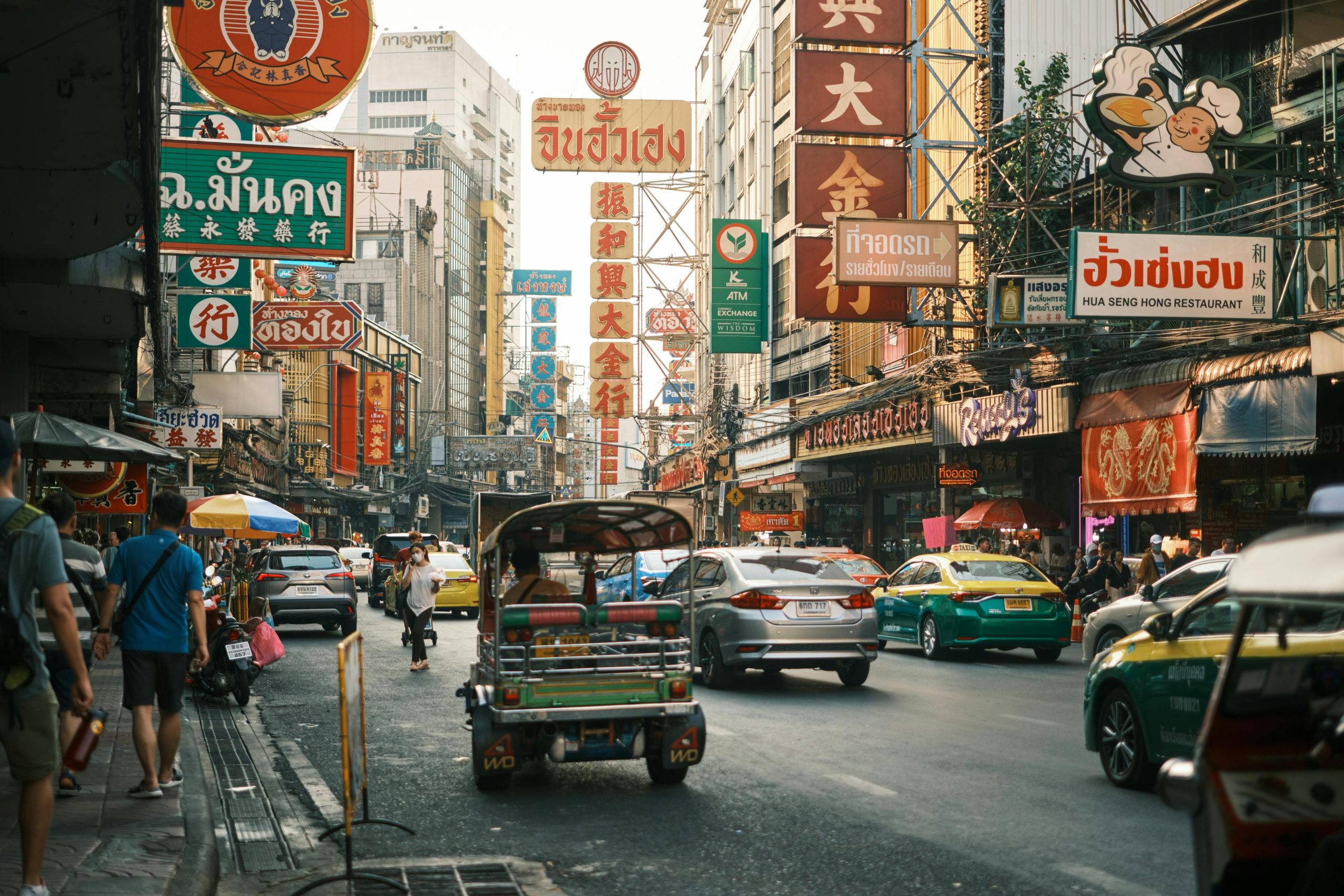
Beaches, temples, street food, night markets, tuk-tuks, tropical islands …
Underneath that glossy backpacker image, Thailand is a country with a long and complicated history, and notably the only country in South-East Asia that was never formally colonised by a European power.
That alone makes it different from its neighbours.
The country today balances monarchy, military influence, rapid modernisation, and deeply rooted Buddhist traditions in ways that are difficult to fully grasp from the outside.
Bangkok, which I have actually been to, is one of those cities that assaults all senses simultaneously: traffic, heat, gold temples, luxury malls, tiny alleyway kitchens, incense smoke and skyscrapers all layered on top of one another.
Though I’ve visited Thailand twice, embarrassingly I have never read any Thai literature, so this feels like a very overdue stop on the journey.
See book suggestions for Thailand here!
Laos
Laos, or officially the Lao People’s Democratic Republic is landlocked, mountainous, and much less globally visible than its neighbours in South-East Asia. And yet historically Laos too was deeply entangled in regional conflicts and colonial histories.
Large parts of the country were heavily bombed during the Vietnam War, making it one of the most bombed countries in history relative to population.
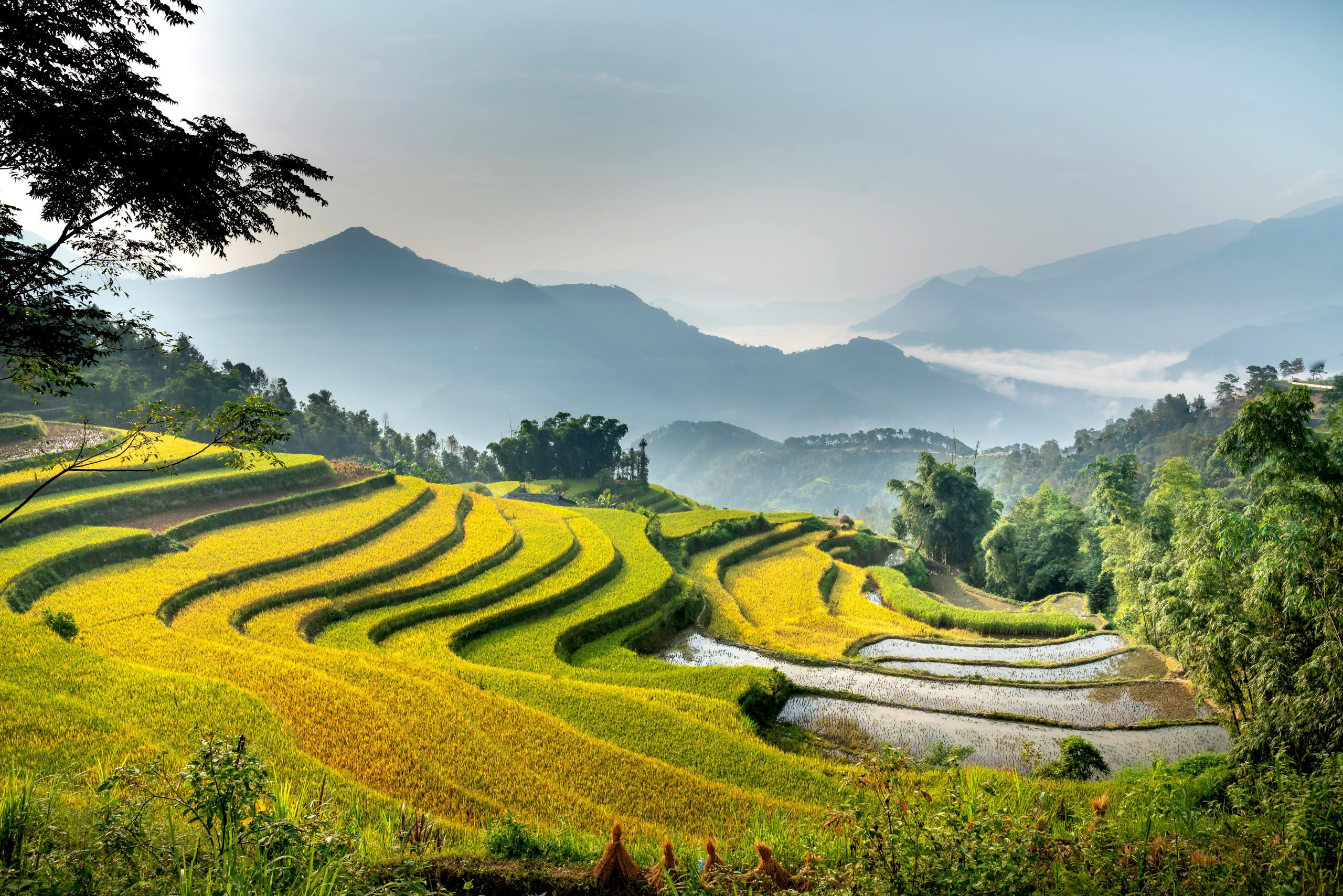
The country is often described as one of the slower-paced countries in the region, shaped strongly by Buddhism, river life, and mountain communities.
The Mekong runs through much of the country, tying daily life closely to the landscape itself.
See book suggestions for Laos here!
Myanmar
And finally, Myanmar. Or Burma. Which name you use is itself a politically sensitive issue …
This is another country where the gap between cultural richness and political reality is enormous.
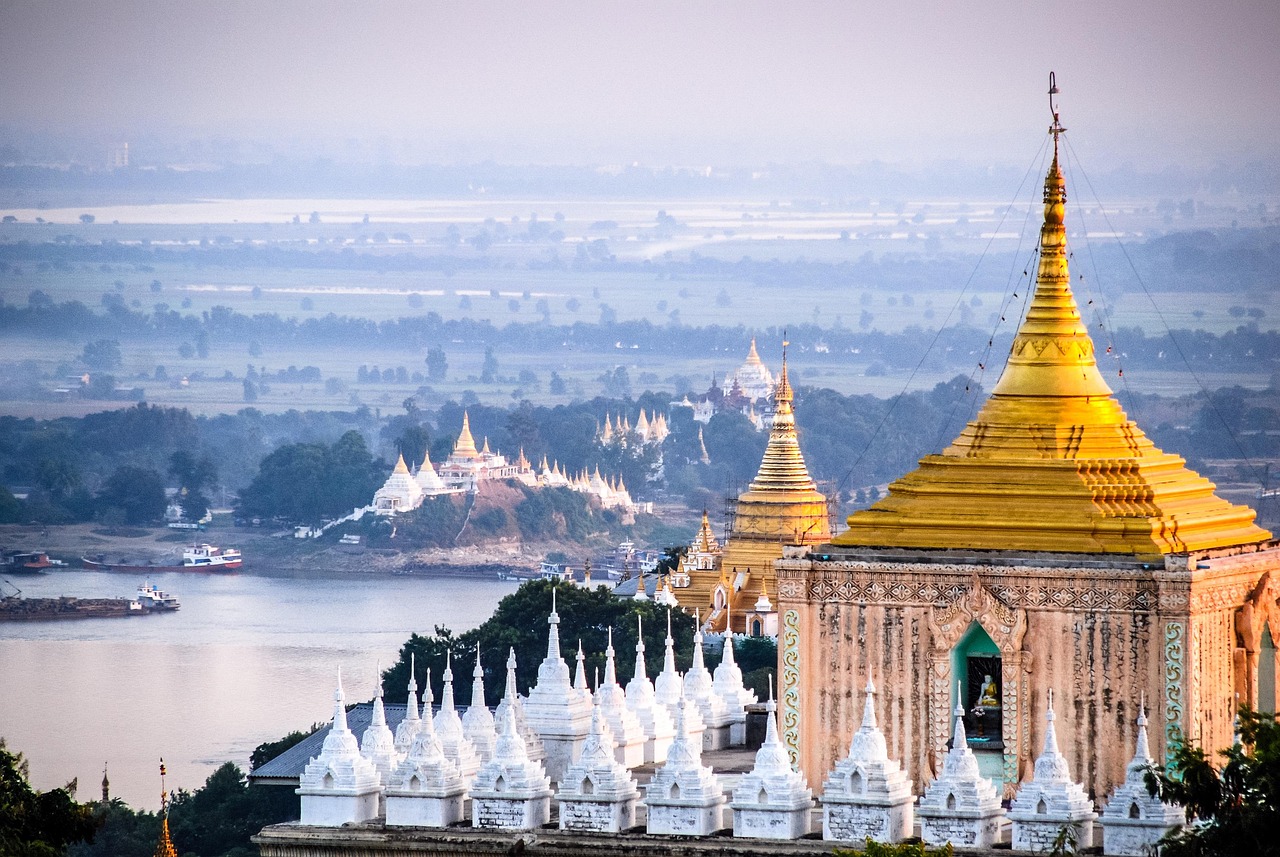
Myanmar is ethnically incredibly diverse, with dozens of different groups, languages, and traditions spread across mountains, plains, and river valleys. Buddhism plays a major role in public life, and the country contains thousands upon thousands of pagodas and monasteries.
But modern Myanmar has also been shaped by military rule, repression, ethnic conflict, and repeated political upheaval. Most recently, the military coup in 2021 pushed the country back into violent instability.
Which means that, much like North Korea in the previous region, reading “from” Myanmar may involve difficult questions about censorship, exile, and who gets to tell the country’s stories.
I suspect this may end up being the hardest countries of this region to find translated literature from, but we shall see.
See book suggestions for Myanmar here!
A very brief history of the region
For centuries, mainland South-East Asia was shaped by overlapping kingdoms, trade routes, and cultural exchange.
Indian influence brought Hinduism, Buddhism, art styles, and systems of kingship into the region, while Chinese influence shaped administration, philosophy, and trade further north. Over time, powerful kingdoms emerged, among them the Khmer Empire in Cambodia and various Thai, Burmese, and Vietnamese dynasties.
In the 19th and 20th centuries European colonialism dramatically reshaped the region. France took control of Vietnam, Laos, and Cambodia as part of French Indochina, while Britain colonised Burma. Thailand, meanwhile, remained formally independent by carefully balancing relations between colonial powers.
The 20th century brought wars, revolutions, occupations, and independence movements. The Vietnam War spilled across borders into Laos and Cambodia, leaving destruction that still affects the region today.
Communist governments emerged in both Vietnam and Laos, while Cambodia experienced the horrors of the Khmer Rouge regime. Myanmar moved toward military dictatorship and prolonged internal conflict.
And yet despite all this upheaval, cultural traditions endured. Buddhism remains deeply woven into daily life across most of the region. Food cultures, languages, festivals, and local identities have persisted through colonisation, war, and political change.
Which is perhaps one of the things that fascinates me most about this region: the coexistence of beauty and violence, serenity and upheaval, old traditions and rapid change.
Join me as I dive into South East Asia
This feels like one of those regions where I’ll constantly have to remind myself how little I actually know. I have impressions, images, fragments of history, films I’ve watched, stories I’ve absorbed second-hand. But very little real understanding yet.
Which is, of course, exactly the reason for doing this project.
Over the next weeks, I’ll be compiling book lists and reading one book from each of these countries: Vietnam, Cambodia, Laos, Thailand and Myanmar.
If you have recommendations, favourite books, or authors from this part of the world, I would absolutely love to hear about them.
Now let’s jump onto the bamboo raft, follow the Mekong south and see where the stories take us.