
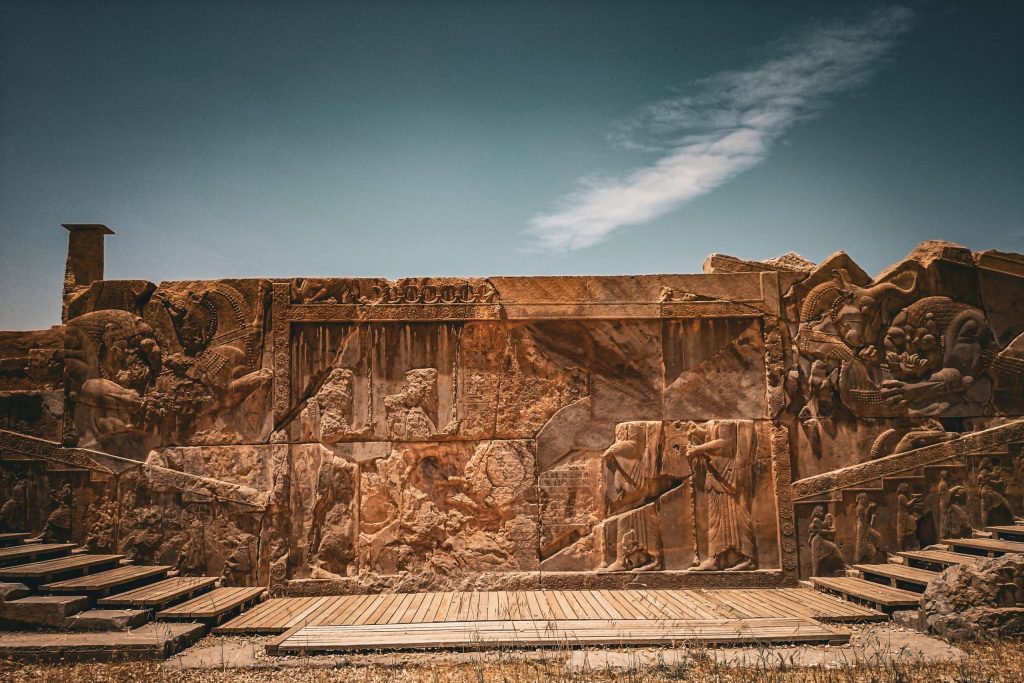
After finishing the Indian Subcontinent, The Borderless Bookshelf will be heading west into Afghanistan, Iran and Iraq. A group of countries I have grandly grouped into the name Persian and Mesopotamian Worlds, which is of course by no means a perfect geographical label.
Afghanistan stretches towards Central and South Asia, Iraq is usually placed firmly in the Middle East, and Iran sits somewhere between them, both geographically and culturally. But they are neighbours, connected in countless ways, and it just makes sense for me to group them together.
These are three countries that have been present in the news headlines for most of my life. Iran and the Islamic Revolution. The Iran-Iraq War. Saddam Hussein and the Gulf Wars. The Soviet invasion of Afghanistan, the Taliban, 9/11, the war in Afghanistan, ISIS. For decades reports from these countries have usually been accompanied by words like war, extremism, sanctions, terrorism, invasion and revolution.
So I recognise the names of cities. I know the names of leaders, wars and militant groups of this region. I have watched my fair share of footage from Kabul, Baghdad and Tehran. And I have already read The Kite Runner, Not without my daughter, and many of the most popular books set in this region.
So where exactly are we going?
This region covers an enormous and surprisingly varied stretch of land. There are snow-covered mountains, deserts, forests, marshes and fertile river valleys. There are megacities and nomadic communities, ski resorts and date palms, ancient ruins and modern shopping centres.
Afghanistan
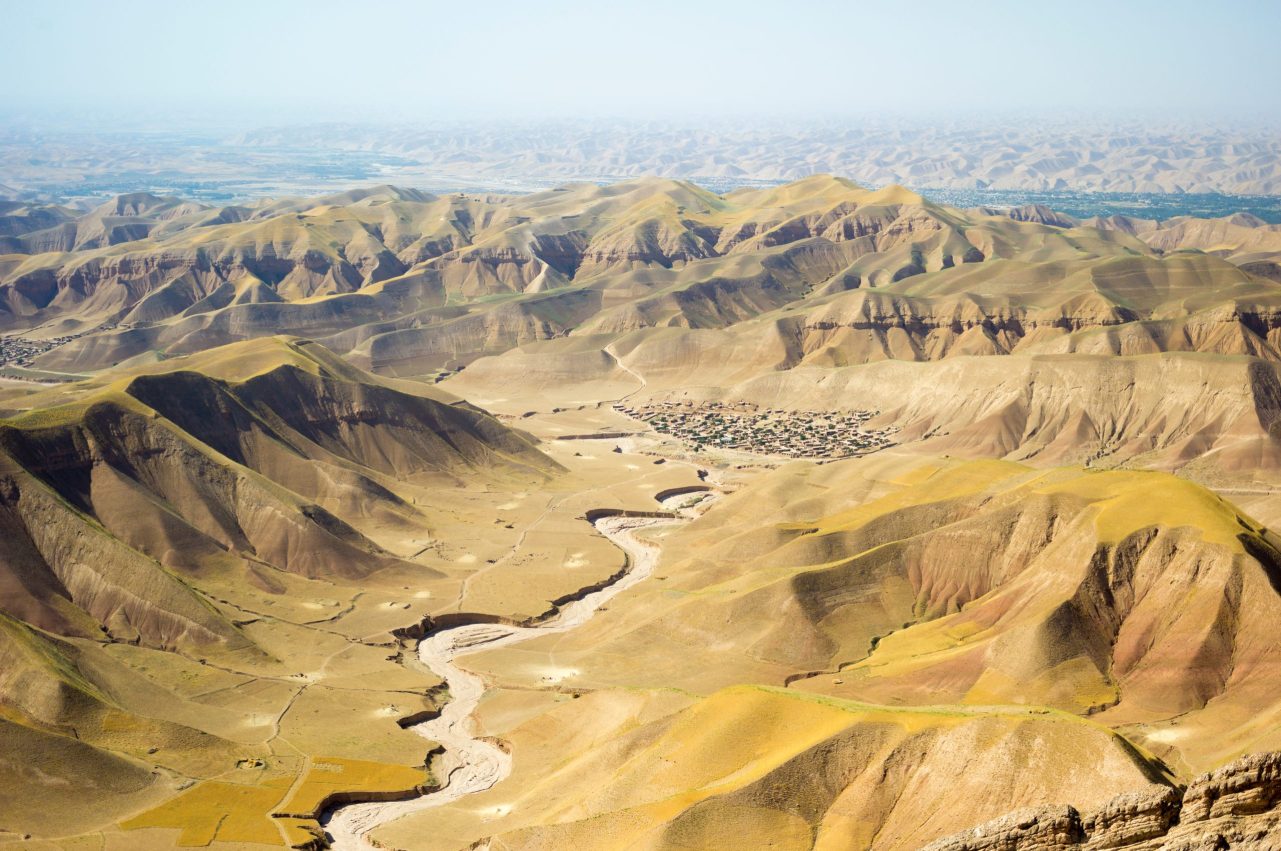
Much of Afghanistan is dominated by the Hindu Kush mountains. More than three quarters of the country is mountainous, the highest mountains rise above 7,000 metres, and some communities are separated by passes that become extremely difficult to cross in winter.
The capital, Kabul, sits at an altitude of around 1,800 metres, making it one of the world’s highest capital cities.
Around 40 million people live in the country, although population figures are difficult to establish precisely. The two official languages are Dari and Pashto, but many others are spoken, including Uzbek, Turkmen and several smaller regional languages.
Afghanistan is also famous for something considerably prettier than the images of the Taliban and the burka clad women we usually see on the news: lapis lazuli. The brilliant blue stone has been mined in the mountains of northeastern Afghanistan for thousands of years and was traded across the ancient world. Afghan lapis ended up in Egyptian jewellery and, centuries later, was ground into the ultramarine pigment used by European painters.
Iran
Iran is … huge. The country is 38 times the size of my native Denmark, and stretches all the way from the Caspian Sea in the North to The Persian Gulf in the South.
Much of the country is mountainous. The Zagros Mountains run along western Iran, while the Alborz range rises dramatically just north of Tehran. Iran’s highest mountain, Mount Damavand, reaches 5,610 metres, and is actually a potentially active volcano.
The Dasht-e Lut desert is one of the hottest and driest places on Earth, while the north of the country includes lush forests along the Caspian coast. Iran even has ski resorts within easy reach of Tehran.
More than 90 million people live in Iran, and although Persian (Farsi) is the official language, the country is far from linguistically or ethnically uniform. Azeris, Kurds, Lurs, Arabs, Baluch and numerous other groups all form part of modern Iran.
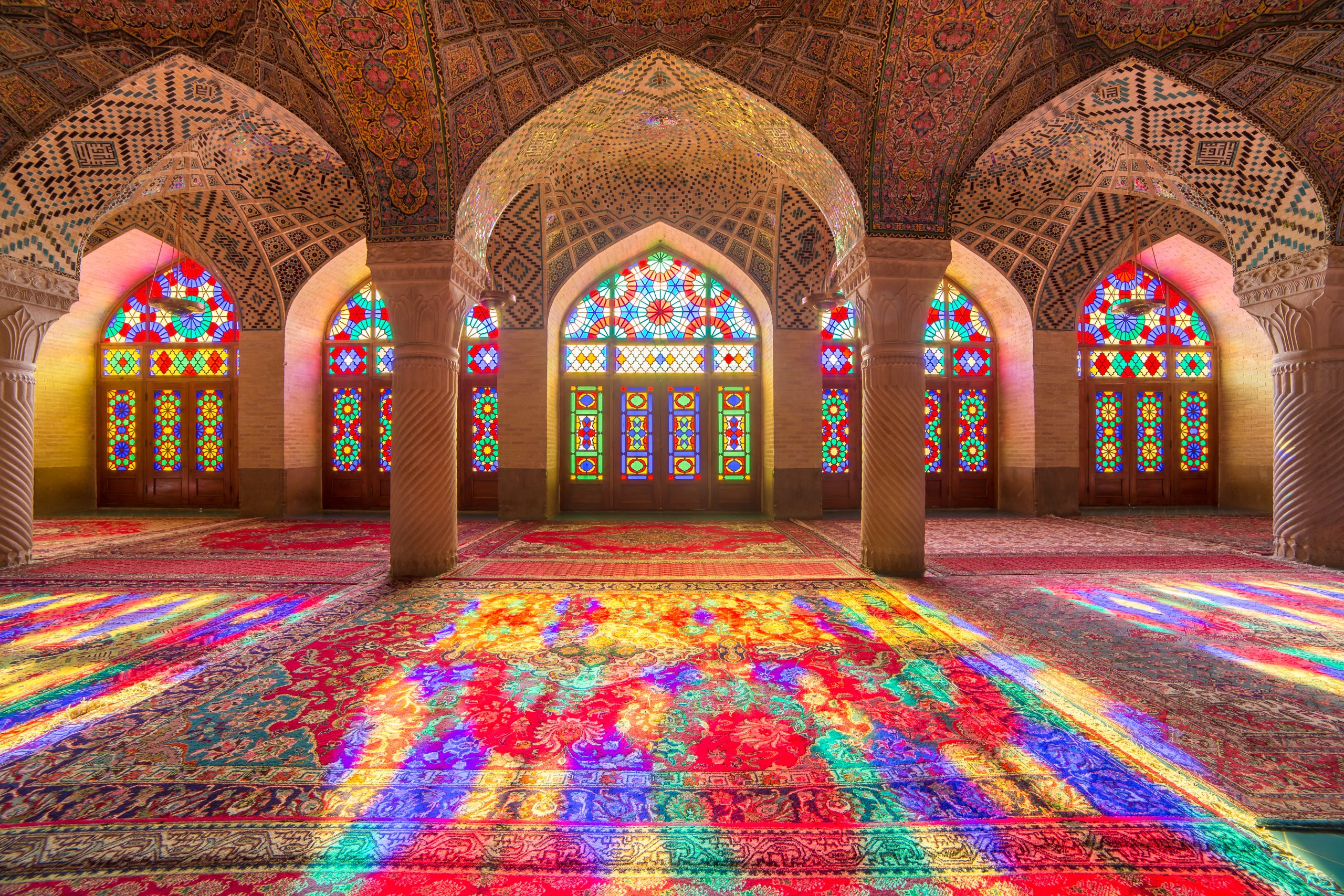
The capital, Tehran, is a sprawling metropolis of around ten million people. Elsewhere are cities such as Shiraz, associated with poetry, gardens and wine (although alcohol has been illegal since the Islamic Revolution) and Isfahan, famous for its extraordinary architecture.
Iraq
Geographically, Iraq looks very different from mountainous Iran and Afghanistan. Much of the country is flat, dry and dominated by two rivers whose names I suspect most of us first encountered in a school history book: the Tigris and Euphrates.
Together, they created the fertile land of Mesopotamia, meaning the land “between the rivers”.
Modern Iraq stretches from the mountains of Kurdistan in the north to desert in the west and the marshlands of the south. It also has a tiny coastline on the Persian Gulf.
The capital, Baghdad, sits on the Tigris and is home to more than seven million people. And Erbil in Iraqi Kurdistan is one of the world’s oldest continuously inhabited urban settlements.
Arabic and Kurdish are Iraq’s official languages, and the country is home to Arabs, Kurds, Turkmen, Assyrians, Yazidis and many other communities.
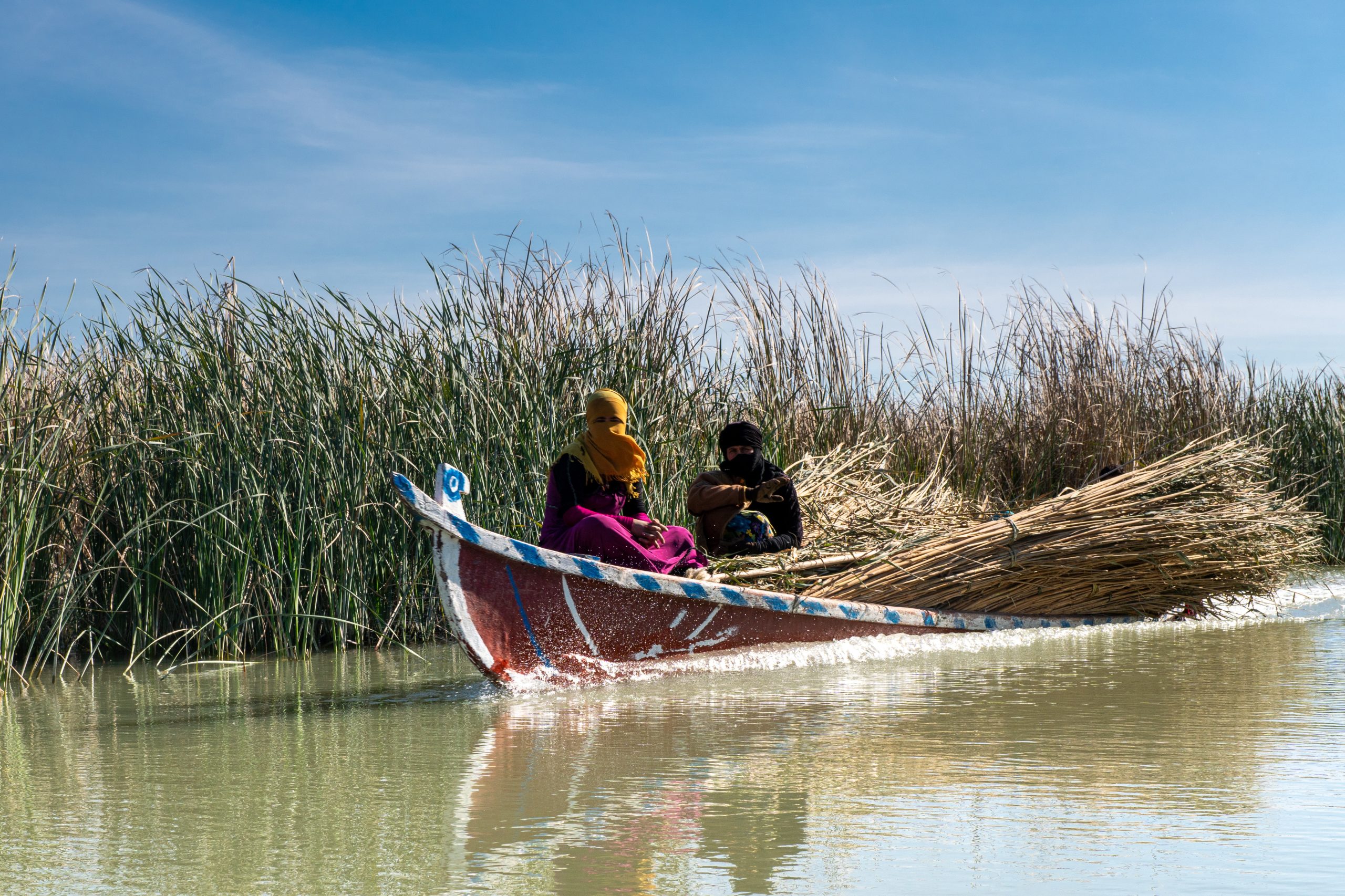
Southern Iraq contains one of the region’s most remarkable landscapes: the Mesopotamian Marshes, an enormous wetland ecosystem inhabited for centuries by the Marsh Arabs. Reed houses, boats and water buffalo are probably not the first images that spring to mind when somebody says “Iraq”. They certainly weren’t for me, but that was a fun rabbithole to get lost in.
A very brief history of the region
And the words “very brief” are doing some major heroic work here.
We are looking at a region where people have lived for tens of thousands of years. Mesopotamia became home to some of the world’s earliest cities. The Sumerians developed cuneiform writing; Akkadian, Babylonian and Assyrian kingdoms and empires followed.
Further east, Iranian peoples established powerful kingdoms of their own. In the sixth century BCE, Cyrus the Great founded the Achaemenid Empire, which eventually stretched from the Indus Valley to the Mediterranean.
Alexander the Great conquered it. His empire fragmented. Parthians and Sasanians followed. Rome and Persia spent centuries fighting each other.
And we’re still only at around 600 CE …
The Arab conquests of the seventh century brought Islam into the region. Baghdad later became the capital of the Abbasid Caliphate and one of the great intellectual centres of the medieval world, while Persian re-emerged as a major language of literature and culture.
Persian influence spread far beyond modern Iran. Historical Khorasan encompassed parts of today’s Iran, Afghanistan and Central Asia, and Persian language and culture eventually travelled eastwards into India as well.
Then came Turkic dynasties, Mongols and Timurids. Later still, Iran was dominated by the Safavid Empire, while much of Iraq belonged to the Ottoman Empire. Afghanistan gradually emerged as a state between the Persian, Central Asian and Indian worlds.
The nineteenth and twentieth centuries brought European imperial ambitions, shifting borders and political upheaval. Afghanistan became caught in rivalry between Britain and Russia. Modern Iraq emerged from former Ottoman territories after the First World War. Iran experienced revolution, foreign intervention, monarchy and finally the Islamic Revolution of 1979.
Recent history has been particularly brutal: Iran and Iraq fought an eight-year war from 1980 to 1988. Iraq invaded Kuwait in 1990 and was invaded by a US-led coalition in 2003. Afghanistan endured Soviet occupation, civil war, Taliban rule, two decades of US-led military intervention and the Taliban’s return to power in 2021.
Join me as I explore the Persian and Mesopotamian worlds
Over the coming weeks, the Borderless Bookshelf will travel through Iran, Afghanistan and Iraq.
Three neighbouring countries. Three very different countries with several thousand years of history tangled up between them.
And though this region has been in the headlines for my entire life, there is a lot here that I know very little about.
Which is, after all, rather the point of this whole project.
Will you be coming along? Have you read books from this region?
I’ll be coming along!
Afghanistan – I’ve read several books:
* fiction: I also read Khaled Hosseini’s The Kite Runner (2003) because it had been recommended to me multiple times. It’s set in both Afghanistan and the US. Our main character, Amir, grows up in Afghanistan and is best friends with his dad’s worker’s son, Hassan, but the classism is so horrifying, it doesn’t feel like a real friendship to me. He and his father have very little in common, but his father’s same-class best friend and business partner does have things in common with him and treats him wonderfully. They escape to the US, then Amir is called back where he has some character development. I still didn’t really enjoy the book. You do learn about kite running (the one interest he shared with his father), an interesting, but dangerous sport (and learned that my partner said he’d participated in a kite ripping contest in the US, though only part of the string was covered in glass).
* fiction: Andrea Busfield’s Born Under a Million Shadows (2009) – This is about life post-Taliban, told from the point of view of an 11-year-old boy. I don’t remember this book at all and can’t find my notes, so maybe it shouldn’t count!
* nonfiction: We Are Afghan Women: Voices of Hope (2016) published by the George W. Bush Institute – It’s mostly voices of elite, educated, progressive women. It starts with a history of Afghanistan and the statement that this country is often described as ‘the worst place in the world to be a woman’ and you get to read a lot of examples of why that might be. But one theme is that letting women earn money increases their power (I was surprised they didn’t just immediately hand over their earnings to their husbands) and improves the lives of everyone in the family. And they do have a law that women who are beaten by their husbands can get a divorce. I think this is where I learned that if women have to stay covered around men, then there need to be female doctors, but there mostly aren’t. This is probably my favorite book I’ve read for Afghanistan.
* nonfiction: Åsne Seierstad’s The Bookseller of Kabul (2002) – A Norwegian reporter spent time with a bookseller, learning about his fate through history. It was interesting to learn about book selling, book publishing, textbooks, and different strategies he had to take to stay semi-safely in business, plus life with multiple wives. Interesting quote: “Although it is not unusual for a man to take a second wife, and sometimes even a third, it is nevertheless humiliating. The slighted wife will always be labeled inadequate.”
* nonfiction: Ruth Bjorklund’s Afghanistan (Enchantment of the World second series) (2012) – This is from my favorite kids’ series of books about different countries. I learned that Afghans have one of the lowest life expectancies (45) in the world. They have quite a long and varied history. Some are still nomadic, living in yurts. Villagers rarely have electricity or plumbing, but often there are tunnels under the floor connected to a fireplace stoked with wood or dried dung to warm the whole house and circulate heat.
Iran – I’ve read one book:
* fiction: Marjan Kamali’s Together Tea (2013) – This starts in the US in 1996 with a college student and her mother. Then there’s a flashback to 1978 – 1980 in Iran when the daughter was about 8 to 10 years old and we see what it was like before and during the revolution and the first year of the Iran-Iraq war. Then the mother and daughter visit Iran again in 1996—it felt a little fake that everyone they’d known was still alive and okay. But you also get to visit some tourist attractions. And they talked about how in the US “Iran” has bad connotations, so it’s better to call yourself Persian, and I have met people who do this (American ignorance for the win!).
Iran – I’ve read no books for Iran or Persia.
Iraq – I’m still looking for books for Iraq. So far, I’ve only read books in related ‘countries.’
Kurdistan (a cultural region that spreads across Iran, Iraq, Syria, and Turkey) – I’ve read one book:
* fiction: Gian Sardar’s Take What You Can Carry (2021) – Gal (Olivia) accompanies boyfriend (Delan) to Kurdish Iraq in 1979 to visit his family, and brings her camera hoping for a winning photojournalist entry. She’s not the most interesting character, but this book is an example of a foreigner trying to teach us about the troubles of the Kurds.
Ancient Iraq (Mesopotamia, Sumer, and Babylonia) – One of my professors for freshman humanities in college studied Akkadian and so she assigned works from there:
* myth/religion: Epic of Gilgamesh – I am not really into epic mythology, and I don’t remember much, so maybe this shouldn’t count.
* myth/religion: Enuma Elish – Babylonian creation story. Same problem, this probably shouldn’t count.
I did also recently check out Moudhy Al-Rashid’s Between Two Rivers: Ancient Mesopotamia and the Birth of History, a nonfiction book where each chapter focuses on a different artifact, so I will be reading that soon.
I have also read The Kite Runner. And most of Khaled Hosseini’s other books. My favourite by far of them is A thousand splendid suns. I did enjoy The Kite runner as well, while I was less impressed with some of his later works.
You mention some books I have not come across in my research. I will look them up!