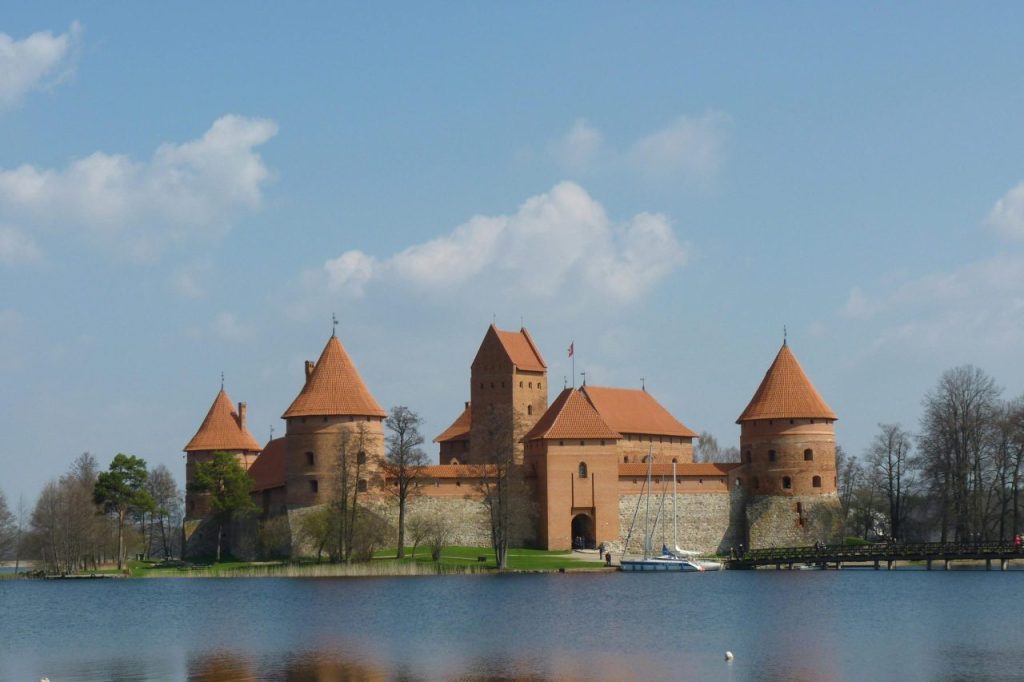
The white stork is the national bird of Lithuania, which has the highest density stork population in Europe. No I didn’t know that either, but I do like storks …
Lithuania is small on the map, but its literature contains entrire worlds: frozen exile camps and postwar ruins, quiet rebellion, and even an alternate steampunk Vilnius! Once banned from printing their own language, Lithuanians turned reading into an act of defiance, and that love of words still runs deep today. I feel like this list of ten books show just how varied the country’s storytelling is! And finding a female author from the 1890’s was certainly a rare treat!
These are the ten books I chose to feature from Lithuania. A few American authors of Lithuanian descent seemed interesting enough for me to not leave them out.
A list of books to read from Lituania
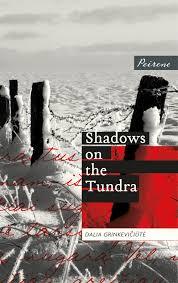
Shadows on the Tundra
Author: Dalia Grinkevičiūtė
First published: 1949
Original title: Lietuviai prie Laptevų jūros
Genre: Memoir
In 1941, 14-year-old Dalia and her family are deported from their native Lithuania to a labour camp in Siberia. As the strongest member of her family she submits to twelve hours a day of manual labour. At the age of 21, she escapes the gulag and returns to Lithuania. She writes her memories on scraps of paper and buries them in the garden, fearing they might be discovered by the KGB. They are not found until 1991, four years after her death. This is the story Dalia buried. The immediacy of her writing bears witness not only to the suffering she endured but also the hope that sustained her. It is a Lithuanian tale that, like its author, beats the odds to survive.
An extraordinary piece of international survival literature, joining the likes of Primo Levi and Anne Frank.

In the shadow of wolves
Author: Alvydas Šlepikas
First published: 2011
Original title: Mano vardas – Marytė
Genre: Historical fiction
The Second World War is drawing to a close, but the world is far from safe. Left to fend for themselves, women and children are forced out of their homes in East Prussia to make way for the advancing victors. As the Russian soldiers arrive, the women know that they are still very much in danger, and that for them, the fight for survival is only just beginning.
Facing critical food shortages and the onset of a bitter cold winter without heat, the women send their children into the nearby forests where they secretly cross the border into Lithuania, begging the local farmers for work or food to take back home to their waiting families. Along the way the children find cruelty, hardship and violence, but also kindness, hope, and the promise of a new and better future.
Based on meticulous research, this stunning and powerful debut novel by Alvydas Šlepikas tells for the first time the story of the ‘wolf children’ and the measures many families were forced to take in order to survive.
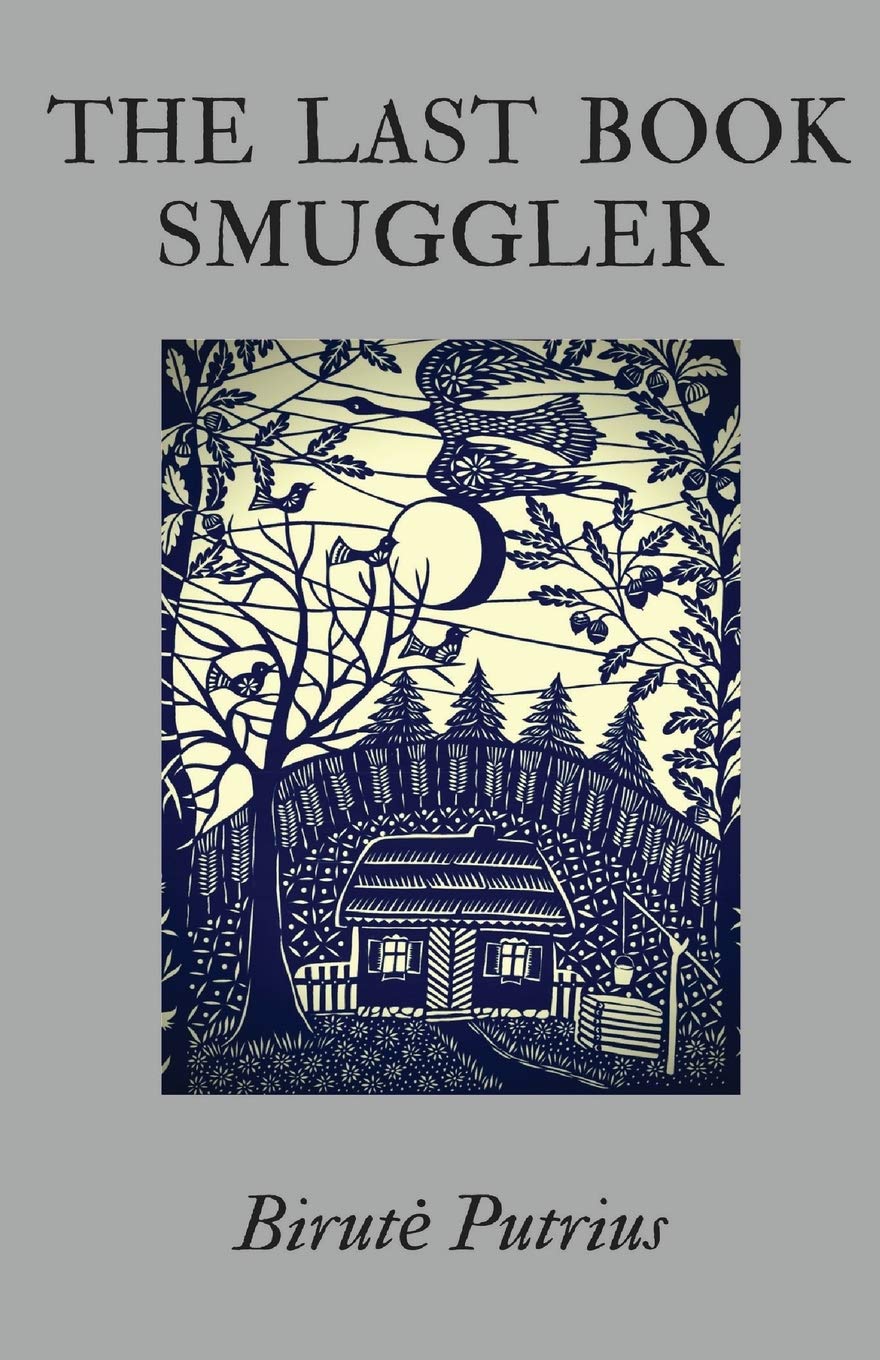
The last book smuggler
Author: Birute Putrius
First published: 2011
Original title: The last book smuggler
Genre: Historical fiction
In 1902 Lithuania, a group of rebels armed with books triumphs against the mighty Russian Empire.
Part folktale, part thriller, The last book smuggler tells the story of Ada and her grandfather Viktoras, an old book smuggler tired of his forty-year battle to keep his language alive despite the attempts of the Russian Empire to destroy it. Into their world steps Jonas, a young man in love with Ada and ready to join the underground book smugglers. But there is a traitor in their midst who must stop them or lose everything.
Based on the author’s grandfather, who was a book smuggler, the novel deftly captures the politics and dangers of the times while bringing to life an engaging and quirky family, with an element of the supernatural.

Marriage for love: A Nineteenth-Century Lithuanian Woman’s Fight for Justice
Author: Žemaitė
First published: 1899
Original title: Marti
Genre: Realist fiction
How did a penniless nineteenth-century farm woman with an alcoholic husband, seven children, and little education, living in a rural backwater of the tsarist Russian empire far from any centers of culture manage to become the initiator of literary prose fiction in the Lithuanian language and write six volumes of stories, plays, and letters? Not only that, but she also distinguished herself as a feminist activist against patriarchy, especially the centuries-long tradition of arranged marriages. During the First World War she traveled the United States for five years, giving speeches from Chicago to New Hampshire for the cause of relieving the famine and suffering of her war-torn country.
Žemaitė is Lithuania’s literary matriarch, giving voice to peasant women and domestic realities often ignored in her time. Her stories are frank, moral, and infused with earthy humor.
Vilnius Poker
Author: Ričardas Gavelis
First published: 1989
Original title: Vilniaus pokeris
Genre: Modernist fiction
An assemblage of troubled grotesques struggle to retain identity and humanity in an alternately menacing and mysterious Vilnius, the Lithuanian capital, under Soviet rule in the 1970s and 1980s.
The story centers on Vytautas Vargalys, a semijustifiably paranoid labor camp survivor who works at a library no one visits while he desperately investigates the Them or They responsible for dehumanizing and killing the humans around him, including his wife, Irena; his genius friend, Gedis; and the young siren, Lolita. Meanwhile, failed intellectual Martynas chronicles Vargalys’s struggle and the city’s mysterious energy in his mlog, library worker Stefanija Monkeviciute dwells on her wavering faith and personal humiliations, and the city itself speaks in the voice of a dog, claiming that Vilnius can’t distinguish dreams from reality.
Wrought — and fraught — with symbolism and ennui, the oppressive internal monologues of the characters and the city show the intense importance and equal absurdity of life.
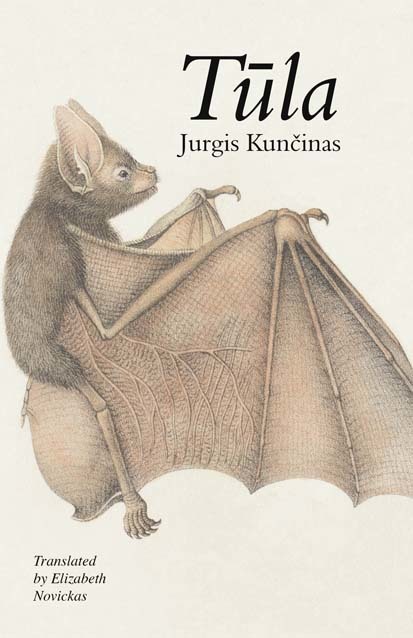
Tūla
Author: Jurgis Kunčinas
First published: 1993
Original title: Tūla
Genre: Literary Fiction
The unnamed narrator of Jurgis Kuncinas’s Tula is our tour guide through the infamous poverty-stricken bohemian quarter of Vilnius known as Uzupis (literally, “beyond the river”), living his life on the fringes of society, including his journeys through various institutions for alcohol treatment.
On the way we meet a number of curious inhabitants of this unique district, everyone from a chemistry professor with an exhibitionist problem to the descendant of a 15th-century Lithuanian hetman obsessively carving wooden masks all night long. It’s a place where you’re likely to encounter people walking both sides of the moral line, where one is just as likely to run into great kindness as unfeeling evil, and where the complex history and mix of cultures that make up the city of Vilnius constantly intrude into the present.
But at the very heart of the narrative is the narrator’s tragic love for the equally misfit Tula, a love the narrator carries with him, both figuratively and literally, throughout his chaotic existence. The action, which sometimes takes the form of the narrator’s fantastic visions of visiting his love in the guise of a bat, includes a hitchhiking trip through Ukraine and Crimea, and takes place over a number of years spanning a good part of the late Soviet era.

Breathing into Marble
Author: Laura Sintija Černiauskaitė
First published: 2006
Original title: Kvėpavimas į marmurą
Genre: Literary fiction
When Isabel decides to adopt the troubled young orphan, Ilya, she has no idea of the trauma that is about to be unleashed upon her family. Taking him back home to their cottage in the country, his dark presence unsettles the family and resurrects the ghosts of Isabel’s past.
Breathing into Marble is a dark and poetic story of love, family, deception and death, and it won the 2009 EU Prize for Literature
Whitehorn’s windmill
Author: Kazys Boruta
First published: 1945
Original title: Baltaragio malūnas
Genre: Classics / Satire / Romance
The story is about Whitehorn the miller’s efforts to find a match for his beautiful daughter, Jurga, against various calamities with and among suitors, neighbors, priests and other inhabitants of the village, and ultimately against the devil’s spell. The interesting plot made the novel popular as juvenile literature, too.
Most of Whitehorn’s Windmill was written in 1942, during the German occupation. Bearing a lyrical style that gives full rein to the oral folktale tradition Lithuania is famous for, the novel is by turns romantic, farcical, fantastic, and tragic. The sense of spirituality that permeates the work reflects Lithuania’s pagan roots that were overlaid with an occasionally over-zealous Catholicism not so very long ago.
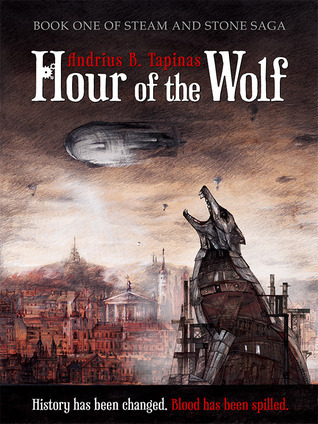
Hour of the Wolf
Author: Andrius Tapinas
First published: 2013
Original title: Vilko Valanda
Genre: Speculative fiction / Steampunk / Fantasy
It is the year 1905 and Europe is not as we know it. Alchemists pilot steampunk airships over great cities, hardworking mechanics create automatons and deep in the dungeons secret societies of macabre wizards strive to create artificial intellect.
Former US Marine Antanas Sidabras is exceptional at his job – enforcing public order in the ancient Free City of Vilnius. But a gruesome murder at an abandoned cemetery leaves him at a loss. No clues, no motive, no suspect.
With the biggest social event of the year – The Summit – looming just a few days ahead frantic investigation turns out to be a complex web of political intrigue and Sidabras has everybody against him – mad doctors, corrupt officials, Russian agents and monsters from his personal nightmares. And then, the bells will toll the Hour of the Wolf.
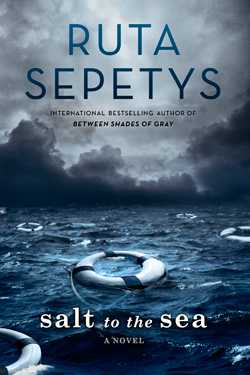
Salt to the Sea
Author: Ruta Sepetys
First published: 2016
Genre: YA / Historical Fiction
While the Titanic and Lusitania are both well-documented disasters, the single greatest tragedy in maritime history is the little-known January 30, 1945 sinking in the Baltic Sea by a Soviet submarine of the Wilhelm Gustloff, a German cruise liner that was supposed to ferry wartime personnel and refugees to safety from the advancing Red Army. The ship was overcrowded with more than 10,500 passengers — the intended capacity was approximately 1,800 — and more than 9,000 people, including 5,000 children, lost their lives.
Sepetys crafts four fictionalized but historically accurate voices to convey the real-life tragedy. Joana, a Lithuanian with nursing experience; Florian, a Prussian soldier fleeing the Nazis with stolen treasure; and Emilia, a Polish girl close to the end of her pregnancy, converge on their escape journeys as Russian troops advance; each will eventually meet Albert, a Nazi peon with delusions of grandeur, assigned to the Gustloff decks.
Ruta Sepetys is American of Lithuanian descent, and I’ve had this book recommended to me enough to include it, though it technically breaks more than one of my own rules!
Join me, and read a book from Lithuania
And that concludes my list for Lithuania, and I’ve reached the final stop on my journey through the Baltic states, three small countries bound by a complicated history and a shared resilience, each with its own distinct voice.
So. Stark realism or steampunk fantasy? Which one should I go for? Which one will you go for?