My name is Marytė
I went into In the Shadow of Wolves by Alvydas Šlepikas knowing nothing about the “wolf children” of Lithuania, but Wikipedia will tell you that “Wolf children” (vilko vaikai) were German and Prussian-Lithuanian minors orphaned or separated from families in 1945–46, who survived by drifting through the forests of East Prussia (today’s Kaliningrad region) and into Lithuania. Many of them were taken in by Lithuanian families, others lived rough for years. It’s a corner of European history that stayed in the shadows for decades, which is part of why this novel hit such a nerve at home and abroad.
Šlepikas builds his novel out of brief, cinematic episodes that track mothers and children from several families as the Red Army has overrun East Prussia and the old world has collapsed. The Germans are driven out of their homes, and the family at the centre of the story lives in a wood shed next to their old house, where a Russian family now reigns.
Food has disappeared, and the women and children are left to hunt for the last surviving rats and fight for the potato peels thrown out by the Russian soldiers. And as if this was not awful enough, they also have to flee from or fight those same soldiers, who are often in the mood for some female company or random violence. One woman dies from the experience of such a band of soldiers – leaving four more orphaned kids behind in the wood shed.
The cold was everywhere; it was in the blood. Hunger was gnawing at them from the inside like an icy fire that could not be assuaged. The children could no longer remember a time when they hadn’t been hungry.
In desperation, som of the older kids cross into Lithuania, sent by their mothers or on their own accord, working for a crust of bread and a piece of fatback to bring back to their starving siblings. Some are taken in by Lithuanian farmers, but more are shot before they even cross the border, fall out of train carriages to never be seen again, or simply die or disappear off page.
In short, The shadow of wolves is a book of despair. Of relentless hunger, hash winter, and sudden and very graphic violence.
The book is at times almost grotesquely gruesome, and any scene involving suffering children generally breaks me to pieces. And yet, somehow, this one did not. For this book I felt oddly distant from the whole thing, and sadly never really connected with any of the characters.
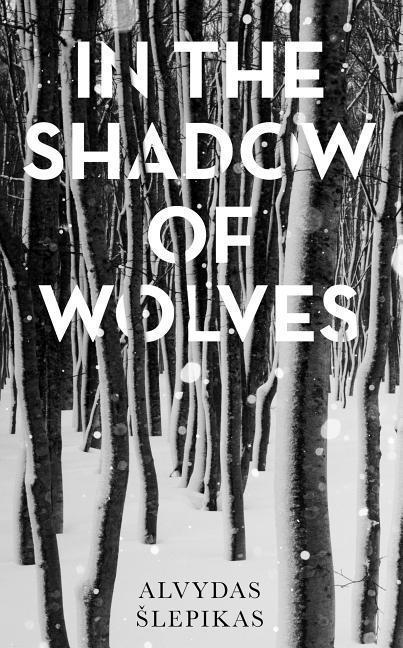
Šlepikas tells the story through different women and children, cutting from one to another without warning, just when I had begun to care about someone. I suppose this style is very fitting for a world where everything has fallen apart, and stories break off because lives do. So I do see how the structure could be meant to mirrors the postwar chaos, the confusion and displacement that defined this forgotten corner of history. But for me personally it did not quite work.
Šlepikas himself is something of a cultural polymath. He’s a novelist, poet, playwright, actor, and film director, and you can definitely feel that cinematic eye throughout the book. Scenes are shot in close focus, then cut away sharply, as if you’re watching fragments of memory. The sense of place in the icy forests of Lithuania is vivid.
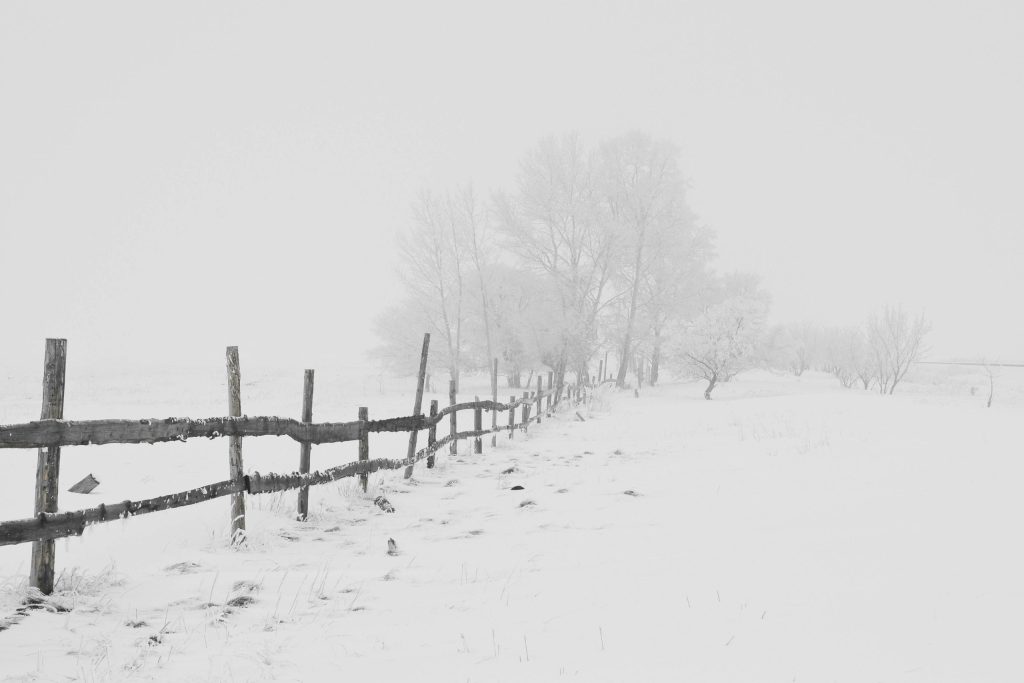
Everything rises up from the past as if through fog. People and events are enveloped in the snow carried on the wind and the mist that hovers in the silence.
All is distant but not forgotten.
Even more than the fragmented narrative, my main gripe with this book was the dialogue. In English much of it just felt very stiff and unnatural to me, and I can’t help but suspect that maybe something got lost in translation here. I do wish I could read this in the original language.
But gripes aside. Even if this will not be put on my personal top shelf, I’m very grateful for the piece of history it uncovers, for the glimpse into lives lived at the edge of survival. In the shadow of wolves shines a harsh light on a piece of the past that very few know about. It’s a stark, concentrated book that adds a missing chapter to the postwar story, and gives names, however briefly, to kids who had to trade theirs to survive.
If you want to skip the book, but still learn more about the wolf children, this documentary has decent English subtitles.
Have you read this one or even heard of the wolf children before? I’d love to hear your thoughts in the comments.
Or you could try another book from Lithuania.
And that leaves me only three countries to read to complete the journey through all of Europe!