
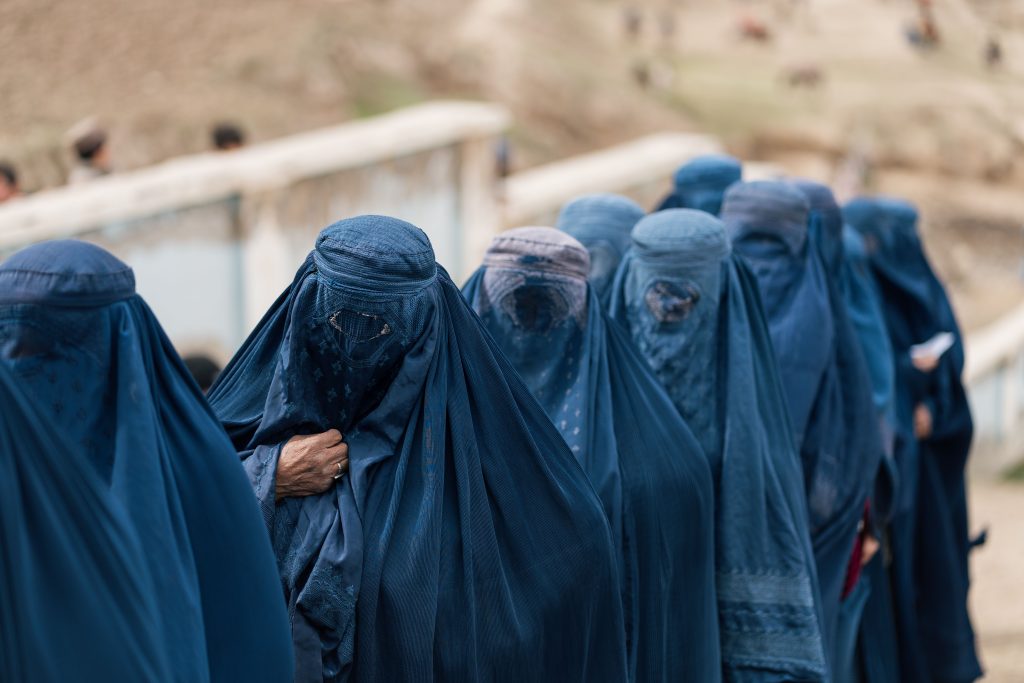
Go, my child, and live the way you want to live
There are books that make you close them, put them down beside you and stare at the wall for several minutes before you can possibly continue.
My Pen Is the Wing of a Bird is one of those books.
This collection brings together short fiction by eighteen different Afghan women, writing in Dari and Pashto, about women and girls (and a few men) from across Afghanistan. And most of these stories are completely and utterly heartbreaking.
There is so much poverty here. Gruesome domestic abuse. Forced and unhappy marriages. Women with almost no control over their own lives. Girls whose futures depend upon decisions made by other people. War is here too, and suicide bombers and terror attacks. Sometimes as the main subject of a story, but more often simply sitting in the background while ordinary life somehow continues.
And yes. Some of the stories squeezed my heart so painfully that I genuinely had to stop reading for a while.
It doesn’t matter what colour your boots are–they could be red or black or blue. Or maybe for you it’s a dress or a notepad or an umbrella that you chose. The important thing is that you chose. And I chose a pair of boots
But here’s the wonderful thing: This isn’t actually a relentlessly miserable book.
Because then another story comes along and there is kindness. Or humour. Or love. Women help each other. They find ways around the rules imposed upon them. They work and dream and argue and make decisions that surprise everyone around them. There are mothers fighting for their children and women stubbornly refusing to give up.
And a child who knows that the only important thing is the right to choose.
And suddenly my faith in humanity was restored again. Or perhaps more specifically, my faith in women.
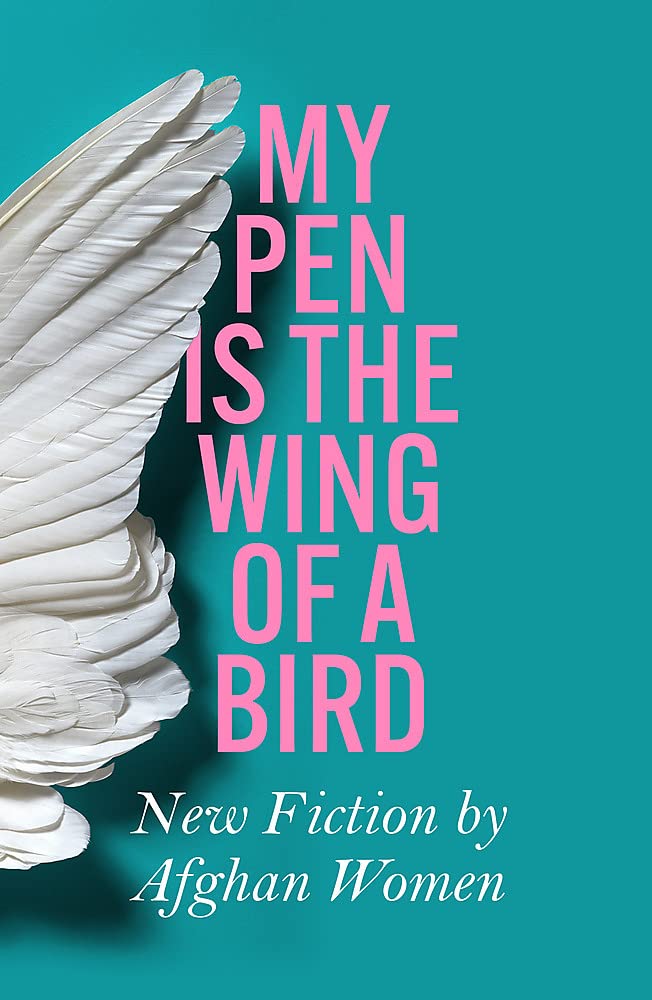
And the story of how their stories reached us makes the book even more remarkable.
My Pen Is the Wing of a Bird grew from “Write Afghanistan”, a project run by Untold Narratives, which works with writers who are marginalised by conflict or their communities. Calls for stories went out across Afghanistan, deliberately looking beyond the established literary circles of Kabul. Hundreds of submissions were received, and selected writers worked remotely with editors to develop their stories.
And I mean remotely. In one case, a writer produced her story by hand, photographed the pages and sent them through other people via WhatsApp so that they could reach the project.
The stories were written in Dari and Pashto and then translated into English. Eighteen women ultimately contributed to the collection.
Then, while the anthology was being prepared for publication, the Taliban took Kabul in August 2021.
Suddenly publishing stories by Afghan women carried a very different weight. Many writers destroyed their work out of fear for their safety. Biographical details about contributors had to be limited. Some of the women eventually left Afghanistan, while others remained.
Knowing this while reading makes this collection feel even more precious.
When the word “Ajah” is used as a person’s name, everyone knows that it refers to the woman called Ajah Ayyub. Ajah means “grandmother”, but Ajah Ayyub had no children. She was given the title “Ayyub” because – like the Prophet Ayyub who resisted Satan’s temptations in the face of God’s trials – Ajah’s determination saved her village from drowning
But the circumstances of its publication should not overwhelm the stories themselves, because these women absolutely deserve to be read as writers, not simply as Afghan women who managed to write despite the Taliban.
They write about violence and oppression. But also about mothers and daughters, neighbours, friendship, marriage, desire, work, memories, small rebellions and ordinary lives.
It will break your heart in a million pieces.
But you will rejoice when Ajah saves her village from the flood by sheer will and determination, and when ingenuity, resilience, kindness and immense sacrifices lets someone live another day.
I was done with reading for Afghanistan, but was tempted by The Honey Thief, so I read it. This is a book of interconnected short stories celebrating and demonstrating oral storytelling of the Hazara people. Some stories are straight-up fables—made up to make a point. Some are fictionalized accounts of real events; I liked these better. But my favorites were stories of more ordinary people—or at least not famous or mythic people. The wise man and his favorite grandson, the beekeeper and his new apprentice (and old teacher), the mute and the musician, the wildlife photographer and his guides.
The writing is often of what I call ‘read-aloud quality.’ Even though I would be a mediocre actor (or voice actor), the writing is so good that I just want to read it aloud.
At the same time it’s also strangely matter-of-fact. In some ways, that makes it easier to get through the violent parts, but it also makes violence seem disturbingly common. ‘It was not that the Hazara feared the Russians or the Englishmen, only that the ambitions of these foreigners always unfolded in such a way that Hazara were left on the roadside with their belongings on their backs while smoke rose from their houses.’
And also, there are a lot of lessons which I admit to enjoying. I like to learn things the easy way! Here’s a favorite that reminds me of Louis L’amour (who wrote western books, often set in rough geography): ‘You must stop and put your hand on a rock every half of an hour after 10:00 in the morning. If the rock is too warm at midday for your hand to stay for more than one minute, you must rest in the shade.’
Also: You can think of a character flaw instead as a disability; it changes how you treat the person. (Not even counting how we keep learning things like that the character flaw of laziness might really be the disability of ADHD.) And we see the negatives of a culture that remembers rather than forgives.
There are also recipes, though none grabbed me, and a nice glossary, though I didn’t need it to understand the book.
I might buy this book just for the story “The Snow Leopard,” which made me cry in a good way because in the end two people bond over a person they both liked who is now gone, and this bonding was more valuable than the original goal of their meeting.
Thank you so much for sharing. I might just have to pick up this one. Though the one I chose for Afghanistan was quite amazing also!
So many temptations! Sticking with just one book is hard but is letting you get all across the planet! I don’t want to yank you off-course, just join you in the journey. But I will definitely keep sharing. It’s like we’re at a restaurant ordering different things, but giving each other tastes! (So far; we won’t always make different choices!)
(Meanwhile, I’m still finishing up books checked out from the library before I learned about your project. Then I have some catching up to do.)