Manuscripts do not burn
This book has been sitting on my TBR for years. As a lover of speculative fiction, I knew long before starting this project that The Master and Margarita would be my pick for Russia. And what a ride it turned out to be!
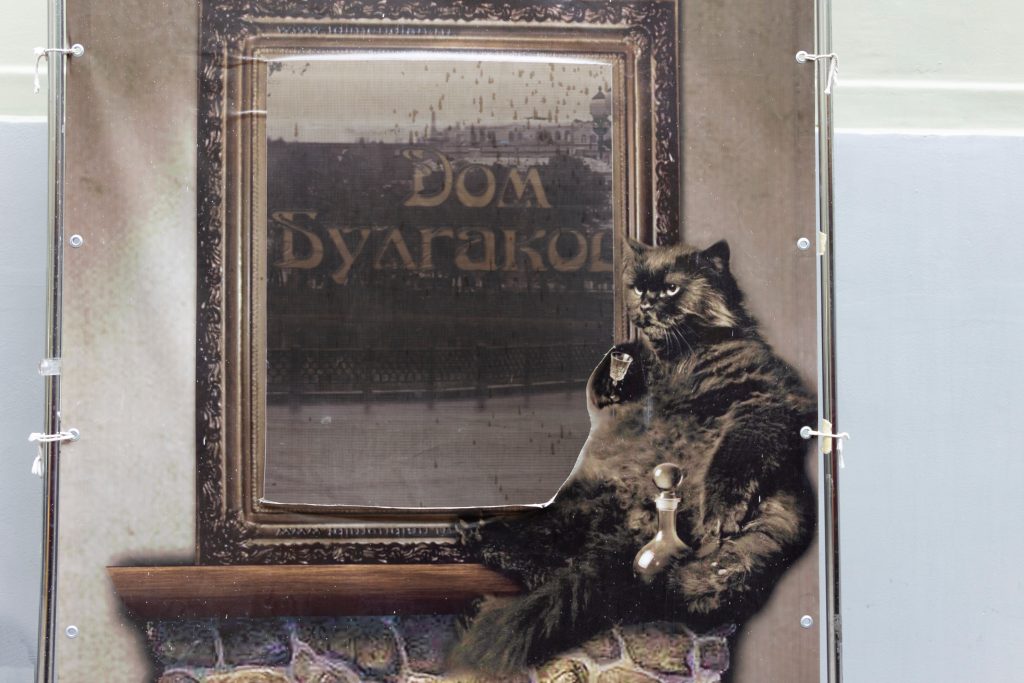
The story begins with two Moscow writers running into a mysterious stranger who claims to have met Pontius Pilate. This stranger turns out to be none other than the Devil in disguise, who has arrived in the city with his bizarre entourage: the enormous, vodka-drinking, pistol-wielding cat Behemoth; the fanged hitman Azazello; the witch Hella; and the ever-smiling, menacing Koroviev. Together they unleash a whirlwind of chaos on Soviet society. We’re talking séances where roubles rain from the ceiling, bureaucrats disappearing into thin air, and the literary elite exposed in all their pettiness.
“I challenge you to a duel!” screamed the cat, sailing over their heads on the swinging chandelier.”
Threaded through this festive carnival of absolute absurdity runs a parallel narrative: a retelling of the trial of Jesus through the eyes of Pontius Pilate, which one character, “the Master,” has written as a novel.
The Master himself is a tormented writer whose manuscript has been rejected and ridiculed. His beloved Margarita, desperate to save him, makes a pact with the Devil and becomes the hostess of his midnight ball, which is one of the novel’s most dazzling and surreal scenes.
The Master and Margarita was stranger and more imaginative than I had ever imagined. At times it reminded me of a Russian fairytale collection I have on my shelf. And the satire of Russian bureaucracy was delicious. At the same time, I was reminded of something that always trips me up in Russian literature: the names. Every character has three names: formal, informal, and affectionate, and it’s always a small mental workout to keep track of who’s who. But the storytelling more than made up for it. I was entertained all the way through.
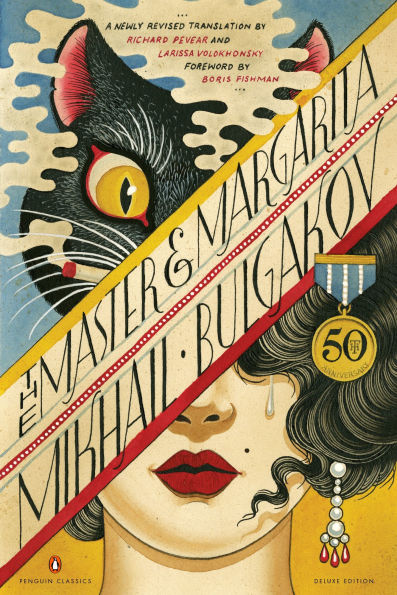
The famous line “Manuscripts don’t burn” has become a symbol of the novel’s own miraculous survival. Despairing of ever being allowed to publish, Bulgakov himself burned the first draft in 1930, but he rewrote it a few years later, working and reworking until his death in 1940. He never saw the book in print. The novel only appeared in a censored magazine version in 1966–67, and the full text was finally published in 1973.
“In order to be in control, you have to have a definite plan for at least a reasonable period of time. So how, may I ask, can man be in control if he can’t even draw up a plan for a ridiculously short period of time, say, a thousand years, and is, moreover, unable to ensure his own safety for even the next day.”
Part biting political satire, part philosophical parable, part fantastical fayrytale, The Master and Margarita defies categorization. It mercilessly ridicules Soviet society, meditates on good and evil, and stages an absolutely dazzling display of absurdity, the likes of which I have never seen.
I’m not a scholar, and entire tomes of literary criticism have already been written about this book, so I won’t even attempt to unpack all its layers. But I will tell you this: I had a blast reading it. It was strange, bold, funny, and thought-provoking in equal measure. It was everything I hoped it would be.
No wonder this has been called one of the greatest novels of the 20th century.
But if you are in the mood for something else, here are some other suggestions for Russia.
(The cover image of this post is from the entrance to the Bulgakov museum in Moscow.)